
Supreme Court Condemns Dowry System for Reducing Marriage to Commercial Transaction in Landmark Ruling
- Date & Time:
- |
- Views: 43
- |
- From: India News Bull
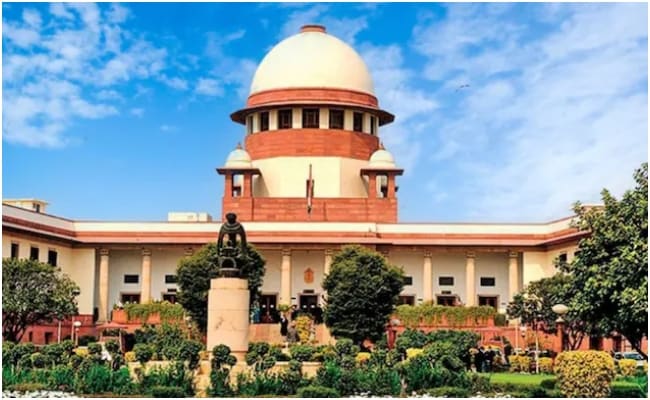
The Supreme Court of India has made significant observations regarding the degradation of marriage into a commercial transaction due to dowry demands while canceling the bail of a man accused of poisoning his wife.
In New Delhi, a bench comprising Justices B V Nagarathna and R Mahadevan emphasized that dowry death represents not merely an offense against an individual but constitutes a crime against society at large.
The justices stated, "Marriage, in its true essence, is a sacred and noble institution founded on mutual trust, companionship and respect. However, in recent times, this pious bond has regrettably been reduced to a mere commercial transaction. The evil of dowry, though often disguised as gifts or voluntary offerings, has in reality become a means to display social status and to satisfy material greed."
These observations emerged during the cancellation of bail for a man accused of poisoning his wife for dowry just four months after their marriage.
The Supreme Court determined that the high court's decision to grant bail was "perverse and unsustainable" as it disregarded the seriousness of the offense, corroborated dying declarations, and the statutory presumption of dowry death.
The bench further emphasized that the "social evil of dowry" not only undermines the sanctity of marriage but also perpetuates systemic oppression of women.
"When such demands exceed reasonable bounds and result in cruelty—or worse, in the untimely death of a young bride—the offense transcends the private family sphere and becomes a grave social crime. It ceases to be merely a personal tragedy and becomes an affront to society's collective conscience," the justices observed.
The court highlighted that dowry deaths represent one of the most abhorrent manifestations of this social problem, where young women lose their lives in their matrimonial homes solely to satisfy others' greed.
Such offenses, according to the court, violate the constitutional guarantees of equality and dignity under Articles 14 and 21, erode community moral values, normalize violence against women, and undermine the foundations of civil society.
The justices emphasized that "judicial passivity or misplaced leniency" would only embolden perpetrators and undermine public confidence in justice administration. They called for a firm deterrent response not only for the present case but also to send a clear message that society will not tolerate dowry-related atrocities.
The Supreme Court pointed to the alarming increase in dowry-death cases, necessitating strict judicial scrutiny, adding that allowing the accused to remain free would undermine the deterrent purpose of sections 304B and 498A of the Indian Penal Code.
Source: https://www.ndtv.com/india-news/marriage-reduced-to-commercial-transaction-due-to-evil-of-dowry-top-court-9718519