
India's AI-Powered Predictive Surveillance System: Revolutionizing Pandemic Preparedness and Disease Control
- Date & Time:
- |
- Views: 65
- |
- From: India News Bull
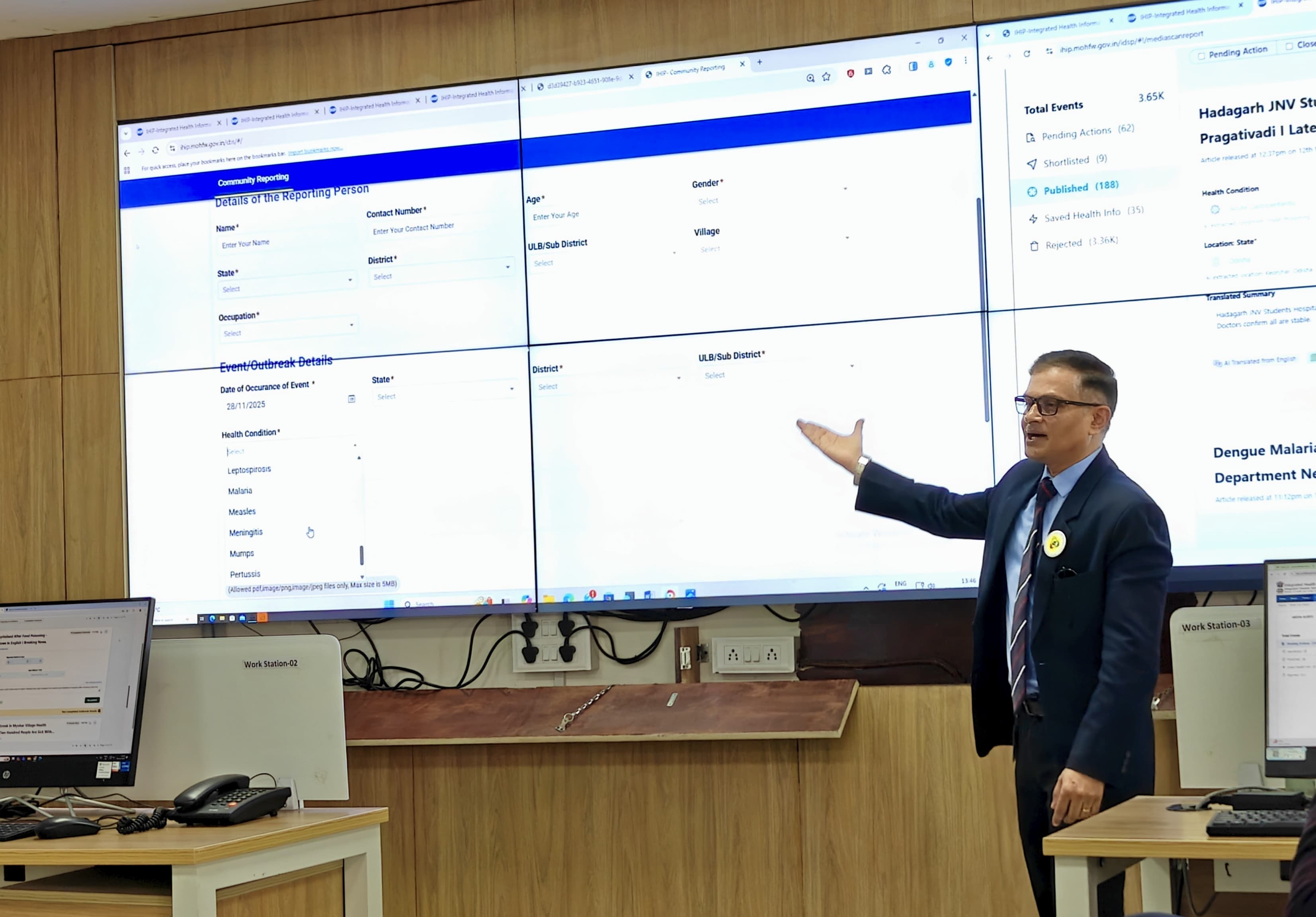
India is transitioning from traditional disease tracking methods to an advanced predictive surveillance system powered by Artificial Intelligence, real-time analytics, and digital intelligence tools.
Officials indicate this shift will enable the detection of early warning signs before outbreaks occur, significantly enhancing response times, decision-making processes, and containment strategies as part of India's comprehensive pandemic preparedness plan.
A central feature of this initiative, the Media Scanning and Verification Cell (MSVC), employs AI technology to analyze millions of news reports daily across 13 languages.
This system extracts critical information about disease type, location, and scale. Since 2022, it has processed more than 300 million articles and identified over 95,000 unique health events—representing a nearly 150 percent improvement over manual tracking while reducing surveillance teams' workload by 98 percent.
Dr. Himanshu Chauhan, Additional Director at the National Centre for Disease Control (NCDC) and head of the Integrated Disease Surveillance Programme (IDSP), explained that this evolution builds upon the proven effectiveness of AI-enabled event detection systems already deployed on the Integrated Health Information Platform (IHIP).
At the core of this capability is the "Health Sentinel," described by NCDC officials as a "digital watchdog" that identifies unusual increases in infections such as dengue and chikungunya. Experts review these alerts before field verification occurs. The forthcoming predictive framework will expand on this technology to forecast disease patterns and initiate interventions even before initial cases are detected.
Dr. Chauhan noted that the newly operational Metropolitan Surveillance Units (MSUs) under the PM-Ayushman Bharat Health Infrastructure Mission (PM-ABHIM) are already demonstrating their effectiveness. He referenced a recent incident involving suspected pediatric Acute Encephalitis Syndrome (AES) cases in Chhindwara, Madhya Pradesh, where MSU Nagpur provided an early warning. This facilitated rapid coordination between state authorities and the Central Surveillance Unit. The National Joint Outbreak Response Team (NJORT), with support from ICMR, NIE, and CDSCO, was immediately deployed to conduct on-site assessments.
According to NCDC Director, Prof (Dr) Ranjan Das, the AES incident demonstrates how India's surveillance network is evolving to quickly identify unusual clinical patterns, even in complex urban environments. "It highlights the collaborative surveillance model that IDSP and NCDC are strengthening," he stated.
Experts indicate the new predictive system will integrate AI-based event monitoring with laboratory data, climate trends, mobility patterns, and digital diagnostics. This enhanced network is expected to help authorities:
Detect early warning signals before symptoms appear - Mobilize emergency teams and resources swiftly - Improve district-level risk management - Prevent large outbreaks using advanced forecasting
Dr. Das emphasized that this upgraded approach aligns with the government's vision of establishing a future-ready public health system capable of addressing infectious diseases, climate-driven risks, and emerging health threats.
As India accelerates its transition toward predictive intelligence, officials believe the integration of AI-driven monitoring with rapid response mechanisms could substantially strengthen national health security. "The shift from reactive to anticipatory surveillance is now underway--data-driven, intelligent and predictive," Dr. Das concluded.
Source: https://www.ndtv.com/india-news/india-plans-ai-driven-predictive-surveillance-for-pandemic-preparedness-9718159