
Researchers Discover 13 New Amphibian Species in Northeast India: Groundbreaking Biodiversity Study
- Date & Time:
- |
- Views: 50
- |
- From: India News Bull
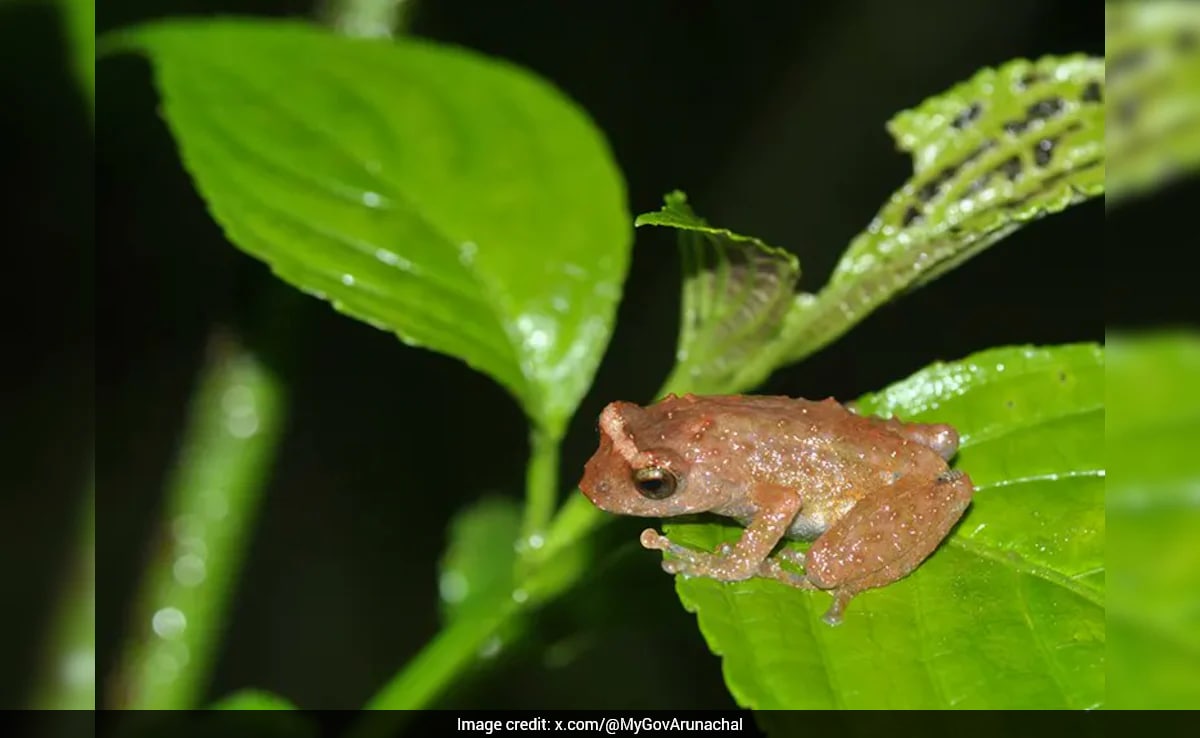
A comprehensive taxonomic study spanning multiple years has led to the discovery of 13 new amphibian species in Northeast India, according to researchers at the Wildlife Institute of India (WII).
The geographical distribution of these newly identified species is quite diverse: six were discovered in Arunachal Pradesh, three in Meghalaya, and individual species in Assam, Mizoram, Nagaland, and Manipur.
This extensive research was conducted between 2019 and 2024 with funding support from the National Geographic Society and the Meghalaya Biodiversity Board.
The newly discovered amphibians belong to the genus Raorchestes and include species such as R. lawngtalaiensis found in Mizoram, R. barakensis in Assam, R. narpuhensis and R. boulengeri in Meghalaya, R. monolithus in Manipur, R. khonoma in Nagaland, and several others from Arunachal Pradesh including R. eaglenestensis, R. magnus, and R. nasuta.
According to an announcement from the Arunachal Pradesh government, these 13 new bush frog species were identified across various locations including Namdapha, Eaglenest, and Mehao, highlighting the incredible biodiversity present in Northeast India's wilderness.
This groundbreaking research was led by Bitupan Boruah, a PhD scholar at WII, in collaboration with herpetologist Dr. Abhijit Das from WII and Dr. Deepak Veerappan from both the Natural History Museum in London and Newcastle University in the UK.
The study represents a significant advancement in documenting the previously unknown biodiversity of Northeast India, a region that forms part of two global biodiversity hotspots.
The researchers employed multiple scientific methods including acoustics, genetics, and morphology to identify and classify these new species.
As part of their comprehensive approach, the team also examined century-old museum specimens from the India-Burma region preserved in international natural history institutions, which helped resolve long-standing classification uncertainties.
The research involved sampling across 81 different locations spanning eight states, including 25 protected areas. In addition to discovering new species, the scientists revised existing species distributions and consolidated four previously described species. With these latest findings, the number of known bush frog species in India has increased significantly from 82 to 95.
The study was published in the latest volume of the journal Vertebrate Zoology and addresses long-standing taxonomic questions about the tiny "tik-tik" bush frogs native to the region. This research opens new pathways for understanding the conservation status and ecological roles of these amphibians.
Source: https://www.ndtv.com/india-news/scientists-discover-13-new-amphibian-species-in-northeast-india-9715295