
5.3 Magnitude Earthquake Hits Indian Ocean: Third Seismic Event in One Day Raises Concerns
- Date & Time:
- |
- Views: 53
- |
- From: India News Bull
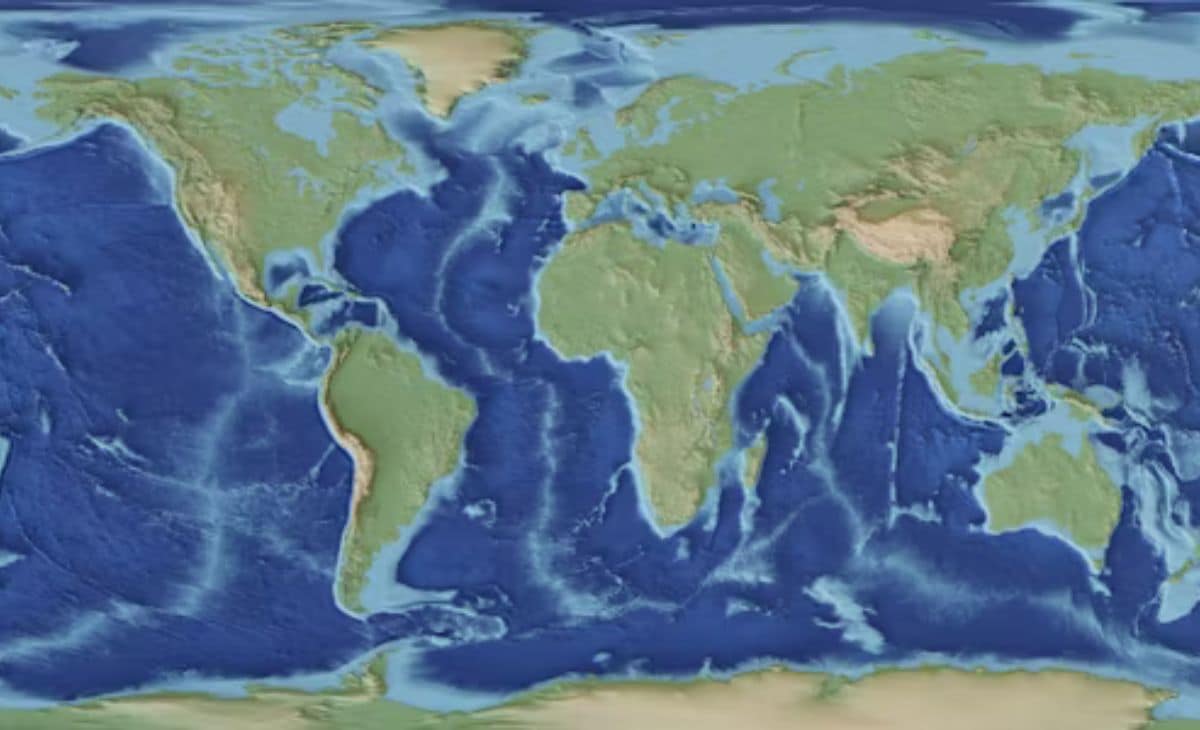
Shallow earthquakes are generally more dangerous than deep earthquakes. (Representative)
An earthquake measuring 5.3 magnitude struck the Indian Ocean on Thursday, as reported by the National Centre for Seismology (NCS).
The seismic event occurred at a shallow depth of only 10km, which increases the potential for aftershocks in the region.
The NCS shared information on social media platform X, stating: "EQ of M: 5.3, On: 27/11/2025 11:02:45 IST, Lat: 1.30 N, Long: 96.87 E, Depth: 10 Km, Location: Indian Ocean."
This marks the third earthquake to hit the Indian Ocean on the same day. Earlier, a more powerful tremor of 6.4 magnitude was recorded in the same region, also at a depth of 10km.
The NCS documented this earlier event on X: "EQ of M: 6.4, On: 27/11/2025 10:26:25 IST, Lat: 2.99 N, Long: 96.23 E, Depth: 10 Km, Location: Indian Ocean."
Prior to these two events, the region had already experienced a 4.8 magnitude earthquake at the same 10km depth.
The NCS reported: "EQ of M: 4.8, On: 27/11/2025 01:24:24 IST, Lat: 0.76 N, Long: 96.95 E, Depth: 10 Km, Location: Indian Ocean."
Experts note that shallow earthquakes typically pose greater danger than deeper ones because seismic waves travel shorter distances to reach the surface, resulting in stronger ground shaking, potentially causing more structural damage and higher casualty rates.
The Indian Ocean region has a history of devastating seismic events. Most notably, on December 26, 2004, a massive 9.2-9.3 magnitude earthquake struck off the coast of Aceh in northern Sumatra, Indonesia. This undersea megathrust earthquake, known as the Sumatra-Andaman earthquake, triggered the catastrophic Boxing Day Tsunami.
The 2004 tsunami produced waves reaching heights of up to 30 meters (100 feet), causing widespread devastation across 14 countries bordering the Indian Ocean. The disaster claimed approximately 227,898 lives, with Indonesia's Aceh province, Sri Lanka, India's Tamil Nadu, and Thailand's Khao Lak suffering the heaviest casualties.
The catastrophe caused severe disruption to living conditions and economic activity throughout coastal communities in the affected regions. It remains the deadliest tsunami in recorded history, the worst natural disaster of the 21st century, and one of the most devastating natural calamities ever documented.
Source: https://www.ndtv.com/india-news/earthquake-of-magnitude-5-3-strikes-indian-ocean-third-in-same-day-9712233