
Supreme Court Questions Whether Aadhaar Holders Should Automatically Receive Voting Rights
- Date & Time:
- |
- Views: 64
- |
- From: India News Bull
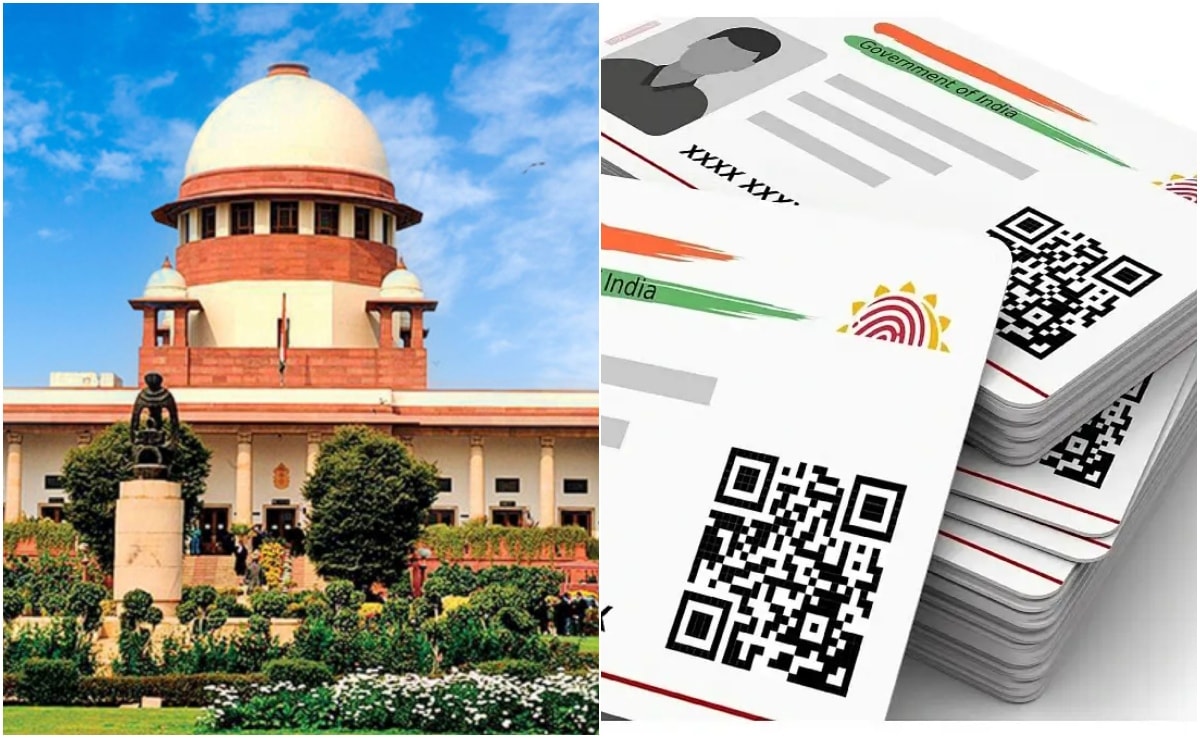
Supreme Court has reaffirmed that Aadhaar documentation does not constitute proof of citizenship status.
The Supreme Court expressed significant concerns regarding non-citizens who have obtained Aadhaar cards, questioning whether such individuals should subsequently be granted voting privileges. The court clarified that Aadhaar's primary purpose is ensuring equitable distribution of social welfare benefits, and possession of this document should not automatically entitle one to electoral rights.
A bench headed by Chief Justice of India Surya Kant alongside Justice Surya Kant is currently examining petitions that challenge the Election Commission's decision to implement Special Intensive Revision (SIR) of voter rolls across several states.
The judicial bench emphasized that an Aadhaar card does not "confer absolute proof of citizenship" and stated, "That is why we said it will be one of the documents on the list of documents. If anyone is deleted, they will have to be given a notice of deletion."
The Aadhaar Act explicitly states that it does not establish citizenship or domicile status.
The Chief Justice remarked, "Aadhaar is a creation of statute for availing benefits. Just because a person was granted Aadhaar for ration, should he be made a voter also? Suppose someone belongs to a neighbouring country and works as a labourer."
Additionally, the court asserted that the Election Commission possesses the jurisdiction to verify the authenticity of documentation submitted with Form 6 applications for voter list inclusion. The court emphasized that the electoral body is not merely a "post office."
The Supreme Court established a schedule to hear petitions specifically contesting SIR implementation in Tamil Nadu, Kerala, and West Bengal. The bench has directed the Election Commission to submit responses by December 1, after which petitioners may file rejoinders before the matters are promptly addressed.
Previously, Senior Advocate Kapil Sibal, representing certain petitioners, argued that the SIR process raises fundamental concerns regarding democratic participation. He maintained that it imposes an unconstitutional burden particularly on illiterate voters. "Filling up the forms is not the responsibility of the elector. So many are illiterate and do not know how to read and write. If they cannot fill forms, they will be ousted (from electoral rolls)," Sibal stated, urging the court to prioritize constitutional protections over procedural justifications.
Sibal contended that once a voter is included in electoral rolls, validity should be presumed unless the state proves otherwise. "Any exclusion must follow a process which is reasonable and fair."
He further argued that while Aadhaar may not conclusively establish citizenship, it creates a presumption favoring the holder. "There is a presumption in my favour. I have an Aadhaar. That is my residence. You want to take it away... take it away by a process and let the process be proven before this court," he asserted.
Justice Bagchi, however, emphasized the necessity of removing deceased voters from lists, noting that electoral rolls are publicly displayed in panchayats and on official websites. "We do not judge in a vacuum," the justice remarked. The hearing is scheduled to continue today.
Source: https://www.ndtv.com/india-news/supreme-court-sir-should-intruders-with-aadhaar-be-made-voter-top-courts-big-question-9708352