
Pakistan's State-Sponsored Terrorism Against India Since 1947: NatStrat's Comprehensive Report Documents Decades of Cross-Border Terror
- Date & Time:
- |
- Views: 43
- |
- From: India News Bull
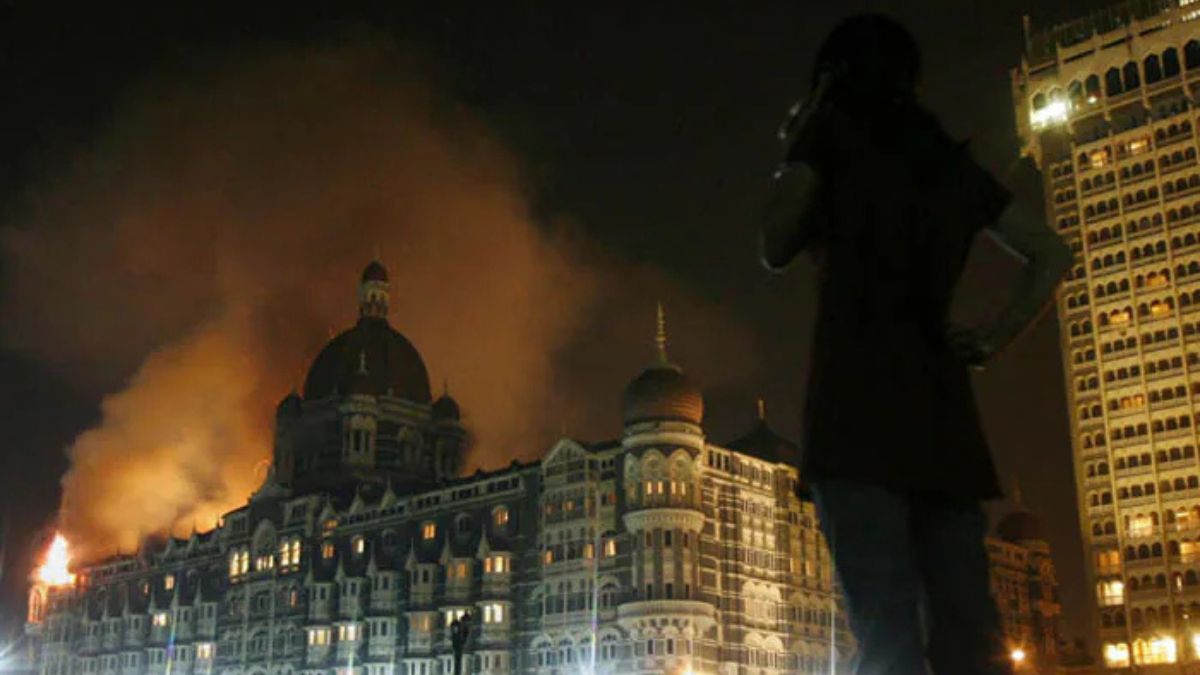
NatStrat's comprehensive timeline demonstrates that the 26/11 Mumbai attacks were part of Pakistan's long-established pattern of terrorism against India.
New Delhi:
As India commemorates the 17th anniversary of the devastating 26/11 Mumbai terror attacks, NatStrat, an independent strategic and security research center, has published an extensive historical record documenting Pakistan-sponsored terrorism against India since partition in 1947. Their report, "Chronology of Pakistani Terror Attacks on India (1947-2025)," covers eight decades of cross-border terrorism, proxy warfare, and covert aggression, revealing what the authors describe as Pakistan's "consistent strategic behaviour" toward India.
In an interview with NDTV before the anniversary, Ambassador Pankaj Saran, former Deputy National Security Advisor of India and Convenor of NatStrat, explained the motivation behind this significant documentation project:
"When we in NatStrat started work on analysing the sources of terrorism in India, we realised we were looking at a pattern of Pakistani behaviour that has been consistent since 1947 - one designed to hurt and harm India through non-military means based on deniability and subterfuge."
Ambassador Saran emphasized that current generations "should not forget this history," which began with the tribal invasion of Kashmir in October 1947 and continues through contemporary hybrid warfare tactics. He described the study as "a tribute to the memory of those who lost their lives and loved ones" and a testament to India's resilience.
The report establishes that Pakistan adopted terrorism as state policy immediately following its creation. The first major attack on India—the 1947 tribal invasion of Jammu and Kashmir—was not a spontaneous uprising but a Pakistani military-orchestrated operation, planned by officers including Major General Akbar Khan, who later documented the conspiracy in his book "Raiders in Kashmir." This invasion initiated Pakistan's strategy of employing irregular forces and proxies while maintaining plausible deniability.
Over subsequent decades, Pakistan's ISI expanded this approach into an extensive network of terrorist organizations, training facilities, and radicalization pipelines across Pakistan and Pakistan-occupied Kashmir. The report meticulously documents Pakistan's direct involvement in:
Khalistani militancy during the 1980s, with ISI-operated training camps in Lahore and Karachi, weapons supply chains, and infiltration networks.
The Kashmir insurgency after 1989, fueled by Afghan war veterans and groups including Lashkar-e-Taiba (LeT), Hizbul Mujahideen, and later Jaish-e-Mohammad (JeM).
Major terrorist attacks throughout India, including the 1993 Mumbai bombings, 2001 Parliament attack, 2006 Mumbai train bombings, 2008 Indian Embassy bombing in Kabul, culminating in the 26/11 Mumbai attacks.
Recent incidents including Pathankot (2016), Uri (2016), Pulwama (2019), and the 2025 Pahalgam terror attack, all traced to ISI-supported organizations.
Internationally, many of these groups—including LeT's Hafiz Saeed and JeM's Masood Azhar—are designated under UN Security Council resolutions. Pakistan was also placed on the Financial Action Task Force (FATF) grey list for terror financing, reinforcing its global reputation as the "mothership of terrorism," a term famously used by India's External Affairs Minister in 2016.
The Mumbai attacks of November 26, 2008, remain the most egregious example of Pakistan's deep connections with UN-designated terrorist groups. Ten LeT operatives were trained, equipped, and guided in real time from Pakistan by handlers linked to the ISI. Their assault on India's financial capital killed 166 people, including foreign nationals, and revealed the sophistication of Pakistan's proxy infrastructure.
NatStrat's timeline demonstrates that 26/11 was not an isolated incident but part of a continuous pattern—from the 1999 IC-814 hijacking orchestrated by Pakistan-based Harkat-ul-Mujahideen, to the Parliament attack in 2001 carried out by LeT and JeM, to the Pulwama suicide bombing in 2019, for which Jaish claimed responsibility.
The report concludes that Pakistan's Army and ISI have, for decades, maintained control over jihadist organizations as instruments of state policy. Civilian leadership is routinely excluded from these operations. Multiple incidents, including the Kargil War—planned by a small group of generals without political approval—illustrate how militant and military strategies are intertwined at the highest levels of Pakistan's security establishment.
From providing weapons and safe havens to facilitating global fundraising, Pakistan's military establishment continues to function, as the report emphasizes, as an architect of transnational terror networks.
Despite the enormous human cost—tens of thousands of civilians and security personnel over 78 years—India has consistently strengthened its intelligence capabilities, diplomatic initiatives, and military preparedness.
The report highlights that India has exposed Pakistan's terrorist connections at the UN and other international forums, conducted cross-border operations against terrorist infrastructure, and implemented domestic security reforms to enhance counterterrorism capabilities.
Ambassador Saran asserts that this chronicle represents "a reminder of the strength and resilience of India that has withstood the continuous onslaught on its social and political fabric."
NatStrat's document serves not merely as a historical account but as a warning that Pakistan's proxy warfare doctrine remains active. As India remembers the victims of the Mumbai 26/11 attacks, the report stands as a valuable resource for scholars, policymakers, and citizens—a record of India's enduring struggle and a reminder that the fight against cross-border terrorism continues.
Source: https://www.ndtv.com/india-news/26-11-pakistan-using-terrorism-as-state-policy-against-india-since-1947-report-9705535