
The Legacy of Macaulay's Education Policy: India's 200-Year Struggle to Reclaim Cultural Identity
- Date & Time:
- |
- Views: 73
- |
- From: India News Bull
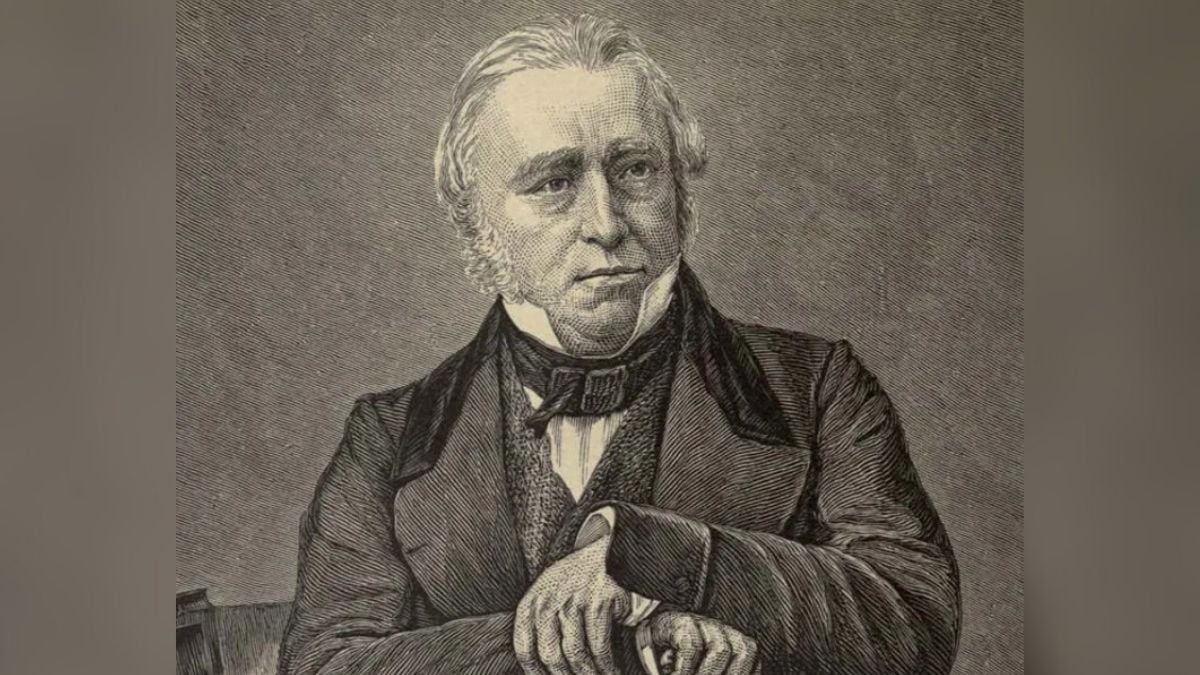
In 1835, Thomas Babington Macaulay introduced English language into India's education system, fundamentally altering the nation's cultural trajectory.
New Delhi:
Prime Minister Narendra Modi recently highlighted that in just a decade, India will mark 200 years since British historian and politician Thomas Babington Macaulay initiated what he described as a colonial campaign to undermine India's cultural foundations.
Speaking at the sixth Ramnath Goenka Lecture in Delhi, PM Modi emphasized that this current decade represents a critical period for Indians to reverse the damage inflicted by Macaulay's educational policies before 2035, which will mark two centuries since the imposition of English language education in India.
PM Modi pointed out that countries such as Japan, China, and South Korea successfully adopted Western practices while preserving their native languages. He explained this reasoning underlies why India's new National Education Policy particularly emphasizes education delivered in local languages.
The Prime Minister clarified that his government does not oppose English language instruction but strongly advocates for Indian languages to hold their rightful place in education.
Let's examine the historical context behind PM Modi's appeal to Indian citizens.
In 1835, Macaulay made the significant decision to mandate English language instruction in India's educational system while introducing Western scientific concepts and literature studies.
During this colonial period, British authorities viewed India's indigenous education system as inferior to their Western educational model practiced in Britain.
Macaulay's strategic objective was to cultivate a new demographic of Indians raised on Western education and the English language—essentially creating an English-speaking elite class within Indian society.
This colonial policy shift that favored Western education and promised social advancement ultimately led to diminishing support for India's traditional educational systems and local languages.
Historical accounts indicate Macaulay believed that establishing a class of English-speaking Indians familiar with Western thought would serve as intermediaries between British colonial authorities and the general population.
His statement in "Minute on Indian Education" published in 1835 became controversial, though sometimes misrepresented in contemporary social media. The complete and nuanced quote from "Macaulay's Minute on Education, February 2, 1835" reads:
"All parties seem to be agreed on one point, that the dialects commonly spoken among the natives of this part of India contain neither literary nor scientific information, and are moreover so poor and rude that, until they are enriched from some other quarter, it will not be easy to translate any valuable work into them. It seems to be admitted on all sides, that the intellectual improvement of those classes of the people who have the means of pursuing higher studies can at present be affected only by means of some language not vernacular amongst them.
"What then shall that language be? One-half of the committee maintain that it should be the English. The other half strongly recommend the Arabic and Sanscrit [sic]. The whole question seems to me to be - which language is the best worth knowing?
"I have no knowledge of either Sanscrit [sic] or Arabic. But I have done what I could to form a correct estimate of their value. I have read translations of the most celebrated Arabic and Sanscrit [sic] works. I have conversed, both here and at home, with men distinguished by their proficiency in the Eastern tongues. I am quite ready to take the oriental learning at the valuation of the orientalists themselves. I have never found one among them who could deny that a single shelf of a good European library was worth the whole native literature of India and Arabia. The intrinsic superiority of the Western literature is indeed fully admitted by those members of the committee who support the oriental plan of education..."
The immediate consequence of Macaulay's implementation of Western educational systems and English language instruction was a rapid decline in interest in traditional Indian educational approaches.
The deeper cultural and long-term damage included social division and instilling doubts regarding the value of Indian knowledge systems.
The cumulative effect of Macaulay's policies, established nearly two centuries ago, created what PM Modi described as "psychological slavery" that must be permanently eliminated.
"Another important thing is complete freedom from the slave mentality. 190 years ago, in 1835, an Englishman named Macaulay sowed the seeds of uprooting India from its roots. Macaulay laid the foundation of slavery in India. Ten years later, in 2035, that unholy event will complete 200 years. For the next 10 years, we have to move ahead with the goal of freeing India from the mentality of slavery," PM Modi stated.
Source: https://www.ndtv.com/india-news/pm-narendra-modi-spoke-of-macaulay-mindset-british-politician-india-impact-decoded-9697755