
India's Economy Shows Resilient 7.3% Growth in Q2 Despite Uneven Development Patterns
- Date & Time:
- |
- Views: 52
- |
- From: India News Bull
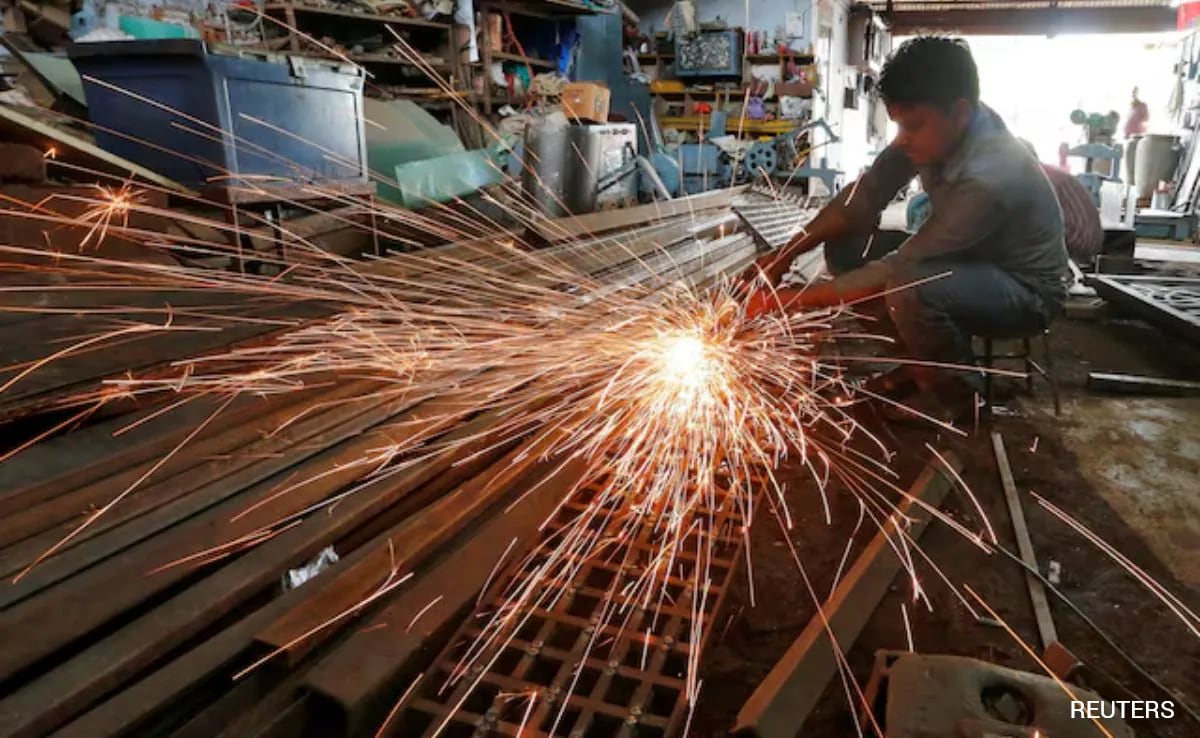
Wholesale price inflation remained negligible while consumer inflation averaged around 2% during the period. (File)
India's economy is projected to have expanded by 7.3% in the July-September quarter, according to a recent Reuters survey of economists. This growth was primarily supported by robust rural spending and government expenditure, although private capital investment continued to show weakness.
Household consumption, which represents approximately 60% of India's economy, strengthened during the previous quarter due to improved rural spending driven by better agricultural production. However, urban demand and private investment lagged behind, indicating uneven growth patterns across India's economy, the third-largest in Asia.
Government spending, which has been a significant growth driver in recent years, likely maintained its momentum in the second quarter of this fiscal year.
Despite U.S. President Donald Trump increasing tariffs on Indian goods to 50% in August—a move that has contributed to foreign investors withdrawing a net $16 billion from Indian equities this year—India continues to be one of the world's fastest-growing major economies.
Many economists point out that the deflator used to eliminate inflation effects and reveal "real" economic growth was likely very low, potentially making India's economic performance appear stronger than its actual condition.
According to the median forecast from a Reuters poll of 61 economists conducted between November 18-24, Indian gross domestic product (GDP) grew by 7.3% year-on-year in the July-September period, down from 7.8% in the previous quarter. Forecasts ranged between 6.0% and 8.5%.
Kaushik Das, India chief economist at Deutsche Bank, noted: "Regarding growth drivers, private consumption and central government capital expenditure will remain key supports, while private sector capital investment will likely grow more slowly due to persistent global uncertainty."
The official data is scheduled for release on Friday, November 28 at 1030 GMT.
For the medium-term outlook, economists are more cautious, forecasting GDP growth to decelerate to 6.8% in the current quarter and further to 6.3% in the quarter ending March 2026.
Several economists mentioned that a low deflator—which decreases when inflation cools—artificially enhanced the latest data, similar to its effect in the previous quarter.
Deutsche Bank's Das explained: "GDP will benefit from a lower base and an exceptionally low deflator, artificially inflating real GDP growth... However, nominal GDP growth will likely remain weak."
Between July and September, wholesale price inflation was negligible, and consumer inflation averaged around 2%. Since then, inflation has fallen to less than 0.5%.
Rajni Thakur, chief economist at L&T Finance, stated: "Inflation projections for the remainder of the year also remain soft. This deflator support—which is statistically impacting real GDP numbers—is unlikely to dissipate until the end of this fiscal year."
Economic activity measured by gross value added (GVA) was estimated to have grown by 7.15%. Nominal GDP growth, which is not adjusted for price changes, likely slowed to 8.3% last quarter from 8.8% previously, according to the poll predictions based on a smaller sample of forecasters.
Recent reductions in consumption tax, part of a major reform of the national goods and services tax (GST) system implemented from September 22, are expected to provide some support to consumer demand in upcoming quarters.
However, Dhiraj Nim, economist at ANZ, cautioned: "Unfortunately, GST cuts have been introduced at a time when Indian households are already heavily indebted. This reduces the disposable income they might otherwise have saved from the tax reductions."
Source: https://www.ndtv.com/business-news/indian-economy-likely-grew-by-7-3-in-july-september-quarter-report-9694501