
India and Japan Collaborate on Revolutionary Thirty Metre Telescope to Search for Extraterrestrial Life
- Date & Time:
- |
- Views: 46
- |
- From: India News Bull
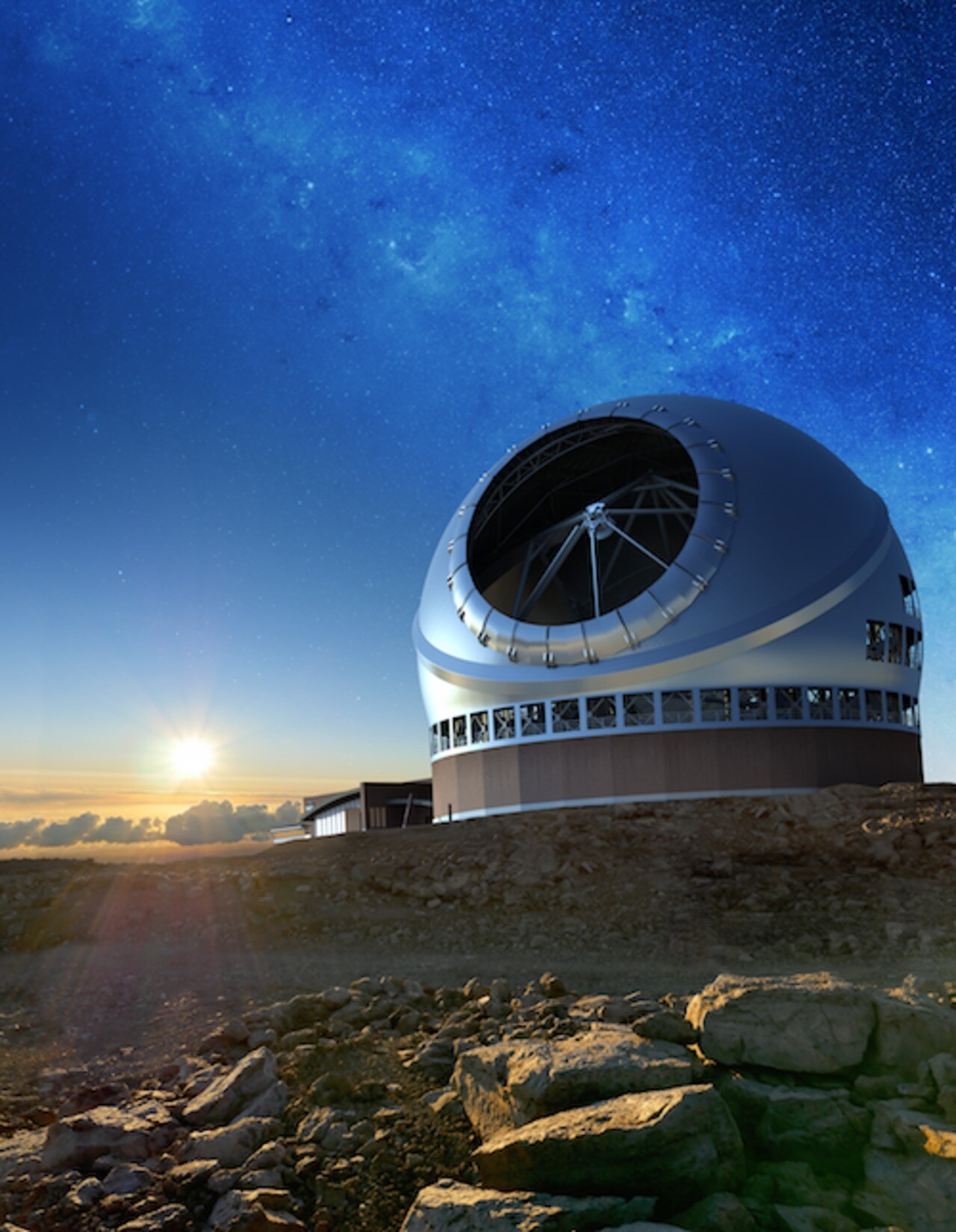
TMT's 30-metre mirror will dwarf existing telescopes (Representational Image)
India and Japan have established a groundbreaking partnership to construct one of astronomy's most ambitious instruments - the Thirty Metre Telescope (TMT). This sophisticated optical-infrared telescope, featuring an enormous 30-metre primary mirror, is designed to transform our cosmic understanding and potentially address humanity's age-old question: Are we alone in the universe?
The TMT initiative represents an international collaboration including India, Japan, and two prominent American universities. Its fundamental purpose is to observe deeper into space than previously possible, examining black holes, far-off galaxies, and most intriguingly, searching for extraterrestrial life signatures.
Dr. Saku Tsuneta, Vice Chair of the Committee on National Space Policy at Japan's Cabinet Office in Tokyo, explained: "Astronomers require larger mirrors to collect more light from distant cosmic objects. The mirror's size directly correlates with the ability to discover extremely remote celestial bodies."
The telescope's massive 30-metre mirror will significantly surpass current telescopes in capability, providing unprecedented observational clarity and depth. Unlike conventional telescopes utilizing single large mirrors, the TMT will incorporate 500 precisely aligned smaller mirrors forming its primary reflective surface. This engineering achievement demands cutting-edge technology—where India makes substantial contributions.
"Rather than constructing one massive mirror, we're integrating 500 smaller mirrors to create a 30-metre primary mirror," Dr. Tsuneta noted. "Each mirror's position and orientation requires precise adjustment—accomplished through Indian technological expertise."
India's contribution centers on developing sophisticated opto-mechanical systems ensuring perfect mirror alignment, crucial for the telescope's operational success. This collaboration highlights India's increasing prominence in global scientific and technological partnerships.
As a founding member of this initiative, India received Union Cabinet approval for participation in 2014. The country's involvement encompasses three prestigious institutions: the Indian Institute of Astrophysics (IIA) in Bengaluru, the Inter-University Center for Astronomy and Astrophysics (IUCAA) in Pune, and the Aryabhatta Research Institute for Observational Sciences (ARIES) in Nainital.
Mauna Kea in Hawaii, at 4,000 metres elevation, has been selected as the TMT construction site due to its exceptional atmospheric clarity and minimal interference. Japan already operates an 8.2-metre telescope at this location, which has yielded revolutionary observations for over two decades.
"Our designated construction location is Mauna Kea in Hawaii," confirmed Dr. Tsuneta. "This represents one of astronomy's premier observation sites."
The project faces certain challenges, however. Native Hawaiian communities consider Mauna Kea sacred, resulting in construction protests. Ongoing negotiations seek to address cultural concerns and obtain proper consent.
"We are unwilling to proceed without permission from local communities," Dr. Tsuneta emphasized. "This remains an ongoing process."
Alternative locations have been considered, including Hanle in Ladakh, India, which already hosts high-altitude observational facilities. While no final decision has been reached, this possibility reflects India's expanding role in international astronomy.
The telescope's scientific agenda encompasses diverse objectives, including studying black holes, mapping distant galaxies, and investigating the early universe. However, its most compelling mission involves searching for extraterrestrial life.
"A primary objective involves identifying life on planets beyond Earth," stated Dr. Tsuneta. "Astronomers believe other life forms likely exist elsewhere in the universe. This telescope will detect signatures of life in planetary systems orbiting stars other than our Sun."
The TMT will analyze exoplanets—planets circling stars outside our solar system—for chemical indicators of life, such as water vapor or organic compounds.
The telescope is projected to become operational by the mid-2030s. Technological development progresses satisfactorily, particularly due to India's precision engineering contributions.
"From a technological standpoint, thanks to Indian contributions, progress remains positive," noted Dr. Tsuneta.
The implications of TMT's future discoveries could be profound. Detecting extraterrestrial life would represent one of science's greatest achievements, potentially warranting global recognition.
"Such a discovery would merit Nobel Prize consideration," remarked Pallava Bagla during their conversation.
"I'm beyond that stage," Dr. Tsuneta responded humorously. "Younger researchers deserve such recognition. Certainly, the entire team should receive credit."
This collaboration builds upon established India-Japan cooperation in space science. The nations are jointly pursuing LUPEX, a lunar mission searching for water on the Moon. With TMT, they extend their partnership to seek life among distant stars.
India and Japan, longstanding partners, now collaborate on both lunar water detection through LUPEX and extraterrestrial life exploration via the Thirty Metre Telescope.
The TMT project transcends its identity as a scientific instrument—representing international collaboration, technological innovation, and humanity's persistent curiosity. As India and Japan unite to explore the cosmos, the possibility of discovering life beyond Earth grows increasingly tangible.
Source: https://www.ndtv.com/science/thirty-metre-telescope-india-japan-team-up-to-search-for-extraterrestrial-life-with-giant-telescope-9695319