
Ethiopian Volcanic Ash Cloud Over Delhi: Impact on Aviation and Air Quality Explained
- Date & Time:
- |
- Views: 66
- |
- From: India News Bull
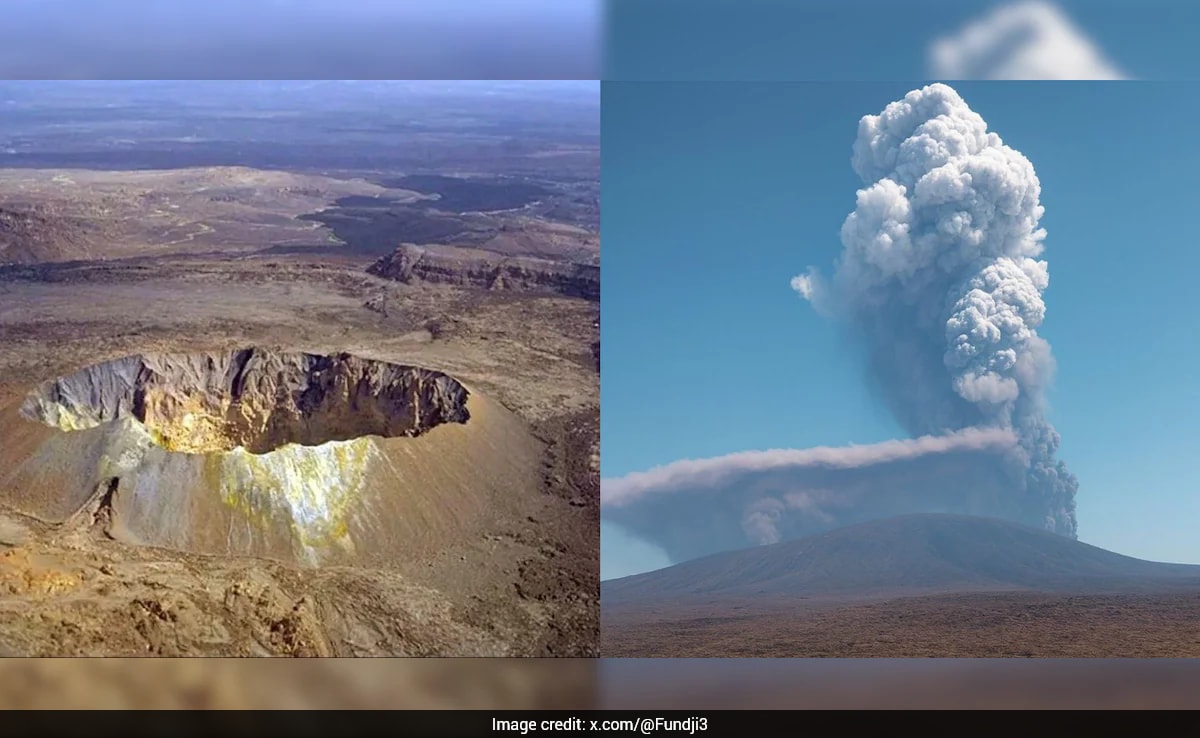
The Hayli Gubbi volcano in northern Ethiopia has erupted for the first time in recorded history, creating significant concerns across multiple regions.
New Delhi is now experiencing the effects of a high-altitude volcanic ash and fume mass that erupted from Ethiopia's Hayli Gubbi volcano on Sunday morning. This cloud is moving eastward at speeds reaching 120 km/hour, impacting flight operations in Delhi and consequently airports throughout India.
Located in Ethiopia's Afar region, this volcano erupted for the first time in nearly 12,000 years, releasing clouds of toxic gases, gravel, and fine ash. Satellites have tracked this plume across the Red Sea region and Arabian Peninsula, through Pakistan, and now into Indian airspace.
The ash cloud has formed a continuous belt stretching from the Oman-Arabian Sea sector into north and northwest India. While gradually thinning as it moves further from its source, concentrated pockets can still affect flight operations and create hazy conditions. Forecasts indicate the cloud should pass from India toward China by approximately 7:30 pm.
The ash cloud primarily contains pulverized rock and glass particles along with high concentrations of sulphur dioxide and varying amounts of gravel. Scientists indicate initial analysis shows lower ash concentration compared to Europe's 2010 experience with Iceland's Eyjafjallajokull volcano eruption.
Despite high sulphur levels at high altitudes potentially affecting aviation, the overall density of this cloud is lower than the 2010 Icelandic eruption. This has resulted in route adjustments and altitude warnings rather than complete regional shutdown of flight operations.
Regarding Delhi's air quality impact, experts confirm the volcanic plume is unlikely to affect ground-level conditions. While volcanic plumes can be fatal if inhaled, the cloud's high altitude (25,000-45,000 feet) means Delhi's already challenging air quality situation should remain largely unaffected. Any potential surface-level AQI changes are expected to be minimal.
The Hayli Gubbi volcano is situated in Ethiopia's tectonically active East African Rift. Its location north of the equator and west of the Arabian Peninsula positioned the eruption directly in subtropical westerly winds' path, which carried toxic materials across the Red Sea and toward India.
Preliminary analysis indicates the ash was initially ejected an astonishing 10-15 kilometers into the atmosphere before settling at a maximum ceiling of 45,000 feet. This near-stratospheric position allowed relatively fast west-to-east winds to disperse the cloud thousands of kilometers eastward, carrying it over Yemen, Oman, and Pakistan before entering India via Gujarat and Rajasthan.
For India, the primary risk involves aviation safety. The Directorate-General of Civil Aviation issued warnings Monday after recognizing the ash cloud's trajectory toward India. Consequently, numerous flights faced delays or cancellations, particularly those operating between India and Gulf region countries, as well as flights to neighboring Asian nations.
The DGCA advised airlines to avoid confirmed ash-affected areas and adjust planning, routing, and fuel considerations based on current advisories. Major carriers including Air India, IndiGo, and SpiceJet have experienced operational impacts.
While ground-level air quality effects remain negligible for most of India, independent weather experts note that high SO2 levels could potentially affect higher altitude regions such as Nepal, parts of the Himalayas, and the adjoining Terai belt of Uttar Pradesh.
Globally, the high SO2 concentration and fine particulate matter require monitoring for potential impacts on regional radiation, cloud microphysics, and future flight paths. While current disruptions primarily affect aviation, larger volcanic eruptions can theoretically influence climatic patterns including monsoon behaviors by injecting aerosols into the stratosphere.
These aerosols can partially block sunlight, cool the Earth's surface, and alter atmospheric circulation patterns, potentially affecting rainfall distribution in subsequent monsoon seasons. However, experts suggest this scenario remains unlikely given the current eruption's characteristics and altitude.
Source: https://www.ndtv.com/world-news/ethiopia-volcanic-eruption-live-updates-hayli-gubbi-news-5-key-points-about-volcanic-ash-cloud-from-ethiopian-volcano-eruption-9694956