
Historic Ethiopian Volcano Eruption Sends Ash Clouds to India: Global Impact of Hayli Gubbi After 12,000 Years of Dormancy
- Date & Time:
- |
- Views: 57
- |
- From: India News Bull
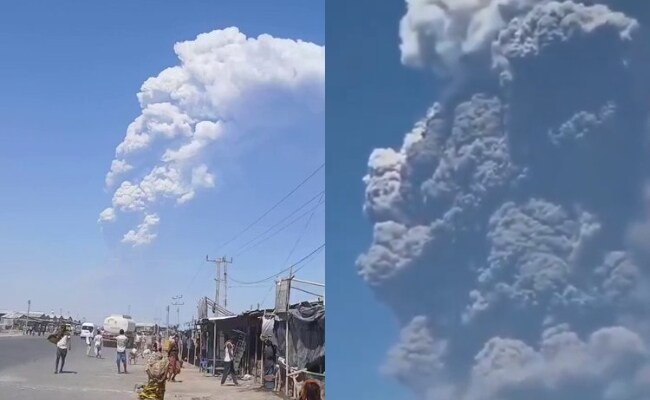
Hayli Gubbi volcano in northern Ethiopia erupted on Sunday for the first time in nearly 12,000 years, creating a significant atmospheric event that affected multiple countries.
Strong winds traveling at speeds of 100-120 km/h carried volcanic ash plumes across international borders, eventually reaching India and exacerbating air quality issues in Delhi, which was already struggling with toxic pollution levels.
The eruption occurred Sunday morning in Ethiopia's Afar region, with ash clouds entering Delhi's airspace late that night, disrupting flight operations throughout the region.
These massive ash plumes, suspended thousands of feet in the atmosphere, initially entered Indian territory through Gujarat before drifting toward Rajasthan, Delhi, Haryana, and Punjab.
According to the India Meteorological Department (IMD), these ash clouds continued moving toward China and were expected to clear from Indian skies by 7:30 pm.
"High-level winds carried the ash cloud from Ethiopia across the Red Sea to Yemen and Oman and further over the Arabian Sea towards western and northern India," explained the IMD in their official statement.
In response to this geological event, India's Directorate General of Civil Aviation (DGCA) issued an advisory instructing airlines to avoid areas affected by volcanic ash, adjust flight planning accordingly, and immediately report any suspected ash encounters, including engine anomalies or cabin smoke.
Several major airlines experienced significant disruptions. Air India canceled eleven flights to perform "precautionary checks" on aircraft that had flown through potentially affected areas following the volcanic eruption.
The canceled flights included routes from Newark to Delhi, New York to Delhi, Dubai to Hyderabad, Doha to Mumbai, Dubai to Chennai, Dammam to Mumbai, Doha to Delhi, Chennai to Mumbai, and Hyderabad to Delhi.
Air India released a statement on social media platform X: "We sincerely regret the inconvenience caused to passengers due to this unforeseen situation beyond our control. The safety of our passengers and crew remains our highest priority."
IndiGo also addressed passenger concerns, stating they were "fully prepared" with necessary precautions to maintain safe operations while closely monitoring the situation in coordination with international aviation authorities.
Weather experts noted that the ash plume primarily consisted of sulfur dioxide with low to moderate concentrations of volcanic ash, stating: "It will not impact AQI (air quality index) levels, but it will impact SO2 levels in the hills of Nepal, the Himalayas and the adjoining Terai belt of Uttar Pradesh, as some of the material will bump into the hills and later move into China."
The Hayli Gubbi volcano, which rises approximately 500 meters in altitude, is located within the Rift Valley, an area of intense geological activity where two tectonic plates converge.
The eruption sent thick plumes of smoke up to 14 kilometers into the sky, covering numerous villages in ash. Social media videos showed massive columns of white smoke rising from the volcano site.
Local residents reported dramatic experiences, with one telling the Associated Press: "It felt like a sudden bomb had been thrown with smoke and ash."
According to the Smithsonian Institution's Global Volcanism Program, Hayli Gubbi has had no known eruptions during the Holocene period, which began approximately 12,000 years ago following the conclusion of the last Ice Age.
Source: https://www.ndtv.com/world-news/hayli-gubbi-ethiopian-volcanic-ash-enters-delhi-amid-toxic-air-crisis-flights-affected-9694692