
Chief Justice Surya Kant Implements New Protocol: Written Requests Required for Urgent Case Listings in India's Supreme Court
- Date & Time:
- |
- Views: 45
- |
- From: India News Bull
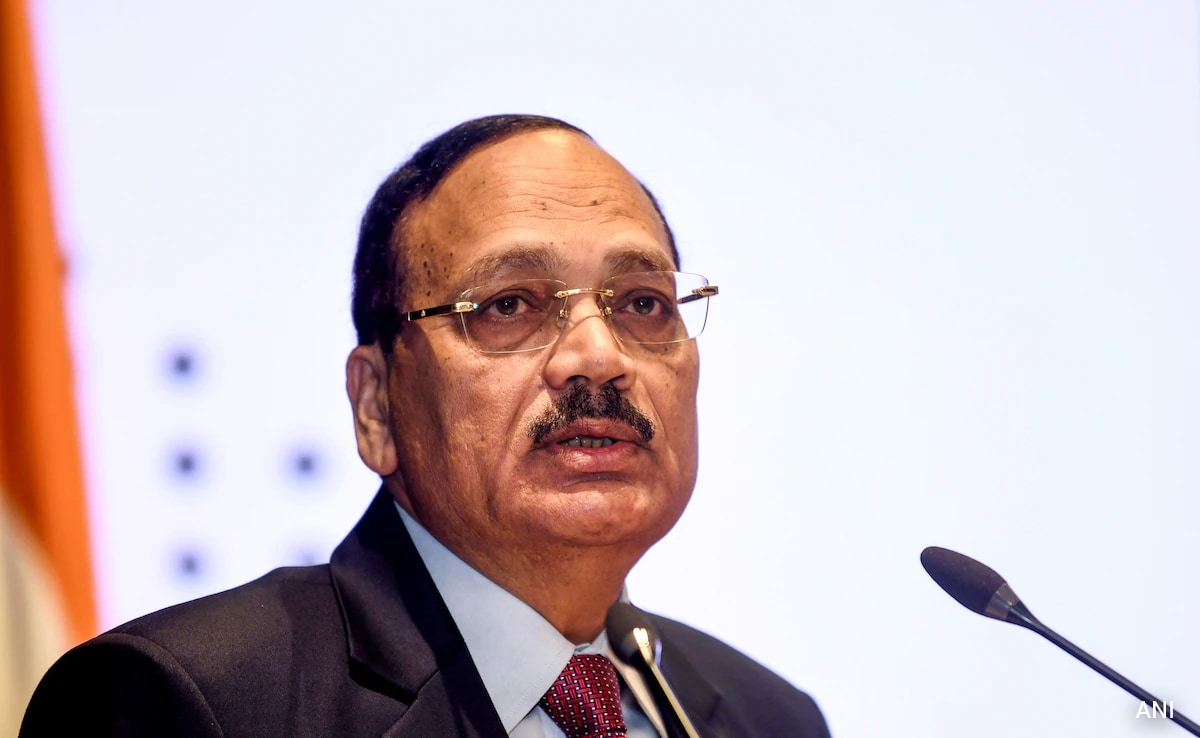
Traditionally, attorneys verbally present urgent cases to the Chief Justice of India for expedited scheduling before the courts. (File)
New Delhi:
Chief Justice of India Justice Surya Kant established a new procedural protocol on his inaugural day in office, mandating that requests for urgent case listings must be submitted in writing. Oral petitions will only be considered under "extraordinary circumstances," such as cases involving death penalties or matters concerning personal liberty.
During his first day as Chief Justice, Justice Kant's bench heard 17 cases in approximately two hours of proceedings.
Justice Kant officially became the 53rd Chief Justice of India after taking his oath in Hindi in the name of God at the Rashtrapati Bhavan.
Upon his first arrival at the Supreme Court as Chief Justice, he offered floral tributes at the statues of Mahatma Gandhi and Dr. B R Ambedkar within the court premises.
He subsequently presided over a three-judge bench that included Justices Joymalya Bagchi and Atul S Chandurkar in the historic courtroom number one.
When proceedings began around noon, the Chief Justice delivered a judgment regarding a petition filed by Himachal Pradesh against a private company.
Following this pronouncement, Supreme Court Advocates-on-Record Association (SCAORA) President Vipin Nair welcomed the new Chief Justice in the crowded courtroom.
A lawyer acknowledged him as "a farmer's son who has become the CJI," eliciting a brief smile. Justice Kant replied, "Thank you. I can see young lawyers from Chandigarh also." Moving to administrative matters, the new Chief Justice clarified that except for "extraordinary" situations, requests for urgent hearings must be submitted in writing through a mentioning slip rather than oral presentation.
"If you have any urgent mentioning, provide your mentioning slip along with the reason for urgency; the registrar will examine it, and if we identify an element of urgency, we will schedule it," he stated.
When counsel emphasized the urgency of a matter, Justice Kant explained, "Unless there are extraordinary circumstances involved, when someone's liberty is at stake, there is a question of death sentence, etc., only then will I schedule it. Otherwise, please make a written mention... the registry will assess and list the matter accordingly."
Prior to the Chief Justice's remarks, an attorney had urgently mentioned a case concerning the demolition of a canteen.
Previously, former Chief Justice Sanjiv Khanna had discontinued the practice of oral mentioning of cases for urgent listing in the Supreme Court. However, the practice was reinstated by Justice B R Gavai, who succeeded Justice Khanna.
Traditionally, attorneys verbally present cases before the Chief Justice for expedited scheduling.
Justice Kant also attempted to encourage a junior counsel who had requested an adjournment on behalf of a senior advocate. "Take this opportunity, you should argue... If you present the case, we may offer some leniency," he remarked lightheartedly, suggesting the possibility of the matter being dismissed.
The junior attorney, however, declined, indicating he lacked authorization to present arguments.
In another case, families of alleged extrajudicial killing victims in Manipur requested a court-monitored investigation. Their counsel argued that the families "deserve to know what happened at minimum."
Justice Kant acknowledged that an investigation was already underway and issued notice "for the limited purpose of determining the status of the NIA investigation."
The bench led by Justice Kant heard an appeal challenging an Allahabad High Court decision that refused to order the removal of an attorney, who is married to a judge, from his position as standing counsel for the Uttar Pradesh government.
Cautioning against personal targeting, Chief Justice Kant stated, "There are certain issues to be addressed administratively. Please refrain from naming or targeting individuals." Subsequently, the petitioner's counsel requested permission to withdraw the appeal, which the court permitted.
President Droupadi Murmu administered the oath to Justice Kant during a brief ceremony attended by various dignitaries, including Prime Minister Narendra Modi and former Chief Justice B R Gavai. Justice Kant will serve as Chief Justice for approximately 15 months before retiring on February 9, 2027, upon reaching 65 years of age.
Source: https://www.ndtv.com/india-news/oral-case-requests-only-in-extraordinary-situations-chief-justice-surya-kant-9693504