
From Village to Supreme Court: The Inspiring Journey of Chief Justice Surya Kant, India's Legal Trailblazer
- Date & Time:
- |
- Views: 40
- |
- From: India News Bull
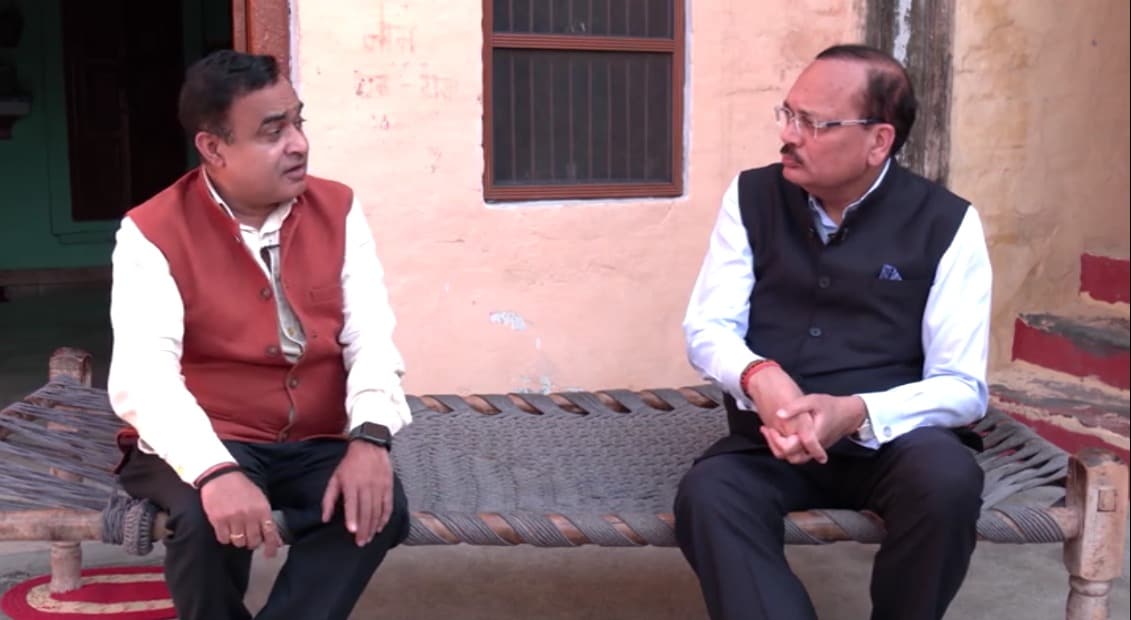
Chief Justice Surya Kant spoke to NDTV's Ashish Bhargava from his childhood home in Petwar in Haryana
New Delhi:
Justice Surya Kant has been sworn in as the new Chief Justice of India, marking a historic moment as the first individual from Haryana to attain the nation's highest judicial position since the Supreme Court's establishment in 1950.
Speaking with NDTV's Ashish Bhargava from his childhood residence in Petwar, Haryana's Hisar district, Chief Justice Kant reflected on his remarkable four-decade journey in the legal profession.
"All my childhood memories are connected to this house. I was born here," he shared while seated on a traditional village 'khatiya' bed.
Born on February 10, 1962, to a middle-class family, Chief Justice Kant recalled beginning his education at around age four when his parents enrolled him in the village school.
"We used to walk from this house through these streets to the village school with the schoolbag in our hands. All my childhood games and studies are connected to this village and the nearby areas," he reminisced.
He showed NDTV his modest study room, approximately 6 by 8 feet, where he studied alongside three classmates.
"Our teachers had a hope that all four of us would be able to perform well in school. So, we were always encouraged to study together at night," explained the 53rd Chief Justice of India.
"And it didn't just happen in this small room. Before the exam, we had a very dedicated English teacher, Prem Singh, who told us to shift to the school building. So, we used to have food from home and go to school at night. And that teacher used to teach us different subjects till 11 or 12 at night. And then we used to wake up in the morning, get ready and go to school again," he shared.
Despite the village having electricity, the supply was unreliable. "So, we never depended on electricity to study. We used to have the clay lamps," he added.
When asked if he had ever envisioned becoming the Chief Justice of India after growing up in a rural environment, he responded, "No, definitely not."
"At that time, I didn't even know what the judiciary was and what the role of a judge was in it. It was a time of struggle for every child in the village, including me," said the first-generation lawyer, noting that village families typically prioritized employment for their children immediately after matriculation.
"And if you have gone to college by mistake, then there is no point in doing anything else after college. You must try for a job. I also faced a similar situation. And I would like to thank my parents for this. When I told them that I wanted to study further, they agreed to what I said," he expressed.
He mentioned a "dilemma" regarding his educational path. "My brothers wanted me to do an MA in Geography, because that was my subject. But I was determined to do law. So, my parents stood by me and told me to do whatever I wanted," said Chief Justice Kant, who earned his law degree from Maharishi Dayanand University, Rohtak, in 1984.
Discussing his early career challenges, he shared, "I started practicing in a district court in Hisar. And after four to five months of practice, I argued my senior's case in the district court. My senior said, 'It is a small case; you can argue it'. He had confidence in me. He was a great inspiration for me. And he also played a key role in my career."
"So, when I argued the case, the judge called every senior advocate of the district and said, 'Don't ruin this boy here. Inspire him to go to the high court'," he recalled.
"I didn't know anyone in the high court. So, my senior and other senior advocates said, 'We will take you to the high court'. A senior advocate then took me in his car to Chandigarh and dropped me at a senior advocate's house," said Justice Kant, who relocated to Chandigarh in 1985, attributing his journey to the blessings of his parents, teachers, and village elders.
"I earned my name in the profession very soon. And after five to six years of practice, the whole state knew that I was a successful lawyer. And then, the story of my struggle to success started," said Justice Kant, who became the youngest Advocate General of Haryana in July 2000.
Justice Surya Kant's Rise From Judge To Chief Justice Of India
Justice Surya Kant was appointed the chief justice of the Himachal Pradesh High Court in 2018, followed by his elevation to the Supreme Court a year later.
The Chief Justice, who succeeded Justice BR Gavai, has contributed to numerous landmark verdicts, including the recent presidential reference concerning governors' and presidents' powers in handling state assembly bills.
He participated in the bench that suspended the colonial-era sedition law, directing that no new cases be registered under it pending government review.
He also prompted the Election Commission to disclose details about 65 lakh voters excluded from Bihar's draft electoral rolls while addressing petitions challenging the poll panel's decision to conduct Special Intensive Revision of voter lists in the state.
Chief Justice Kant led a bench that reinstated a woman sarpanch (village head) who had been unlawfully removed from office, highlighting gender bias in the matter. He is also recognized for directing that one-third of seats in bar associations, including the Supreme Court Bar Association, be reserved for women.
Source: https://www.ndtv.com/india-news/new-chief-justice-of-india-surya-kant-to-ndtv-i-didnt-even-know-role-of-a-judge-9689396