
Supreme Court Clarifies: President and Governors Cannot Be Bound by Timelines for Bill Approval
- Date & Time:
- |
- Views: 46
- |
- From: India News Bull
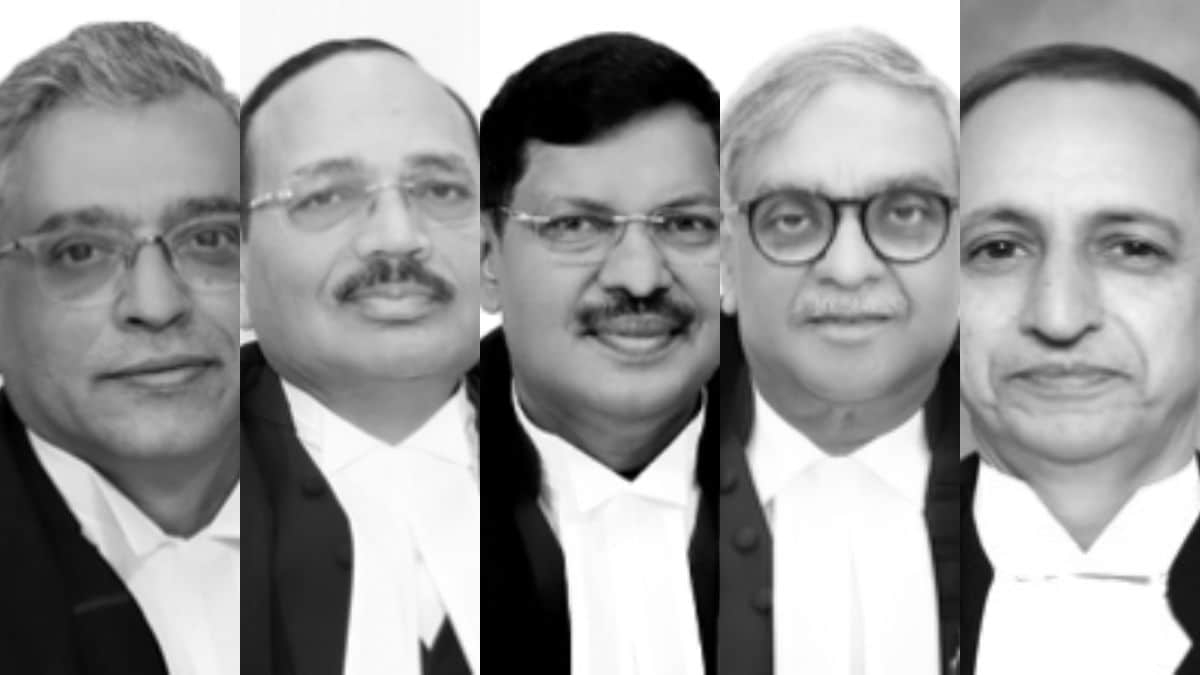
A five-judge Constitution bench of the Supreme Court provided responses to President Droupadi Murmu's questions regarding the withholding of Bills and constitutional timelines.
New Delhi:
Following the Constitution bench's response to President Droupadi Murmu's inquiries about Bill approvals and timelines, Chief Justice of India BR Gavai announced that the bench had collectively decided the clarification would be issued "in the name of the court" rather than attributed to any specific judge. The Chief Justice noted this decision represented a "sacrifice" by one particular judge who had made substantial contributions to formulating the responses.
The Supreme Court today affirmed that neither the President nor state Governors can be constrained by timelines when considering Bills for approval. The five-judge Constitution bench emphasized that actions taken by the President or Governors are not "justiciable," and judicial review becomes applicable only after a Bill has been enacted into law.
This clarification comes in response to questions raised by President Murmu following a previous verdict by a two-judge bench in the Tamil Nadu Governor case, which had effectively established deadlines for the President and Governors to process Bills passed by legislative bodies.
Invoking Article 143 of the Constitution to seek the court's opinion, the President had inquired: "In the absence of a constitutionally prescribed time limit, and the manner of exercise of powers by the Governor, can timelines be imposed and the manner of exercise be prescribed through judicial orders for the exercise of all powers under Article 200 of the Constitution of India by the Governor?"
The President had further questioned whether the constitutional discretion exercised by the President under Article 201 could be subject to judicial review.
President Murmu referenced Article 361 of the Constitution, which provides that neither the President nor Governors shall be answerable to any court regarding the exercise of their constitutional powers and duties.
The bench headed by Chief Justice BR Gavai declared that imposing timelines would be "strictly contrary" to constitutional provisions. The bench included Justice Surya Kant, Justice Vikram Nath, Justice PS Narasimha, and Justice AS Chandurkar.
Following the court's pronouncement, Solicitor General Tushar Mehta expressed gratitude, stating, "On behalf of the honourable President of India and on our behalf, we express sincere gratitude for a very illuminating opinion of our lordships."
In response, the Chief Justice acknowledged his colleagues' contributions, noting, "And I am extremely grateful to all my learned brothers, each of us who has contributed." He revealed that one judge had made particularly substantial contributions to preparing the clarification and formulating the court's response. "On principle, we have decided it would go in the name of the court," he explained.
Senior Advocate Kapil Sibal thanked the court for its "circumspect and thoughtful decision," adding, "And that it is unanimous makes us happier."
With a smile, the Chief Justice remarked, "...in one voice, we wanted it to be the voice of the court. It required (a) sacrifice by one of us," referencing the judge who had done significant work on the unanimous response. The Solicitor General responded, "I understand, milord, by each one of you."
In today's clarification, the court also overruled the concept of 'deemed assent' established in the previous two-judge bench judgment. The Constitution bench stated that "deemed consent of the Governor, or President, under Article 200 or 201 at the expiry of a judicially set timeline, is virtually a takeover, and substitution, of the executive functions by the Judiciary, through judicial pronouncement, which is impermissible within the contours of our written Constitution".
Source: https://www.ndtv.com/india-news/supreme-court-tamil-nadu-governor-case-chief-justice-br-gavai-chief-justices-sacrifice-quip-as-top-court-answers-presidents-queries-9669075