
Is 3I/ATLAS an Extraordinary Interstellar Object? Harvard Astronomer Challenges Conventional Classification
- Date & Time:
- |
- Views: 56
- |
- From: India News Bull
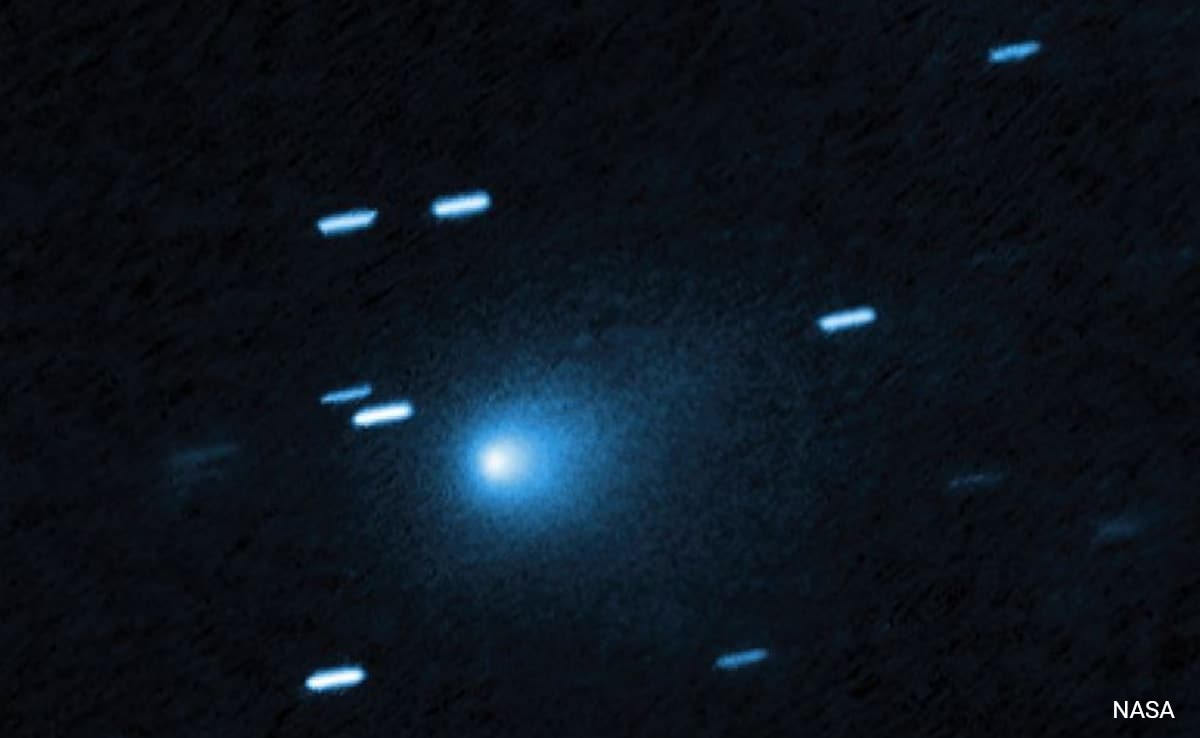
3I/ATLAS is scheduled to make its closest approach to Earth on December 19.
Harvard astronomer Avi Loeb continues to explore intriguing possibilities regarding the interstellar object 3I/ATLAS as it journeys through our solar system. While the scientific consensus classifies it as a carbon dioxide-rich comet, Loeb highlights several unusual characteristics—its distinctive chemical composition, extraordinary size, and unique planetary encounters—suggesting it might have a more exotic origin than conventional comets.
"I'm eagerly anticipating additional data in the upcoming weeks," Loeb explained to NewsNation. "This represents how science should function—like investigating a mystery. Any colleagues who definitively claim it's a familiar type of comet aren't demonstrating genuine curiosity or imagination about natural phenomena."
The interstellar visitor will reach its closest point to Earth on December 19, passing at a distance of 270 million kilometers, before continuing to Jupiter in March, providing scientists with further observation opportunities.
NASA's HiRISE camera aboard the Mars Reconnaissance Orbiter captured images of 3I/ATLAS in October, though their release was unfortunately delayed due to government shutdown procedures.
"We should remain hopeful," Loeb remarked regarding the pending image release. In a blog post, he criticized bureaucratic delays, stating that "scientific data sharing should have taken precedence over administrative protocols, especially since the information is time-sensitive for planning additional 3I/ATLAS observations."
Recent photographs from Spain's Nordic Optical Telescope reveal that 3I/ATLAS remained intact during its closest solar approach. Loeb contends that the object's enormous jets, extending up to one million kilometers toward the Sun, are difficult to reconcile with typical cometary behavior.
Currently, the comet is moving away from the Sun, allowing amateur astronomers to observe it in real time.
This celestial visitor, discovered on July 1, 2025, emerged from behind the Sun's glare after reaching perihelion on October 30. It's now visible from the eastern horizon before dawn, traversing the Virgo constellation. With an estimated magnitude of +10.9, it remains too faint for naked-eye observation but appears as a glowing, fuzzy patch through small telescopes.
Astronomy enthusiasts can watch a livestream by the Virtual Telescope Project at 9:45 am IST on November 19, featuring robotic telescope views from Manciano, Italy. The event was rescheduled from November 16 due to unfavorable weather conditions.
"The surface area required to generate such massive jets is implausible," Loeb told The NY Post. He proposed these jets might be "technological thrusters directing exhaust toward the sun," enabling the object to accelerate beyond our solar system.
The scientific community remains divided. Michigan State University astronomer Darryl Seligman stated, "3I/ATLAS not disintegrating aligns perfectly with my expectations." Observations from South Africa's MeerKAT radio telescope detected hydroxyl radicals—indicators of water being broken down by sunlight—supporting its identification as a comet.
"The true nature of 3I/ATLAS will be revealed through publicly shared scientific data rather than controlled narratives," Loeb emphasized in his blog.
Source: https://www.ndtv.com/india-news/could-interstellar-visitor-3i-atlas-be-more-than-a-comet-what-harvard-astronomer-avi-loeb-said-9656174