
Prashant Kishor's Jan Suraaj: Analysis of Electoral Failure in Bihar and Future Political Prospects
- Date & Time:
- |
- Views: 58
- |
- From: India News Bull
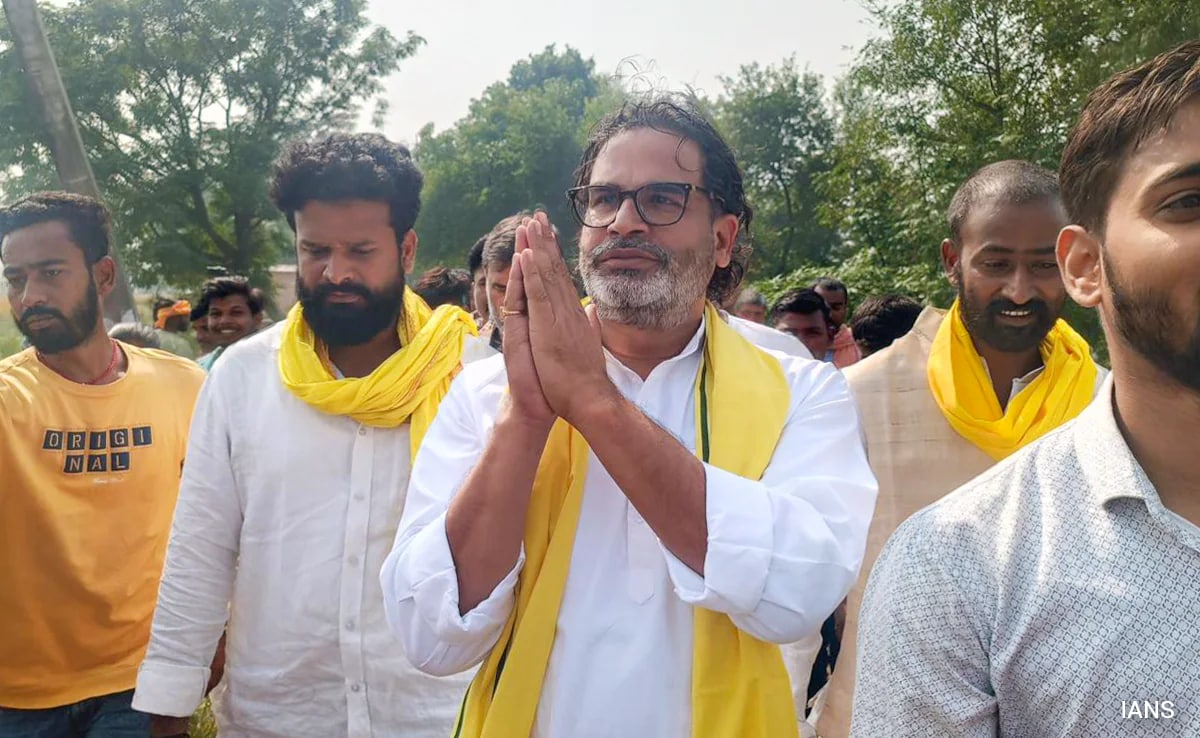
The Jan Suraaj, led by political strategist-turned-activist Prashant Kishor, made its electoral debut in Bihar's assembly elections with significant fanfare but failed to convert its social media popularity into electoral victories. This performance, while disappointing for supporters, provides valuable insights into the challenges of establishing a political movement from scratch in India's complex electoral landscape.
The electoral results paint a sobering picture for Jan Suraaj. The party contested 238 seats across Bihar but secured zero seats while garnering 3.5% of the total vote share. This outcome aligned closely with Votevibe's predictions, which had forecast 0-2 seats and a 5.2% vote share due to the party's limited organizational capacity and electoral appeal. Jan Suraaj secured 16.77 lakh votes, averaging around 7,000 per seat. During the 2024 by-polls on four seats, they had achieved a 10% vote share. The party managed to secure more than 10% votes in only eight seats and between 5-10% in 31 seats.
The consistency of these disappointing results was striking. Jan Suraaj candidates lost their deposits in 236 out of 238 contested seats, a humiliating outcome reflecting the party's inability to mobilize even a modest support base in most constituencies. The party finished as runner-up in only one seat and secured third place in 115 constituencies, showing scattered pockets of influence but no concentrated strength anywhere in Bihar. Meanwhile, smaller parties like the All India Majlis-e-Ittehadul Muslimeen (AIMIM) and the Bahujan Samaj Party (BSP) maintained their 2020 seat tallies of five and one respectively, limiting Jan Suraaj's ability to penetrate their support bases.
Despite the overall poor performance, Jan Suraaj did demonstrate some electoral presence in select areas. The party secured more than 5% of votes in 39 seats and exceeded 10,000 votes in 35 constituencies. However, only one candidate - in Marhaura - managed to poll more than 30,000 votes, highlighting the party's failure to establish any strong local bastions.
On 18 seats, Jan Suraaj scored between 10,000-15,000 votes, on 11 seats between 15,000-20,000 votes, on three seats between 20,000-25,000 votes, on two seats between 35,000-40,000 votes, and on one seat 58,000 votes - the latter possibly because the NDA candidate's nomination was rejected. Among the party's top four performing candidate seats, two benefited from either the NDA or the Mahagathbandhan candidate's nomination being rejected, making Jan Suraaj the default beneficiary.
Perhaps the most intriguing aspect of Jan Suraaj's performance was its potential role as a spoiler in closely contested races. The party polled more votes than the victory margin in 34 seats, suggesting it may have influenced the final outcomes in these constituencies. Analysis of these 34 seats reveals interesting patterns in candidate selection and vote distribution.
Jan Suraaj fielded candidates from diverse social backgrounds in these crucial seats: six from the Muslim-Yadav (MY) coalition, 14 from upper castes, five from the Mallah community, two from Ravidas samaj, three from Dusadh samaj, one from Pasi samaj, and three from Kurmi/Kushwaha communities.
The distribution of victories in the 35 seats where Jan Suraaj potentially played spoiler is revealing. The National Democratic Alliance (NDA) won 19 of these seats, the Mahagathbandhan (MGB) secured 13, and the Bahujan Samaj Party (BSP) and All India Majlis-e-Ittehadul Muslimeen (AIMIM) won one each. On seven seats, Jan Suraaj fielded candidates from the same caste as both Mahagathbandhan and NDA candidates, directly competing for the same vote banks.
Electoral analysis suggests that Jan Suraaj drew votes primarily from the NDA in 20 seats, inadvertently helping the Mahagathbandhan win eight of these while merely denting the NDA's margin in the remaining 12. Conversely, the party appears to have cut into the Mahagathbandhan's vote share in 10 seats, helping the NDA secure a victory in seven and reducing the opposition alliance's winning margins in three. In four seats, Jan Suraaj seemed to have attracted votes from both major alliances, with Mahagathbandhan winning two and the BSP and the AIMIM taking one each.
Several factors contributed to Jan Suraaj's electoral failure. Foremost was the complete absence of organizational infrastructure. Unlike established parties with decades of grassroots presence, Jan Suraaj lacked booth-level workers, district networks, and mobilization machinery essential for electoral success in India.
The party also suffered from a timing problem. Three years is an insufficient timeframe to build a viable political alternative in a politically mature state like Bihar. The comparison with the Aam Aadmi Party (AAP) is instructive - AAP emerged from the anti-corruption movement and had years of grassroots activism before its electoral breakthrough. Jan Suraaj attempted to fast-track this process without the underlying social movement, relying on professional networks instead of party cadre.
Prashant Kishor's decision not to contest elections himself sent a negative signal. Many interpreted this as a lack of confidence in his own creation, raising questions about the seriousness of the political project. His highly publicized "padyatra" (foot march) across Bihar generated media attention but failed to translate into organizational building at the grassroots level.
The party's messaging proved problematic. The slogan "arsh pe ya farsh pe" (from throne to ground) lacked the conviction and clarity needed to inspire voters. Moreover, persistent allegations that Jan Suraaj was the "B-team" of the Bharatiya Janata Party (BJP) damaged its credibility as an alternative force, particularly among opposition-leaning voters.
Organizational weaknesses extended to ticket distribution. Like the established parties it sought to replace, Jan Suraaj fielded 43 candidates with criminal records according to an Association for Democratic Reforms (ADR) study, undermining its claims of promoting clean politics. The absence of a manifesto, despite having a professional team, suggested a lack of serious policy preparation. During television interviews, Kishor's perceived arrogance alienated potential supporters who might have been drawn to a more humble, grassroots-oriented approach.
Perhaps most tellingly, Jan Suraaj appeared to confuse social media metrics with electoral support. High viewership of videos and reels did not translate into votes at the polling booth, exposing the gap between online visibility and real-world political organization. Jan Suraaj was also seen as a one-man army without other prominent faces. Kishor's Brahmin background may have deterred Muslim-Yadav voters from supporting his party in Bihar's caste-conscious society. On many seats, there were allegations of ticket selling - similar to practices in established parties. Jan Suraaj also faced rebellion in several constituencies.
With both Mahagathbandhan and the NDA increasing their vote shares in 2025 compared to 2020, Jan Suraaj gained votes primarily at the expense of other smaller parties. However, it failed to make significant inroads into the youth vote of Mahagathbandhan and the upper caste vote of the NDA, with voters adopting a cautious wait-and-watch approach. The Rs 10,000 cash income support for women also appears to have neutralized whatever traction Jan Suraaj gained among the poor on issues of health and education.
Despite the comprehensive defeat, the Jan Suraaj experiment still has potential. Bihar's political landscape does have space for a third alternative. The Janata Dal (United) (JD-U) faces an uncertain future in a post-Nitish Kumar era. Similarly, the Rashtriya Janata Dal (RJD) is dealing with internal family feuds that could weaken Tejashwi Yadav's position long-term.
Jan Suraaj did succeed in raising important issues during the campaign and demonstrated some appetite for fresh political voices in Bihar. If Prashant Kishor and his team learn from this electoral setback, build their ground-level presence, improve grassroots organization, and maintain commitment to their political project beyond electoral cycles, they could potentially carve out a meaningful space in Bihar's future political landscape.
The 2024 Bihar election may have been a false start for Jan Suraaj, but whether it becomes a footnote in Bihar's political history or the foundation for a future force depends entirely on how its leadership responds to this sobering reality check. And certainly, PK needs to address his perceived arrogance.
(Amitabh Tiwari is a political strategist and commentator. In his earlier avatar, he was a corporate and investment banker)
Disclaimer: These are the personal opinions of the author
Source: https://www.ndtv.com/opinion/what-went-wrong-for-prashant-kishor-arrogance-and-a-certain-9651023