
India Challenges Pakistan's Role in UN Security Council Committees Over Conflict of Interest Concerns
- Date & Time:
- |
- Views: 63
- |
- From: India News Bull
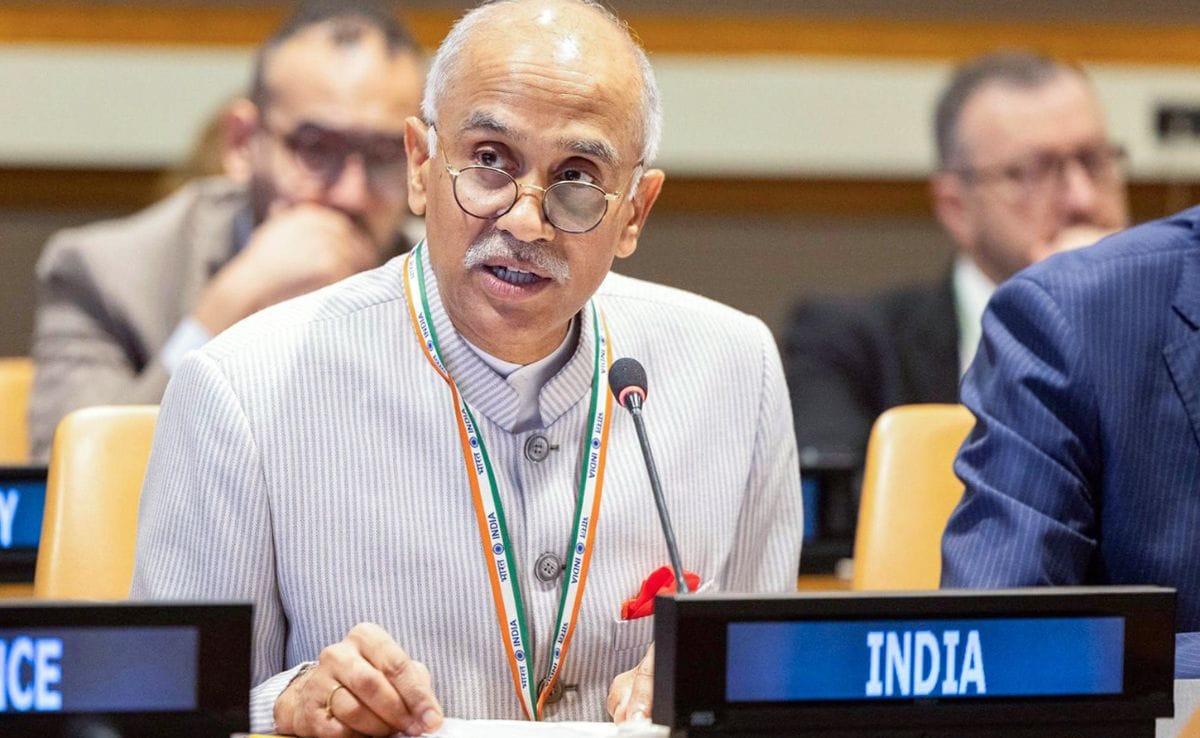
India's Permanent Representative P Harish. (File)
At the United Nations, India has expressed criticism regarding Pakistan's leadership of the Security Council's Taliban sanctions committee and its co-chairing of the counter-terrorism panel, highlighting significant conflicts of interest.
During Friday's Council debate on working methods, India's Permanent Representative P Harish emphasized that Council members with "vested interests" should be prevented from chairing committees.
P Harish stated firmly, "Obvious and outright conflicts of interest can have no place in the Council."
While Pakistan, currently serving a two-year term as an elected Council member, was not explicitly named, nor were the specific committees mentioned, the target of these remarks was clear.
The 1988 committee, named after its founding resolution number, possesses authority to restrict Taliban members' travel. Afghanistan's Foreign Minister Amir Khan Muttaqi's visit to India last month faced delays due to complications in securing necessary travel waivers.
Pakistan continues to experience conflict with Taliban-governed Afghanistan, with military skirmishes occurring between their forces.
Despite co-chairing the counter-terrorism committee, Pakistan is known to provide sanctuary to various terrorist groups and leaders, including those under UN sanctions.
Harish advocated for more transparency, stating, "Selection of Chairs of subsidiary bodies and pen-holderships needs to be carried out in a more transparent, objective and time bound manner."
He explained that subsidiary bodies refer to Council committees administering sanctions or addressing specific issues, while "pen-holders" are Council members assigned primary responsibilities for particular countries and issues.
Harish further called for removing the secrecy surrounding the Security Council's anti-terrorism committees and their leadership selection processes.
"There must be greater transparency in the functioning of the subsidiary organs," he declared.
He pointed out that decisions rejecting requests to sanction terrorists or terror organizations are made behind closed doors.
"A case in point is the manner in which listing requests are rejected. Unlike de-listing decisions, these are done in a rather obscure manner, with member states that are not on the Council not being privy to details," Harish explained.
China has repeatedly blocked efforts by India and the United States to sanction leaders of Lashkar-e-Tayyiba and Jaish-e-Mohammad through the committee responsible for actions against Islamic State organizations, al-Qaeda, and affiliated groups, known as the 1267 committee.
Harish also addressed the UN Military Observer Group (UNMOGIP), established to monitor Kashmir's ceasefire. While India maintains this group no longer serves a relevant purpose, Pakistan advocates for its continuation.
"Continuation of mandates that have outlived their utility for narrow political interests of certain states must not be allowed," he stated without directly naming UNMOGIP or Pakistan.
"This continued existence in a resource constrained scenario is a drain on the UN and member states" who are working to streamline UN operations.
Harish urged the Council to "undertake necessary measures on this front to bring about sunset clauses" for UN peacekeeping operations, a recommendation that could apply to other peacekeeping missions as well.
Source: https://www.ndtv.com/world-news/indias-veiled-dig-over-pak-heading-un-panel-on-sanctions-against-taliban-9639802