
ISRO Confirms Chandrayaan-3 Module Naturally Returns to Moon's Gravitational Field After Two Years
- Date & Time:
- |
- Views: 48
- |
- From: India News Bull
The Chandrayaan-3 service module has naturally reentered the Moon's gravitational field, as confirmed by scientists after being last tracked by Space-Track.org on June 27, 2025.
Asteroid tracking data from September indicated that the service module's trajectory would bring it near the Moon twice in early November. The Chandrayaan-3 propulsion module has naturally drifted back to lunar proximity more than two years after the completion of its primary mission.
The combined gravitational influences of Earth, Moon, and Sun caused the spacecraft to gradually drift without requiring any propulsion. The module served as the portion of the spacecraft that supported mission operations in space while transporting Chandrayaan-3 to the Moon without performing any landing functions.
According to a post by researcher Scott Tilley on November 14, 2025: "CHANDRAYAAN-3 was last reported by https://t.co/jPw7NGPQYB on 2025-06-27. In September it became obvious from asteroid tracking data that the service module would encounter the Moon in early November twice."
It is exceptionally rare for a spacecraft to naturally establish an orbit around the Moon years after completing its primary mission objectives. While the lander and rover touched down on the lunar surface in August 2023, the propulsion module remained in orbit, only to naturally migrate back toward the Moon in 2025.
The module entered the Moon's Sphere of Influence (SOI) on November 4, the region where lunar gravity exceeds Earth's gravitational pull. During this approach, it passed approximately 3,740 kilometers above the lunar surface. A second flyby occurred on November 11 at a distance of 4,537 kilometers.
Following these lunar encounters, the module's orbit has expanded and flattened slightly. ISRO stated in its blog post: "The satellite orbit has changed from 1 lakh x 3 lakh km to 4.09 lakh x 7.27 lakh km in terms of size, and its inclination changed from 34 degrees to 22 degrees due to these flyby events."
India's space agency emphasized that these encounters were not planned maneuvers but rather the result of gradual orbital drift caused by gravitational interactions.
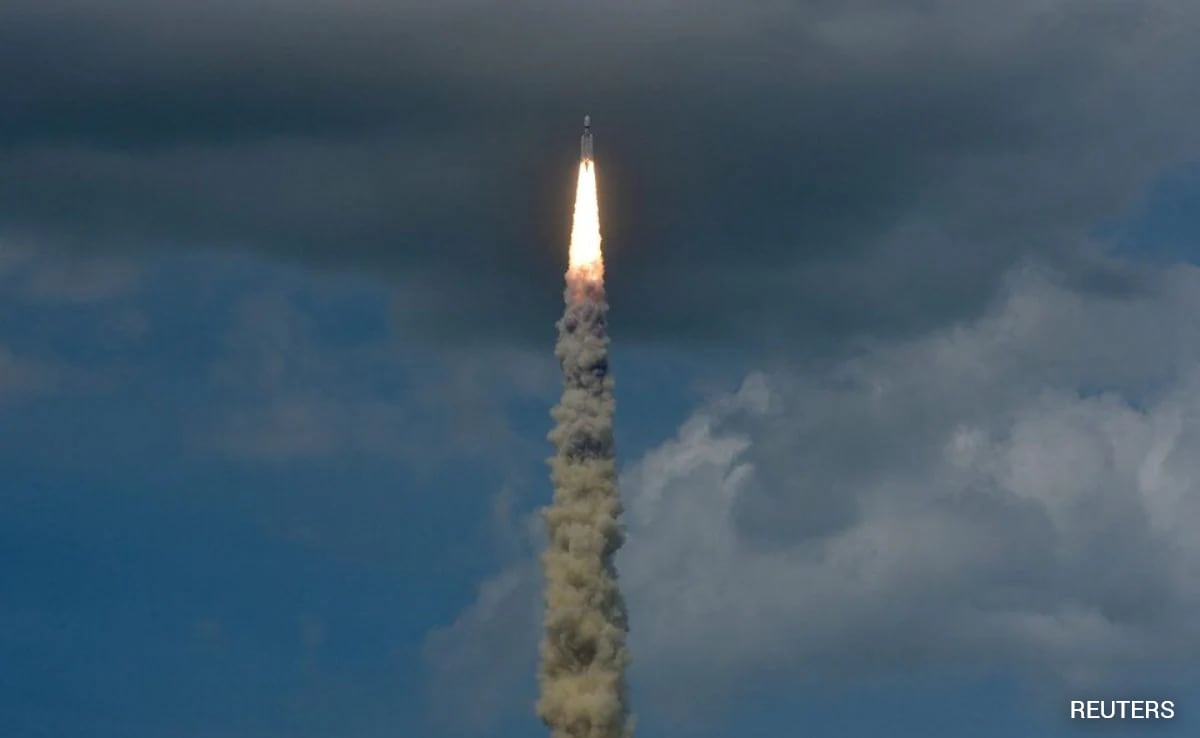
Chandrayaan-3 was launched on July 14, 2023, from Sriharikota using an LVM3 rocket with the mission objectives of achieving a safe lunar landing, deploying a rover, and conducting scientific experiments on the Moon's surface.
Following its successful lunar landing in August 2023, the Propulsion Module remained in orbit before being transferred to a higher Earth orbit in October. Over the subsequent two years, it naturally drifted under the combined gravitational influence of Earth and the Moon.
Source: https://www.ndtv.com/india-news/isro-tracks-chandrayaan-3-module-as-it-re-enters-lunar-zone-9634773