
Lalu Yadav: The Resilient Political Force Behind Bihar's RJD Legacy
- Date & Time:
- |
- Views: 62
- |
- From: India News Bull
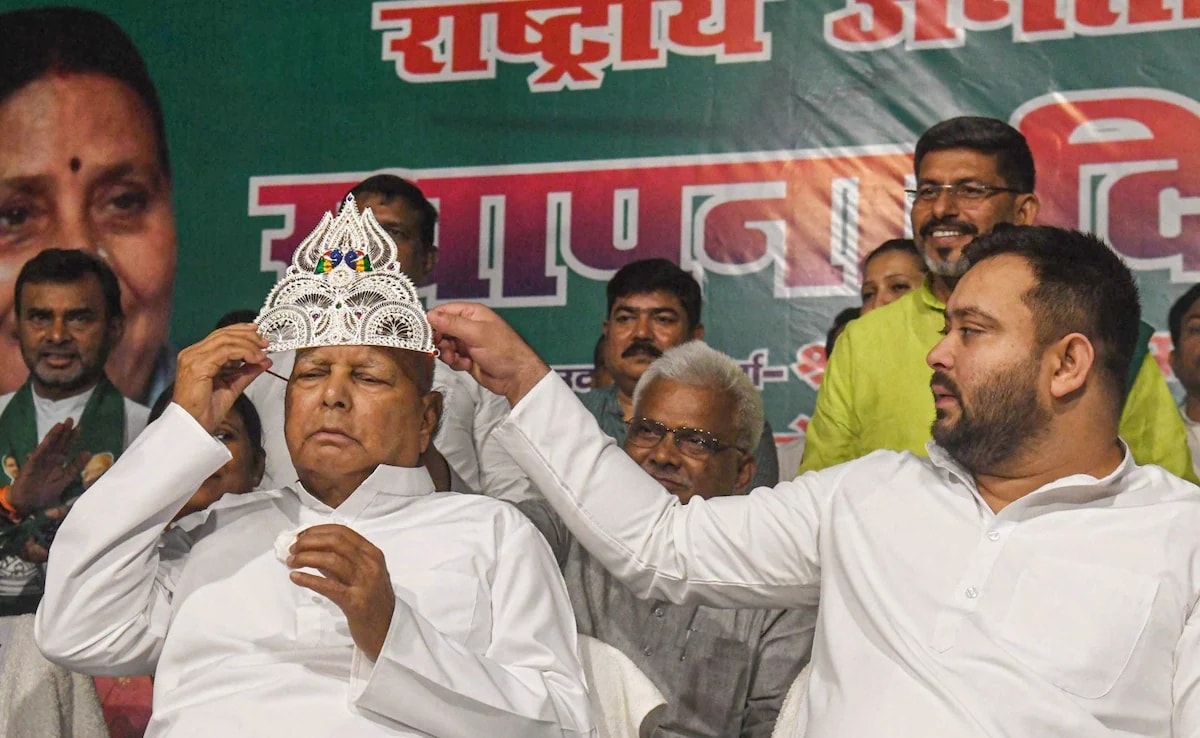
Yadav, still heading the RJD, has stepped back from the frontlines in this year's electoral contests.
As a two-term Bihar chief minister, five-time Member of Parliament, and former Union Minister renowned for transforming the Indian Railways, Lalu Yadav's political trajectory stands as remarkable. However, his career has been equally defined by controversies, including his conviction in the notorious fodder scam and accusations of 'gundaraj' (lawless governance) and corrupt practices.
Born to a farming household near Bihar's Gopalganj in Phulwaria on June 11, 1948, Lalu Yadav earned an MA in Political Science and a law degree from Patna University. He married Rabri Devi in 1973, and together they raised nine children – two sons and seven daughters.
His political journey began in 1970 when he was elected President of the Patna University Students' Union, later becoming active in Jayaprakash Narayan's movement. During the Emergency period, he faced imprisonment until 1977.
Following his release, Lalu Yadav entered the 9th Lok Sabha in 1977 at just 29 years of age. By 1980, he had secured a seat in the Bihar assembly, winning re-election in 1985 and serving as opposition leader by 1989. Having joined the Janata Dal by then, he also claimed his second Lok Sabha term in 1989.
Lalu Yadav gained substantial support from backward castes (particularly Yadavs) and Muslims by championing the Mandal Commission's recommendations for reservations and opposing communal politics. These communities formed his core constituency.
In 1990, Yadav returned to state-level politics, becoming chief minister of Bihar. He secured a second term in 1995.
The year 1996 brought controversy when Lalu Yadav and other officials were implicated in the fodder scam, involving embezzlement of state funds amounting to Rs 950 crore. These allegations forced his resignation as chief minister in July 1997, with his wife Rabri Devi assuming the position.
That same year, breaking from the Janata Dal, he established the Rashtriya Janata Dal (RJD). From 2000 to 2005, the RJD maintained control of Bihar's government in alliance with Congress, with Rabri Devi serving as chief minister.
In 2004, Lalu Yadav was appointed Union Minister for Railways in the Congress-led UPA administration. During his five-year tenure, he orchestrated a remarkable turnaround of Indian Railways, transforming heavy losses into significant surpluses. His revenue strategies became case studies at prestigious institutions including Harvard and IIM Ahmedabad.
Despite securing 26 seats in the 2004 Lok Sabha Elections, the RJD's fortunes declined dramatically in the following year's Assembly polls, winning only 54 of 243 seats and losing power after 15 years.
This decline continued into the 2009 Lok Sabha elections, with the RJD securing just four of Bihar's 40 seats. The 2010 Assembly elections marked their worst performance with merely 22 seats.
The 2015 Assembly Elections brought revival for the RJD and reconciliation with Nitish Kumar. Former adversaries became allies again, joining with Congress in the Mahagathbandhan to win the elections. However, in 2017, Kumar withdrew from this alliance to partner with the BJP, once again relegating the RJD to opposition status.
Though the RJD emerged as the largest single party in 2020, the JD(U) with just 43 seats retained power. Nitish Kumar, supported by the BJP, was reinstated as Bihar's chief minister.
While Lalu Yadav remains the RJD's president, he has now taken a less prominent role, allowing his son Tejashwi Yadav to lead the party's electoral efforts. Tejashwi has been designated the Mahagathbandhan's candidate for chief minister.
Source: https://www.ndtv.com/india-news/bihar-elections-bihar-polls-bihar-results-bihar-election-results-lalu-yadav-profile-lalu-yadav-the-political-veteran-you-can-never-count-out-9334730