
Supreme Court Proposes Luxury Fossil Fuel Vehicle Ban as Strategy to Accelerate Electric Vehicle Adoption in India
- Date & Time:
- |
- Views: 50
- |
- From: India News Bull
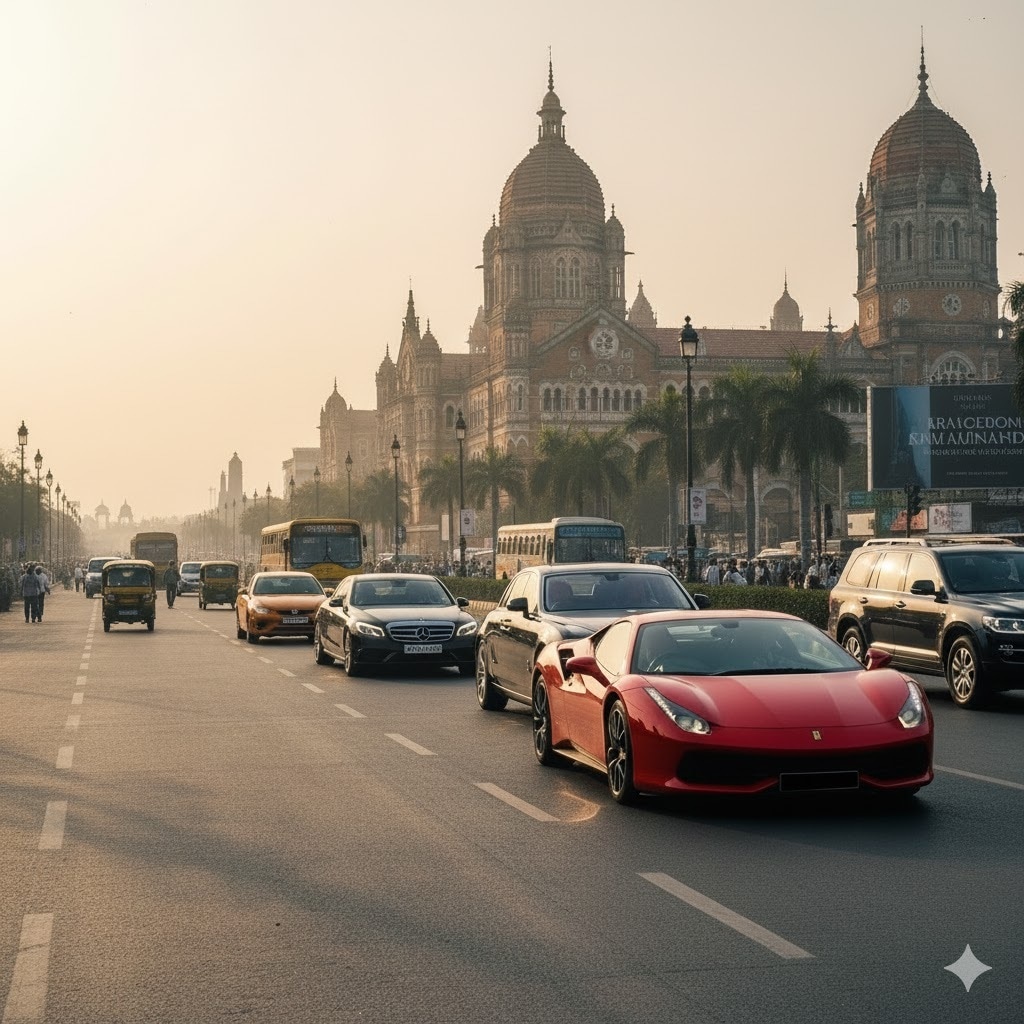
The Supreme Court suggested phasing out luxury petrol/diesel vehicles to promote EVs (AI-generated image)
New Delhi:
The Supreme Court today proposed that eliminating luxury petrol and diesel vehicles could serve as an initial step towards effectively implementing the government's Electric Vehicle (EV) promotion strategies.
During a hearing on a public interest litigation seeking robust implementation of the government's EV policies, Justice Surya Kant and Justice Joymalya Bagchi shared their perspectives.
"Based on our experience handling cases, we've noticed that the electric vehicle market now offers premium cars that provide comfort comparable to fuel-consuming vehicles currently used by VIPs and major corporations," Justice Kant remarked.
"I'm not singling out specific entities to avoid any prejudice. Consider implementing a ban first on high-end vehicles. This approach wouldn't impact average citizens, as only a small percentage of India's population can afford such luxury vehicles," he elaborated.
Attorney General R Venkataramani, representing the Centre, expressed the government's support for this concept. He mentioned that thirteen ministries are actively engaged in this initiative and the government is making progress in this direction.
Advocate Prashant Bhushan, appearing for the petitioner, Centre for Public Interest Litigation, explained that electric vehicles were previously expensive, leading to incentive programs to encourage purchases. He identified the primary challenge now as insufficient charging infrastructure for electric vehicles.
The court observed that charging facilities would naturally increase as electric vehicle adoption grows. "These developments follow market dynamics. As electric vehicle numbers rise, charging stations will correspondingly expand," the bench stated, suggesting that charging facilities could also be installed at existing petrol stations.
The court additionally indicated that the current EV policy might require revision.
The Attorney General committed to submitting a comprehensive report detailing notifications issued thus far. The case will be revisited after four weeks.
Source: https://www.ndtv.com/india-news/supreme-courts-ban-luxury-cars-tip-for-promoting-electric-vehicles-9628512