
India Launches Rs 25,060 Crore Export Promotion Mission to Counter US Tariffs and Boost Global Trade Competitiveness
- Date & Time:
- |
- Views: 64
- |
- From: India News Bull
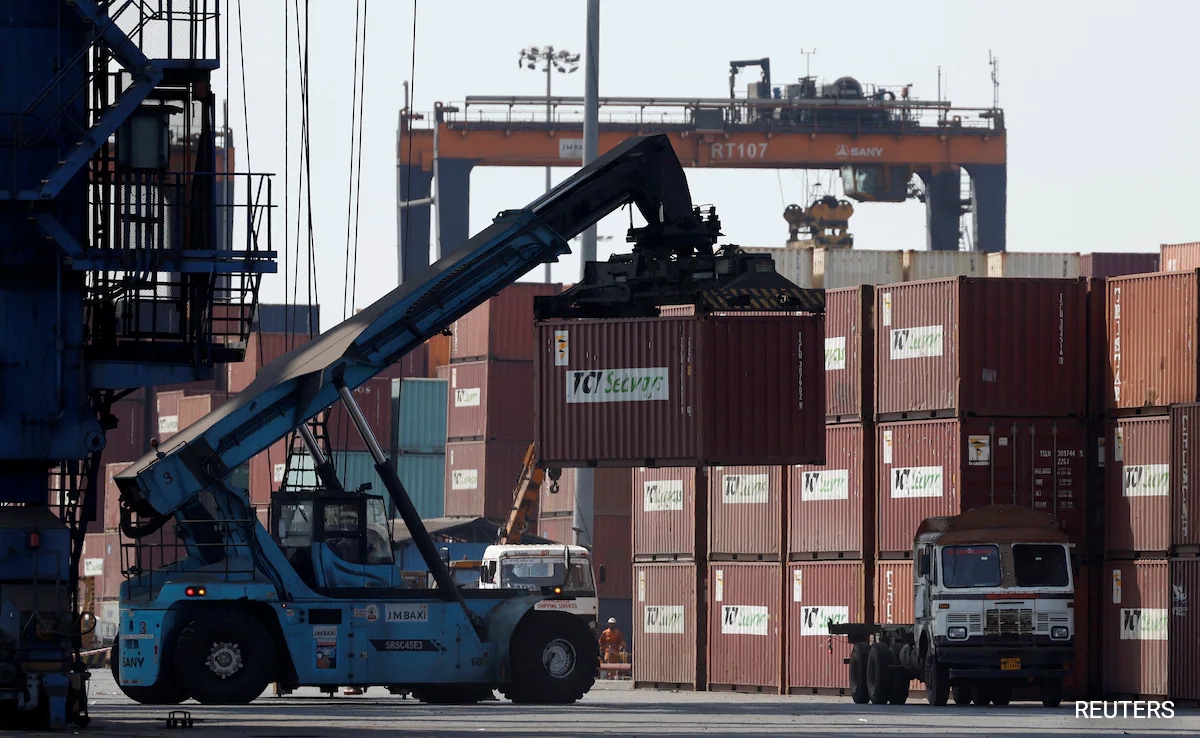
The US has implemented a substantial 50 percent tariff on Indian goods effective from August 27.
New Delhi:
On Wednesday, the Indian government approved an Export Promotion Mission (EPM) with a financial allocation of Rs 25,060 crore spanning six fiscal years starting from the current financial year, an initiative designed to assist exporters in coping with high tariffs imposed by the United States.
The mission will be executed through two complementary sub-schemes: Niryat Protsahan (allocated Rs 10,401 crore) and Niryat Disha (allocated Rs 14,659 crore).
Information and Broadcasting Minister Ashwini Vaishnav described it as "a very comprehensive mission" that will provide support to the entire export ecosystem.
Under this initiative, priority assistance will be provided to sectors adversely affected by recent global tariff escalations, including textiles, leather, gems and jewellery, engineering goods, and marine products.
These sectors are currently experiencing difficulties in the US market. Due to elevated import duties, India's merchandise exports to the US declined by 11.93 percent to USD 5.46 billion in September.
The United States has implemented a substantial 50 percent tariff on Indian goods since August 27. Meanwhile, both nations are engaged in negotiations for a bilateral trade agreement.
Trump has indicated that the US is "pretty close" to achieving a "fair trade deal" with India, adding that he intends to reduce the tariffs imposed on Indian goods "at some point".
According to the commerce ministry, this mission represents a strategic shift from multiple fragmented schemes to a unified, outcome-based, and adaptive mechanism capable of responding rapidly to global trade challenges and evolving exporter requirements.
Under Niryat Protsahan, efforts will focus on improving access to affordable trade finance for MSMEs through various instruments including interest subvention, export factoring, collateral guarantees, credit cards for e-commerce exporters, and credit enhancement support for diversification into new markets.
The government has not disclosed the specific rate of subvention.
Similarly, under Niryat Disha, funds will be utilized for non-financial enablers such as assistance for international branding, packaging, participation in trade fairs, export warehousing and logistics, inland transport reimbursements, and trade intelligence and capacity-building initiatives.
"EPM consolidates key export support schemes such as the Interest Equalisation Scheme (IES) and Market Access Initiative (MAI), aligning them with contemporary trade needs," stated the ministry, adding that these interventions will help maintain export orders, safeguard jobs, and support diversification into new geographical markets.
The initiative is expected to facilitate access to affordable trade finance for MSMEs, enhance export readiness through compliance and certification support, and improve market access and visibility for Indian products.
The mission is specifically designed to address structural challenges that constrain Indian exports, including limited and expensive trade finance access, high costs of compliance with international export standards, inadequate export branding and fragmented market access, and logistical disadvantages for exporters in interior and low-export-intensity regions.
The Directorate General of Foreign Trade (DGFT) will serve as the implementing agency, with all processes—from application to disbursement—being managed through a dedicated digital platform integrated with existing trade systems.
India's exports grew by 6.74 percent to USD 36.38 billion in September, while imports increased by 16.6 percent, widening the trade deficit to USD 31.15 billion, the highest in over a year.
During the cumulative period of April-September this year, exports increased by 3.02 percent to USD 220.12 billion, while imports rose by 4.53 percent to USD 375.11 billion, resulting in a trade deficit of USD 154.99 billion.
Source: https://www.ndtv.com/india-news/india-approves-rs-25-000-crore-plan-to-aid-exporters-hit-by-us-tariffs-9624114