
The 150-Year Legacy of 'Vande Mataram': India's National Song and Its Complex History
- Date & Time:
- |
- Views: 54
- |
- From: India News Bull
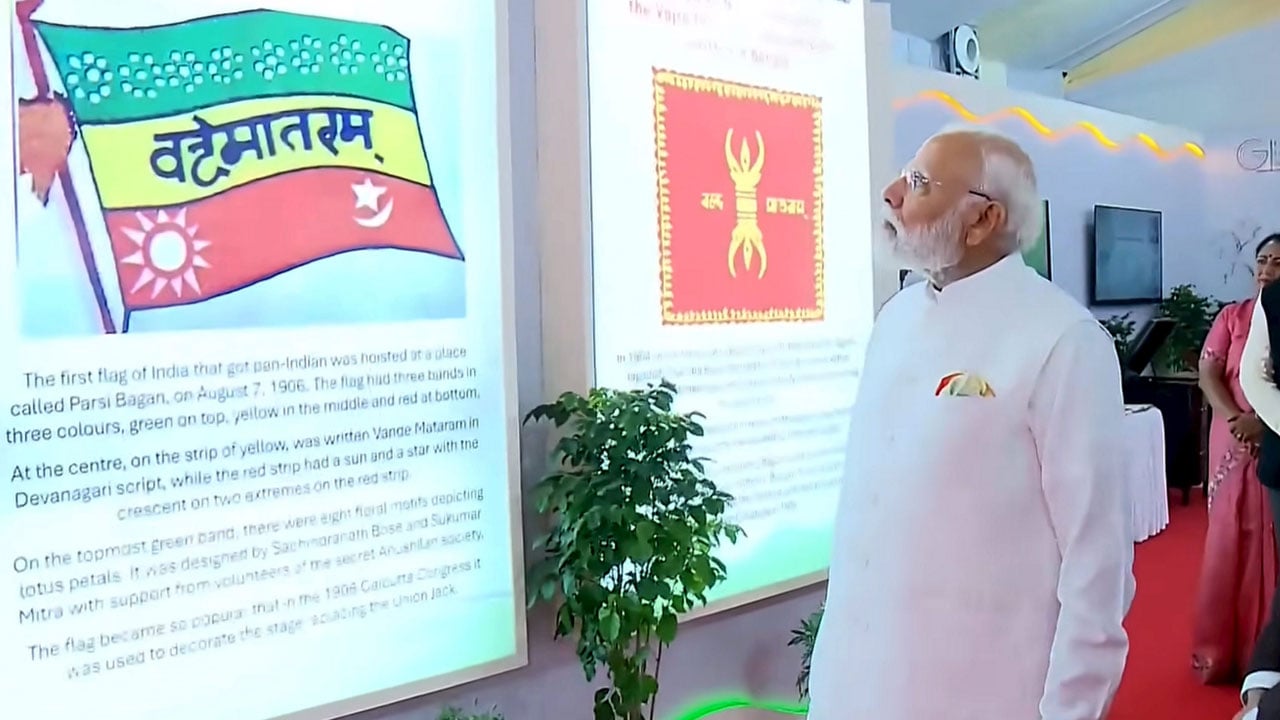
On November 7, a grand orchestra of 70 prominent musicians led by violinist Mysore Manjunath performed "Vande Mataram - Naad ekam, roopam anekam" at New Delhi's Indira Gandhi Indoor Stadium. This performance inaugurated the year-long celebrations marking the 150th anniversary of India's national song, 'Vande Mataram'.
Prime Minister Narendra Modi, commemorating Bankim Chandra Chaterjee's composition from November 7, 1875, expressed regret that when the Indian National Congress Working Committee adopted the song in 1937, only the first two stanzas were retained. The remaining portions were omitted to avoid offending Muslim sentiments. Modi suggested this decision contributed to the eventual Partition of India.
'Vande Mataram' served as the rallying cry for Bengal revolutionaries during the 1905-11 movement against Bengal's partition, later inspiring mass movements across India. Freedom fighters would face British gallows with the slogan on their lips, making it the embodiment of anti-colonial resistance. The British consequently banned its public performance.
At midnight on August 14-15, 1947, Sucheta Kriplani sang 'Vande Mataram' before the Constituent Assembly, preceding Jawaharlal Nehru's famous "Tryst with Destiny" speech. The session concluded with all members singing 'Jan Gan Man'. The following morning, Akashvani (formerly All India Radio) began Independent India's first broadcast with Pandit Omkar Nath Thakur's rendition of 'Vande Mataram' at 6:30 am, a tradition that continues daily, with 'Jai Hind' marking the end of broadcasts.
On January 24, 1950, Dr. Rajendra Prasad, President of the Constituent Assembly, announced that while 'Jan Gan Man' would be India's national anthem, 'Vande Mataram' would receive equal honor as the National Song, recognizing its historical significance. This was unanimously accepted without debate.
Bankim Chandra Chatterjee initially composed two stanzas of 'Vande Mataram' in 1875 while serving as deputy magistrate in Chinsura, Hooghly district. These stanzas appeared in Bangadarshan magazine, which he edited. Later in 1881, he incorporated additional stanzas into his novel Anandamath, chronicling the Sanyasi Uprising in 18th-century Bengal. The novel was serialized in Bangadarshan, captivating readers and popularizing 'Vande Mataram'.
The young Rabindranath Tagore, then just 18, was deeply moved by the original two stanzas. In 1879, before Anandamath's publication, he composed a poem praising 'Vande Mataram', which appears as the seventh entry among patriotic songs in his 'Geeta Bitan'. The poem speaks of unifying thousands of minds and dedicating countless lives to one cause, facing obstacles with fearlessness.
In 1886, Chatterjee asked his friend Jadunath Bhattacharya to set the lyrics to music, resulting in a composition in raga Malhar. During the 1889 Indian National Congress session in Calcutta, outgoing President Surendranath Banerjee requested Tagore to perform 'Vande Mataram'. Tagore composed it in raga Desh and sought Chatterjee's approval before performing. This session was presided over by Rahimtulla Mohammed Sayani, a Khoja Muslim Barrister from Bombay, whose grandson Ameen Sayani would later become famous for his Binaca Geet Mala radio program.
The song has seen numerous interpretations throughout history. VD Paluskar rendered it in raga Kaafi at a 1915 Congress session. Subhas Chandra Bose commissioned Timir Baran to create a marching version in raga Durga. MS Subbulakshmi recorded it as a bhajan in 1950, while Hemanta Mukherjee composed a version for the 1952 film Anandamath, sung by Lata Mangeshkar. In more recent times, AR Rahman created a modern interpretation with 'Maa Tujhe Salam'.
'Vande Mataram' was also translated into English by Aurobindo Ghose, who called it Bengal's national anthem, and into Tamil by Subramani Bharati, performed by DK Pattamal. The commemoration slogan "Nadam ekam, Roopam Anekam" (one symphony, varied renditions) perfectly captures the song's diverse legacy.
The ongoing controversy surrounding 'Vande Mataram' stems from the 1937 Congress Working Committee's decision to adopt only the first two stanzas. The omitted portions, containing references to idol worship and goddess Durga, had been objected to by the Muslim League, which cited these as reasons for declining to share power with Congress in certain states following that year's elections.
The CWC formed a committee including Jawaharlal Nehru, Subhas Chandra Bose, Maulana Abdul Kalam Azad, Acharya Narendra Dev, JB Kripalani, Rajendra Prasad, and Sarojini Naidu. They sought Rabindranath Tagore's guidance, who suggested that including the controversial stanzas might impede national unity. This decision sparked outrage, with Congress leaders led by Ramananda Chatterjee submitting a petition to Mahatma Gandhi. Tagore was deeply troubled by the criticism he received in Bengal four years before his death.
Today, West Bengal's current leadership has remained notably silent regarding the 150th anniversary of 'Vande Mataram', missing an opportunity for Mamata Banerjee to celebrate "Bangla pride." It appears the same concerns that influenced the Congress Working Committee in 1937 may be constraining the Trinamool Congress today.
Source: https://www.ndtv.com/opinion/theres-more-to-the-vande-mataram-controversy-than-whats-obvious-9621745