
Tracking Terror: The Journey of an i20 Car Behind Delhi's Red Fort Explosion
- Date & Time:
- |
- Views: 37
- |
- From: India News Bull
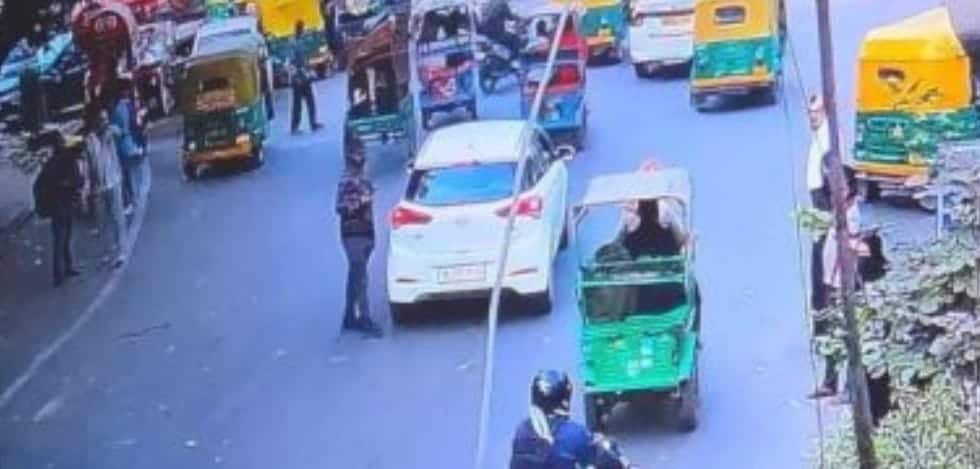
The Hyundai i20 car was documented on CCTV footage prior to the explosion near Delhi's Red Fort
New Delhi:
Investigators began their probe into the alarming explosion near Delhi's historic Red Fort by examining the destroyed remains of a white i20 car that contained the explosives. By tracking the vehicle's history, authorities worked to uncover the complex plot behind this blast that shocked the nation and triggered serious security concerns.
The 2013 manufactured vehicle, bearing registration number HR26CE7674, was registered to an individual named Salman in 2014. According to the registration certificate, Salman was the second owner of this vehicle, with his residence listed in Gurugram.
Following the explosion, authorities contacted Salman who informed them he had sold the car to Devendra, an Okhla resident. The investigation revealed a chain of ownership: Devendra sold it to someone in Ambala, who subsequently transferred it to Aamir in Pulwama, Jammu and Kashmir. The car ultimately came into possession of Dr. Umar Mohammad, employed at Al-Falah University in Faridabad. Investigators suspect Dr. Umar was driving when the explosion occurred and are exploring whether this might have been a suicide bombing.
Remarkably, despite changing hands multiple times across different states, the car remained officially registered to Salman. This practice is not uncommon in India's used car market, where vehicles frequently change ownership without proper re-registration to avoid documentation expenses.
This registration loophole creates opportunities for individuals with criminal intentions to acquire vehicles that cannot be easily traced back to them. Meanwhile, used car dealers often skip the registration process to reduce costs. Consequently, when crimes involve such vehicles, investigators initially find themselves pursuing the original registered owner.
The investigation has reconstructed the vehicle's journey on the day of the blast. Starting from Faridabad, the i20 entered Delhi via the Badarpur border, proceeded through Sarai Kale Khan and the busy ITO intersection, before arriving at a parking area near the Red Fort Metro station.
Surveillance footage shows the car entering this parking lot at 3:19 PM. For approximately three hours, the vehicle remained stationary, with the driver notably never exiting the car during this period, seemingly intent on keeping the vehicle under constant supervision. At approximately 6:28 PM, the car departed the parking area and approached the traffic signal. The explosion occurred at 6:52 PM, damaging multiple nearby vehicles in the blast.
Source: https://www.ndtv.com/india-news/delhi-blast-red-fort-blast-delhi-blast-update-chasing-the-terror-car-how-i20-changed-hands-states-before-red-fort-blast-9613511