
The Cultural Renaissance of Bihar: How Chhath, Cuisine, and Community are Reshaping the Bihari Identity
- Date & Time:
- |
- Views: 84
- |
- From: India News Bull
Bihar election results are expected to be declared on November 14.
New Delhi:
As attention turns to Bihar during election season and thousands return home to vote, Bihari migrants have increasingly come into focus—these men and women who travel far to make a living while keeping numerous industries functioning in their adopted states.
Though the two-phase Bihar assembly elections conclude on Tuesday, with results having nationwide implications and establishing a new state government, the narrative extends beyond politics. Biharis living away from their homeland are increasingly asserting their cultural identity and reshaping previously held perceptions.
"Bihari" was once an identity carrying negative connotations, but over the past decade, this term has begun to regain its dignity, according to Anup Sharma, a Gurugram-based strategic communications advisor born and raised in Bihar.
This transformation cannot be attributed to politics alone.
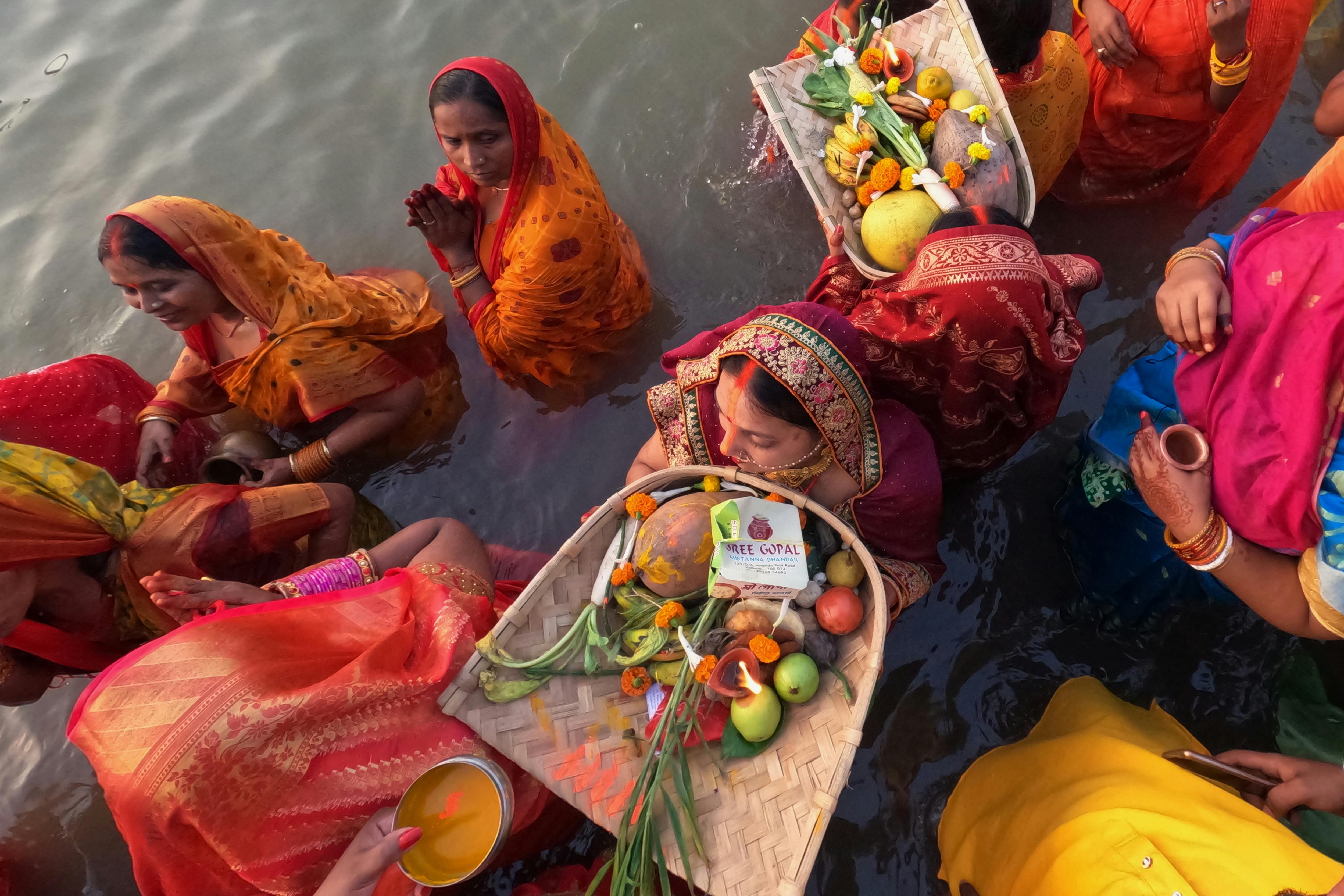
"Chhath Puja, once a quiet, regional festival, has transformed dramatically. Today, images of women offering arghya to the setting sun and families singing traditional songs spread across continents through social media," Sharma told PTI.
"You'll see this tradition trending on Instagram from Mauritius to Mumbai, Delhi, the Yamuna banks to New Jersey. This represents belonging going global—what was once a riverbank ritual has become a connection between generations and geographies," Sharma explained.
In his assessment, this reflects a deeper story of recognition.
"When political parties organize ghats or make arrangements for devotees in cities like Mumbai or Delhi, they aren't merely seeking votes—they're acknowledging presence. Migrants who previously existed on society's margins are now recognized as contributors and cultural torchbearers," he said.
The Chhath celebration sweeps across large portions of India a week after Diwali. This period marks a homecoming for hundreds of thousands of Biharis returning for their most significant festival.
In recent years, those unable to return home have been welcomed with enthusiasm by various state governments, including Delhi, Uttar Pradesh, Haryana, West Bengal, and Madhya Pradesh.
Other distinctive elements of Bihar's culture and lifestyle have gained increasing acceptance beyond state borders—from establishments selling Champaran meat and "litti chokha" to social media creators showcasing Bihar's hidden treasures and stand-up comedians delivering self-aware humor.
Does this indicate a fundamental shift in perceptions of Bihar and its people? How essential are Biharis to India's development? Has the term "Bihari" transcended its previous connotations to become as acceptable as designations like Punjabi, Marathi, or Bengali? While definitive answers remain elusive, the Bihari community senses changing attitudes—a welcome dissolution of stereotypes and a future that appears markedly different from a challenging past characterized by stigma, poverty, and limited opportunities.
According to the 2011 census, more than 7.45 million migrants from Bihar reside across India. Another study, published by the International Labour Organisation (ILO) and the Institute for Human Development, found that in 2021, 39 percent of Bihar's migrants left the state seeking employment.
Political positioning isn't the only factor casting Biharis in a positive light; a quiet transformation is occurring regarding Bihar's cuisine, infrastructure, tourism, and the professional profile of its people.
Those once visible only at opposite ends of the professional spectrum—blue-collar laborers and white-collar bureaucrats—now occupy the entire range of structured employment.
Abhay K, a writer-poet and diplomat also born and raised in Bihar, noted "organic growth" among professionals from the state working throughout India and globally, who proudly express their culture wherever they go.
"Professionals from Bihar contribute across numerous fields, including cutting-edge technology (IT, AI, biotechnology), finance, investment, management, administration, diplomacy, literature, medicine, education, and politics, beyond being migrant laborers. Calling someone from Bihar a 'Bihari' is no longer derogatory but a source of pride," said the author of "Nalanda: How it Changed the World".
He added that significant development has occurred in Bihar, including the establishment of "the best museum in India" and the revival of Nalanda University—a destination worthy of visiting for its architectural significance alongside the ancient Nalanda Mahavihara ruins.
While acknowledging that migration continues extensively and the image of Bihari migrants is improving gradually, Patna-based entrepreneur Neehar R emphasized the need to create more opportunities within the state.
"Politics certainly helps create visibility, particularly during festivals, but the genuine momentum has come from people themselves rediscovering Bihar in their own ways. Both people and politics are transforming the 'dasha' and 'disha' (condition and direction) of Bihar—and that's the most encouraging aspect," said the founder of Bihar Say, a PR and branding platform dedicated to "reconnecting Biharis worldwide".
This "rediscovery of Bihar" has manifested through various channels, including social media content creators and comedians featuring the state in their productions.
While comedians like Sharon Verma, Shreya Priyam, Priyesh Sinha, and actor Satish Ray subvert stereotypes with self-aware humor about their identity, Instagram creators like 'Sizzle with Shikha' (13,000+ followers), Arya Gupta (nearly 200,000 followers), and Ashish Jha (nearly 100,000 followers) produce Bihar-specific content.
American vlogger Drew Hicks and Korean Lee Yechan creating Bhojpuri content might surprise Instagram newcomers, but their popularity among their 1.2 million and 300,000+ followers respectively is genuine.
Certainly, there remains considerable progress to be made. The broader Bihar narrative isn't uniformly positive; while promising developments exist, they remain limited.
As Gurugram-based Manvendra Prasad, managing partner at IntelliNexus Ventures, observes, stereotypes and negative impressions will persist "until Bihar achieves economic prosperity comparable to other regions of the country".
"In areas where poorer segments of Bihar's population are more prominent than professionals, negative perceptions and discrimination continue, as seen in Punjab. Anecdotal evidence indicates significant anti-Bihar sentiment online," Prasad noted.
He added that it's primarily the established "acceptable" presence of Biharis across the country's middle class—college students, software engineers, bankers, doctors, startup founders, film actors—resulting from the 1990s exodus, that has enabled Chhath Puja, Champaran meat, and even makhana to contribute to Bihar's improving image.
Source: https://www.ndtv.com/india-news/chhath-chokha-and-champaran-meat-the-reconfiguration-of-bihari-image-9608674