
Supreme Court Confronts Centre Over Delays in Tribunal Reforms Case Amid CJI's Approaching Retirement
- Date & Time:
- |
- Views: 62
- |
- From: India News Bull
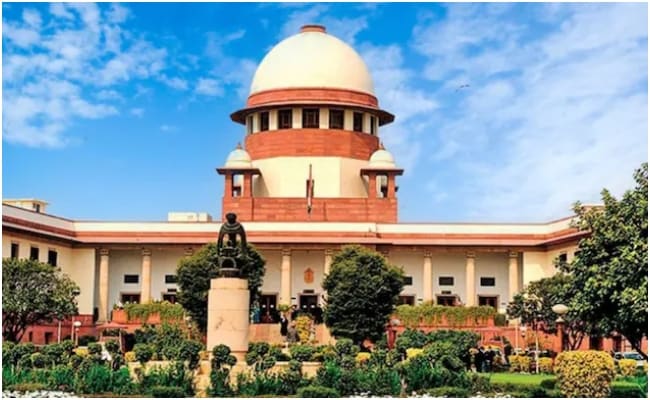
The Chief Justice of India noted that it appears the Centre wishes to avoid the current bench.
The Supreme Court expressed significant displeasure on Thursday regarding the Centre's petition to postpone hearings on multiple pleas, including one from the Madras Bar Association, that challenge the constitutional validity of the 2021 tribunal reforms legislation.
On November 3, a bench led by Chief Justice B R Gavai strongly criticized the Centre's application requesting that challenges to the Tribunals Reforms (Rationalisation and Conditions of Service) Act, 2021 be referred to a five-judge bench, stating that such a request from the government at the conclusion of final hearings was unexpected.
The 2021 Act eliminates certain appellate tribunals, including the Film Certification Appellate Tribunal, and modifies various provisions related to appointment procedures and tenure terms for judicial and other tribunal members.
The CJI-led bench had threatened to dismiss the Centre's petition, submitted through Attorney General R Venkatararamani for referral to a larger bench, expressing disapproval of such tactics from the government.
This prompted the Attorney General to argue the case on its merits on Monday, after which the bench scheduled further hearings for Friday.
On Thursday, Additional Solicitor General Aishwaraya Bhati mentioned the matter and requested adjournment on behalf of the Attorney General, citing his international arbitration commitments.
"Very unfair to the court," remarked the CJI.
The ASG explained that the Attorney General had an international arbitration scheduled on Friday and therefore sought accommodation.
"We have accommodated him for so much time. We have accommodated him twice. This is not fair to the court," the CJI reiterated.
"If you want to keep it after 24 (November), you tell us frankly," the CJI, who retires on November 23, told Bhati.
When ASG Bhati suggested resuming the matter on Monday, the visibly irritated Chief Justice commented, "When do we write the judgment then? Every day we are told he's busy with arbitration. At the last moment, you come with an application to refer the matter to a Constitution Bench!" The CJI also questioned why another law officer could not represent the Union in this case.
"You have a battery of competent ASGs. When we were in the high court, we gave up other briefs for part-heard matters," he said, adding that the bench had specifically kept Friday's schedule clear to conclude hearings and utilize the weekend to prepare the judgment.
Eventually, the bench agreed to hear senior advocate Arvind Datar, representing the petitioner Madras Bar Association, on Friday and accommodate the Attorney General's submissions on Monday.
"If he does not come, we will close the matter," declared the CJI.
Previously, the bench, which also includes Justice K Vinod Chandran, had already heard final arguments from the petitioners, including lead petitioner Madras Bar Association.
The court was particularly displeased that the Centre now sought to refer the matter to a five-judge Constitution bench.
"On the last date (of hearing), you (Attorney General) did not raise these objections and you sought adjournment on personal grounds. You cannot raise these objections after hearing them fully on merits... we do not expect the Union to indulge in such tactics," the court stated.
The CJI observed that it appeared the Centre wanted to avoid the current bench.
The Supreme Court had begun final hearings on October 16 regarding petitions challenging the constitutional validity of various provisions of the Act.
Datar noted that in July 2021, the Supreme Court had struck down several provisions of the Tribunal Reforms (Rationalisation and Conditions of Service) Ordinance, 2021, finding they violated principles of judicial independence and separation of powers.
The Centre subsequently introduced the Tribunal Reforms Act after the Supreme Court's verdict quashed several ordinance provisions, he explained.
Remarkably, the Act contained "verbatim" the same provisions of the ordinance that were invalidated by the Supreme Court, which Datar argued was impermissible unless the government addressed the fundamental basis of the judgment.
The Supreme Court had invalidated the ordinance provision that reduced tribunal members' and chairpersons' tenure to four years, noting that shortened terms could encourage executive influence over the judiciary.
It had determined that tenure should be five years to ensure service security, with maximum age limits of 70 for chairpersons and 67 for members.
The bench had also invalidated the minimum age requirement of 50 for tribunal appointments.
It emphasized the importance of inducting younger members to maintain a robust judiciary, stating that a minimum of 10 years of practice should sufficiently qualify judicial members, similar to High Court judge requirements.
The verdict had also rejected the government's authority to make appointments from a panel of only two names recommended by the Search-cum-Selection Committee.
The ordinance was enacted in April 2021.
Following the Supreme Court's verdict, the government introduced and passed the Tribunals Reforms Act in August, containing provisions nearly identical to those previously struck down.
Source: https://www.ndtv.com/india-news/do-you-want-to-resolve-tribunal-reforms-case-after-we-retire-supreme-court-to-centre-9590648