
Supreme Court Mandates Written Arrest Grounds in Comprehensible Language for All Offenses in India
- Date & Time:
- |
- Views: 55
- |
- From: India News Bull
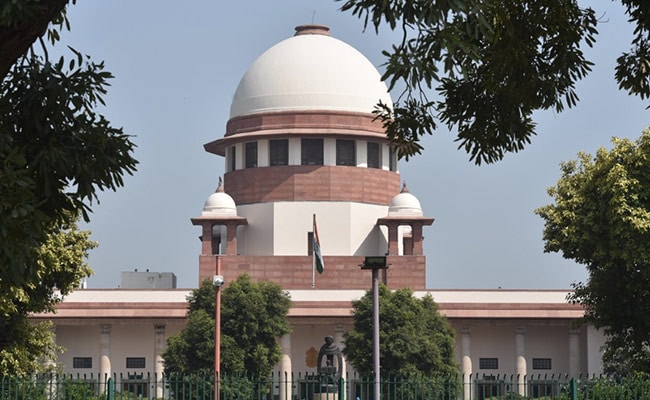
The ruling emerged from the Mihir Rajesh Shah vs State of Maharashtra case.
The Supreme Court delivered a landmark judgment on Thursday, establishing that every person under arrest must receive written grounds for their arrest in a language they comprehend, regardless of the offense type or applicable statute.
In this significant decision reinforcing constitutional protections for personal liberty, the Supreme Court determined that while failure to provide written arrest grounds immediately doesn't invalidate the arrest, such grounds must be furnished "within a reasonable time and at least two hours before the arrestee's production before a magistrate for remand proceedings."
Chief Justice B R Gavai and Justice Augustine George Masih issued this verdict concerning the Mihir Rajesh Shah vs State of Maharashtra case, which originated from the high-profile Mumbai BMW hit-and-run incident of July 2024.
In the comprehensive 52-page judgment authored for the bench, Justice Masih emphasized that Article 22(1) of the Constitution, guaranteeing that arrested individuals must be informed of arrest grounds "as soon as may be," represents not merely a procedural requirement but a fundamental safeguard of personal liberty.
"This court holds that to fulfill the intended objective of the constitutional mandate under Article 22(1) of the Constitution of India, arrest grounds must be communicated to the arrested person in every case without exception, and such communication must be written in a language the arrestee understands," stated the verdict.
"The constitutional requirement to inform arrestees of arrest grounds applies mandatorily across all offenses under all statutes, including offenses under IPC 1860 (now BNS 2023)," the judgment affirmed.
"Arrest grounds must be provided in writing to the arrestee in their comprehensible language. When the arresting officer cannot immediately provide written grounds upon or shortly after arrest, oral communication is permissible temporarily. However, written grounds must follow within reasonable time and at minimum two hours before the arrestee's production for remand proceedings before the magistrate," the Court directed.
The judgment further specified that non-compliance would render the arrest and subsequent remand illegal, entitling the individual to immediate release.
The Supreme Court instructed its registry to distribute copies of this judgment to all high court registrars general and chief secretaries across all states and Union territories.
The verdict addressed two key questions: first, "whether written arrest grounds must be furnished to an accused in every case, including those under IPC (now Bharatiya Nyaya Sanhita, 2023), either before or immediately following arrest"; and second, whether arrests would be invalidated in exceptional circumstances where immediate provision of arrest grounds proves impossible.
Citing previous judgments, the Court noted, "Merely communicating grounds in a language the arrested person doesn't understand fails to satisfy the constitutional requirement under Article 22. Failure to provide grounds in the arrestee's comprehensible language renders constitutional protections meaningless and violates personal liberty guarantees under Articles 21 and 22." The Court emphasized that the constitutional mandate aims to enable arrestees to understand allegations against them, possible only when communicated in their understandable language.
This ruling stems from appeals by Mihir Rajesh Shah, the accused in the 2024 Mumbai BMW hit-and-run case, who contested his arrest's legality because he wasn't provided written arrest reasons as legally required.
While the Bombay High Court acknowledged this procedural deficiency, it nevertheless upheld the arrest, citing the offense's severity.
Source: https://www.ndtv.com/india-news/grounds-of-arrest-in-writing-mandatory-for-all-offences-supreme-court-9589506