
Former R&AW Chief Vikram Sood Analyzes Global Power Dynamics and India's Strategic Positioning in "Great Power Games"
- Date & Time:
- |
- Views: 74
- |
- From: India News Bull
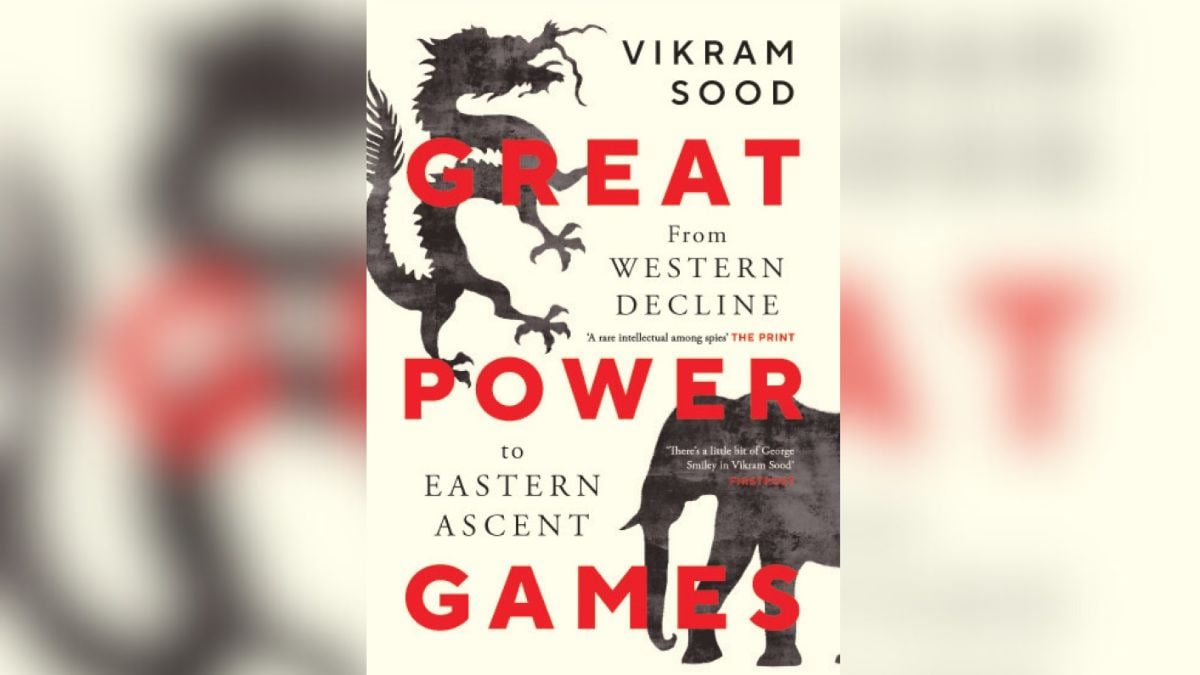
Former R&AW chief Vikram Sood has published his book Great Power Games, offering profound insights into global geopolitical dynamics.
New Delhi:
Vikram Sood, one of India's most distinguished intelligence leaders who dedicated his career to the covert realm of espionage, recently provided candid insights into contemporary global realities while suggesting strategic approaches for India's long-term positioning.
Having served as the head of Research and Analysis Wing (R&AW) before retiring in 2003 after 31 years of service, Sood offered his expert assessment of the evolving relationships between major powers including the United States, China, Russia, Pakistan, Afghanistan, and India.
Chinese Strategic Perspective
According to Sood, China perceives the United States under Trump's leadership as declining in influence, which places India in "a very precarious situation."
"While America wasn't necessarily our greatest ally, China has consistently demonstrated its mistrust toward us. Their proximity to our border allows them to create significant challenges. They represent an immediate threat, whereas Americans pose a distant threat that can make life uncomfortable," explained the former intelligence chief who recently authored Great Power Games.
Addressing questions about the actual nature of the China threat amid improving bilateral relations—increased border trade and resumed direct flights—Sood emphasized, "We share an undemarcated border, which both sides can leverage when needed."
Drawing on expertise developed throughout his extensive career, Sood evaluated other nations in his assessment of the Chinese threat.
"Establishing relations with influential powers is essential. Pakistan remains a nuisance requiring specific handling strategies. However, China possesses the capability to inflict substantial harm. When identifying which nations can cause the greatest damage, China and America rank among the top contenders. Russia has capability but likely won't act against us—that's my assessment. Pakistan will persistently irritate India, but China represents the most significant potential threat. We must continuously monitor these powers closely," Sood stated.
Understanding American Dynamics
The former intelligence leader recommended that India develop a deeper understanding of the United States.
"Our study of America has been superficial rather than comprehensive. We haven't thoroughly examined its complete history. I sense we approach this relationship perfunctorily, relying primarily on perspectives from Time Magazine, Voice of America, and the New York Times," the former R&AW chief observed.
Regarding Trump's significant tariff increases affecting India and other nations, Sood assessed that these actions represent America's attempt to maintain its global dominance while simultaneously revealing its fears about potentially slipping to second or third place internationally.
The tariffs serve as a declaration of continued American supremacy.
"Their strategy involves striking forcefully before others can respond and then claiming victory. However, this approach hasn't fully achieved its intended objectives and may have backfired—imposing tariffs increases domestic prices as well. Blocking foreign products creates gaps that cannot be filled if domestic manufacturing capabilities are insufficient," Sood explained.
He indicated that America's growing concern stems from its transformation from a manufacturing powerhouse to primarily a goods and services economy.
Pakistan's Strategic Position
Regarding Pakistan's role, Sood characterized the neighboring country's nuclear threats during Operation Sindoor as "comparable to a cornered child threatening consequences to escape their situation. I don't believe any leader, regardless of how irrational they might appear, would actually initiate nuclear action."
Furthermore, Sood pragmatically stated that Pakistan's fundamental stance toward India will not change.
"Their foundation is jihad. General Munir describes Pakistan as the second caliphate. The country was established in the name of Islam, which shapes their fundamental worldview. While they recognize they cannot defeat India militarily, we will continuously face challenges from Pakistan. We must prepare for more incidents like Operation Sindoor," Sood advised.
Regarding Pakistan army chief Field Marshal Asim Munir's visit to the United States following Operation Sindoor, Sood characterized US-Pakistan relations as superficial and "temporary."
"Both nations are pursuing their independent interests. With time, their relationship will return to its baseline," he added.
Domestic Unrest and External Influence
While Sood led India's covert international operations, he suggested connections between certain domestic issues and external influences, though not explicitly stating these connections.
"Some propose that younger generations are dissatisfied with current conditions and desire change. However, successful mobilization typically requires external advisors providing guidance and support. This enables protests, whether localized disturbances or nationwide movements. Organizing effective demonstrations demands leadership and strategic direction," Sood told NDTV, referencing the recent youth protests in Nepal described as "Gen Z protests" by media outlets.
India's Afghanistan Strategy
When questioned about India's relationship with Afghanistan, particularly given the ideological differences with the Taliban regime, the intelligence veteran indicated that pragmatism governs geopolitical relationships.
"Nations pursue self-interest. This presents an opportunity to pressure Pakistan, which consistently creates challenges for us. If America can engage with controversial leaders in Syria, India can certainly maintain relations with the Taliban," Sood explained.
Addressing ethical concerns directly, he stated: "We cannot be criticized for engaging with regimes despite their treatment of women. While their policies are regrettable, our strategic interests require maintaining relations with Afghanistan, particularly as they advance narratives about their historical territory extending to the Indus River. This serves our strategic purposes, so we'll continue this engagement."
Reflecting on his intelligence career, Sood identified the Kargil conflict and the hijacking of Indian Airlines flight IC-814 in 1999 as the most significant challenges he encountered.
Despite expert claims of intelligence failures during Kargil, Sood provided a nuanced perspective: "I wouldn't characterize it so severely. Perfect intelligence is an unrealistic expectation. Nevertheless, sufficient indicators existed suggesting impending events. Regarding IC-814, I don't believe anyone anticipated that situation."
Source: https://www.ndtv.com/india-news/ex-spymaster-vikram-sood-to-ndtv-on-games-us-china-pak-play-and-where-india-stands-9588132