
Trump's Tariff Authority: Legal Options If Supreme Court Strikes Down Emergency Powers
- Date & Time:
- |
- Views: 43
- |
- From: India News Bull
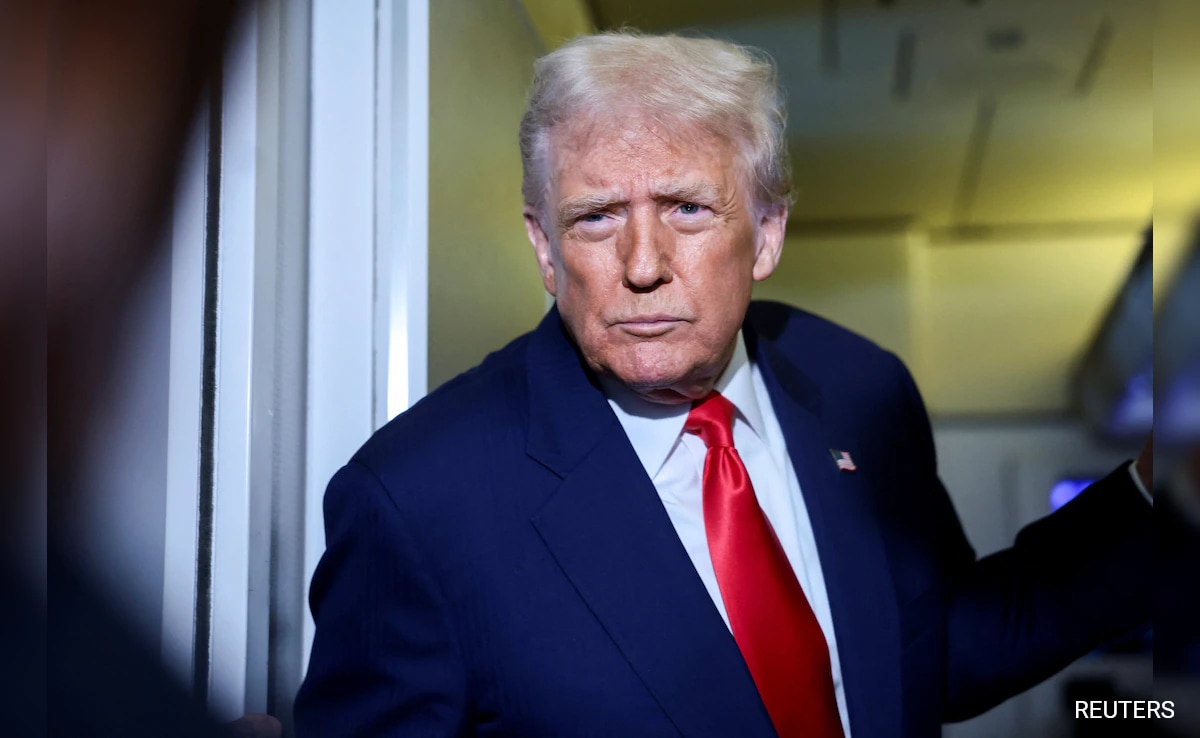
The average US tariff has risen dramatically from 2.5% to 17.9%, reaching its highest level since 1934.
Washington:
President Donald Trump has issued stark warnings that if the Supreme Court invalidates his widespread tariffs, the United States would become "defenseless" and potentially be "reduced to almost Third World status." During Wednesday's oral arguments, however, justices appeared skeptical about his broad claims to tariff authority.
Despite this potential setback, trade experts indicate Trump would still retain numerous avenues to aggressively tax imports even if the court rules against him. He could leverage tariff powers utilized during his first term or access other authorities, including one dating back to the Great Depression era.
"It's hard to see any pathway here where tariffs end," explained Georgetown trade law professor Kathleen Claussen. "I am pretty convinced he could rebuild the tariff landscape he has now using other authorities."
During the Supreme Court hearing, attorney Neal Katyal, representing small businesses challenging the tariffs, argued that Trump doesn't require the unlimited authority he's claiming under the 1977 International Emergency Economic Powers Act (IEEPA). Katyal noted that Congress has already delegated tariff powers to the White House through several other statutes, though with carefully prescribed limitations.
"Congress knows exactly how to delegate its tariff powers," Katyal stated.
Tariffs have evolved into a cornerstone of Trump's second-term foreign policy, with substantial "reciprocal" tariffs imposed on most countries, justified by declaring America's persistent trade deficits a national emergency.
According to Yale University's Budget Lab calculations, the average US tariff has increased from 2.5% when Trump returned to office in January to 17.9%, the highest since 1934.
The president acted unilaterally despite the US Constitution specifically assigning taxation and tariff powers to Congress.
Nevertheless, Trump "will have other tools that can cause pain," according to Stratos Pahis of Brooklyn Law School. Here are some alternative options available to him:
The United States has long possessed a powerful instrument to penalize countries accused of "unjustifiable," "unreasonable," or "discriminatory" trade practices: Section 301 of the Trade Act of 1974.
Trump has previously employed this mechanism aggressively, particularly against China. During his first term, he cited Section 301 to implement extensive tariffs on Chinese imports in response to Beijing's assertive tactics challenging America's technological dominance. The US continues to utilize 301 powers to counter alleged unfair Chinese practices in the shipbuilding sector.
"You've had Section 301 tariffs in place against China for years," noted Ryan Majerus, a partner at King & Spalding who served as a trade official in both Trump's first administration and under Biden.
Section 301 tariffs have no statutory size limitations. They expire after four years but can be extended.
However, the trade representative must conduct an investigation and typically hold public hearings before implementing 301 tariffs.
John Veroneau, general counsel for the US trade representative during the George W. Bush administration, observed that while Section 301 works well for addressing China, it presents challenges when dealing with the smaller countries Trump has targeted with reciprocal tariffs.
"Undertaking dozens and dozens of 301 investigations of all of those countries is a laborious process," Veroneau explained.
When striking down Trump's reciprocal tariffs in May, the US Court of International Trade ruled that emergency powers couldn't be used to combat trade deficits.
This was partly because Congress had already granted the White House limited authority to address such problems through another statute: Section 122 of the Trade Act of 1974. This provision allows the president to impose tariffs up to 15% for a maximum of 150 days in response to trade imbalances, without requiring prior investigation.
However, Section 122 authority has never been utilized to apply tariffs, creating uncertainty about its practical implementation.
Throughout both terms, Trump has aggressively exercised his authority under Section 232 of the Trade Expansion Act of 1962 to impose tariffs on imports deemed threats to national security.
In 2018, he implemented tariffs on foreign steel and aluminum, which he's expanded since returning to office. He has also applied Section 232 tariffs to automobiles, auto parts, copper, and lumber.
In September, the president even imposed Section 232 tariffs on kitchen cabinets, bathroom vanities, and upholstered furniture. Veroneau noted that "even though people might roll their eyes" at the suggestion that imported furniture threatens national security, "it's difficult for courts to second-guess a presidential determination on a national security matter."
Section 232 tariffs have no statutory limits but require a US Commerce Department investigation. Since the administration conducts these investigations itself – as with Section 301 cases – "they have substantial control over the outcome," Veroneau observed.
Nearly a century ago, as the US and global economies collapsed, Congress passed the Tariff Act of 1930, imposing substantial import taxes. Known as Smoot-Hawley tariffs (named after their congressional sponsors), these measures have been widely condemned by economists and historians for restricting international trade and exacerbating the Great Depression. They even received a memorable cultural reference in the 1986 film "Ferris Bueller's Day Off."
Section 338 of this law authorizes the president to impose tariffs up to 50% on imports from countries discriminating against US businesses. No investigation is required, and the tariffs can remain indefinitely.
These tariffs have never been implemented – US trade negotiators have traditionally preferred Section 301 sanctions – though the United States leveraged the threat of them during 1930s trade negotiations.
In September, Treasury Secretary Scott Bessent told Reuters that the administration was considering Section 338 as a contingency plan if the Supreme Court ruled against Trump's use of emergency powers for tariffs.
While the Smoot-Hawley legislation has a negative reputation, Veroneau suggested Trump might find it appealing: "To be the first president to ever use it could have some cache."
Source: https://www.ndtv.com/india-news/what-will-happen-if-us-supreme-court-strikes-down-tariffs-trump-has-options-9584263