
India Women's Cricket World Cup Victory: The 1983 Moment That Changed Everything
- Date & Time:
- |
- Views: 54
- |
- From: India News Bull
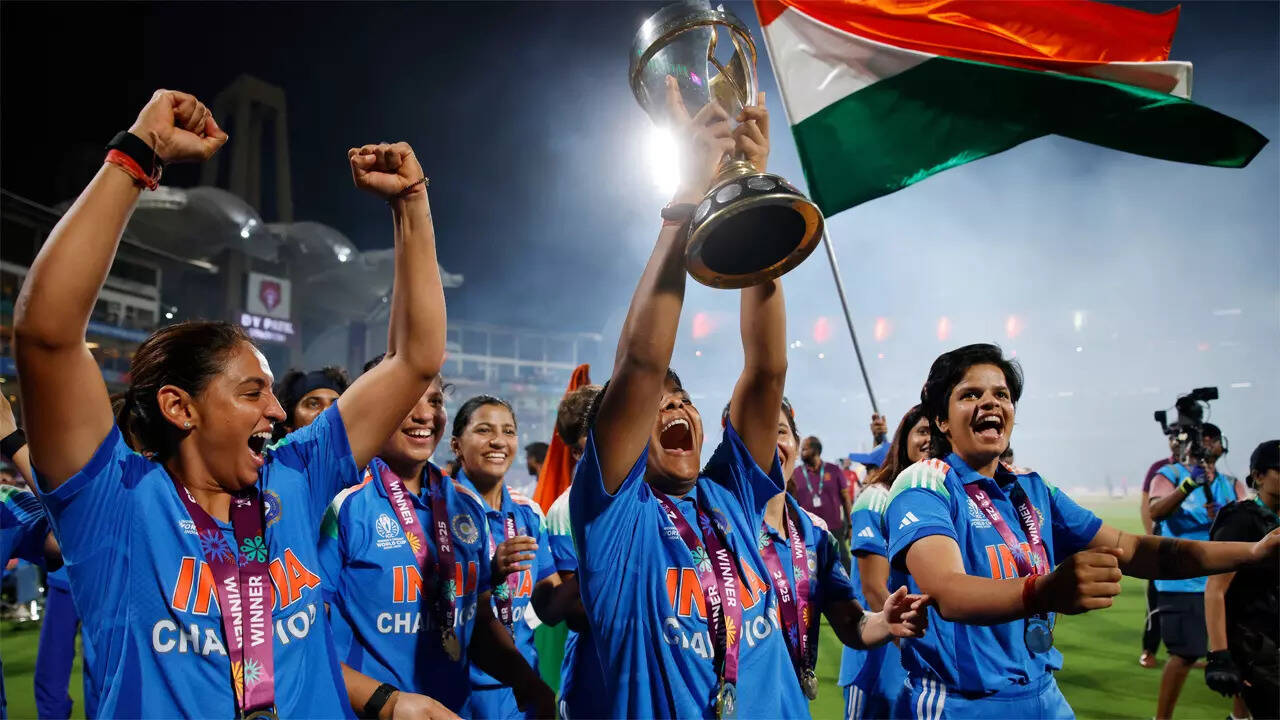
Under the bright floodlights of Navi Mumbai's DY Patil Stadium, typically reserved for men's cricket spectacles, Sunday night witnessed an event that transcended sport itself. It was both a cultural milestone and historical affirmation, delivered through the crisp sound of bat meeting ball and the precision of yorkers finding their mark.
When the final wicket fell at midnight—captured in a remarkable running catch by the captain reminiscent of the 1983 Lord's final—India claimed the Women's Cricket World Cup title, triggering fireworks across the nation. This moment of catharsis represented a collective release after decades of struggle. With over 50,000 jubilant fans packing the stadium, this victory wasn't merely about winning a trophy; it marked the decisive breakthrough that women's cricket in India had long fought for—widely recognized as its "1983 moment."
For far too long, Indian women's cricket has been defined not by achievements but by systematic barriers. The team's journey through this World Cup exemplified this harsh reality. After faltering with three consecutive narrow defeats in the group stages, reports emerged of cruel accusations suggesting players were wasting the resources provided by the BCCI—implying they didn't deserve institutional support.
Such criticism, directed at athletes competing at the highest level, reveals a deeply entrenched male skepticism—a patriarchal view that women's cricket represented an unnecessary burden rather than a source of national pride. This attitude has lurked within institutional memory, exemplified by an incident in 2011 when an incoming BCCI president reportedly told a former Indian women's captain, "If I had my way, I wouldn't allow your women's team to play cricket."
This chilling statement captures decades of official indifference and occasional outright hostility toward the women's game. It suggests women cricketers had to fight for existence before fighting for excellence. That the team not only survived but flourished to achieve global dominance despite this fundamental lack of support testifies to the resilience of generations of players.
The struggle for recognition remains intensely personal for the players. Captain Harmanpreet Kaur, now holding the golden trophy as a national icon, once reportedly failed to secure employment under the sports quota—a system designed to support elite athletes. Her world-class athletic abilities were somehow deemed insufficient for the basic security routinely granted to male counterparts. These individual battles—the employment challenges, inadequate facilities, and constant pressure to prove their worth—represent the hidden costs behind this victory.
Yet cricket is shedding its elite metropolitan constraints. Sunday's success celebrates the sport's dramatic democratization. Cricket is no longer exclusively the domain of urban centers and English-speaking backgrounds. The rise of players from diverse corners of India reveals the sport's true national reach. This victory belongs as much to emerging rural areas as to cities: the winning team includes players from Moga, Ghuwara, Kadapa, Sangli, Rohru, Siliguri, and Golaghat. The inclusion of Kanti Goud, a fast bowler from a tribal background, perfectly illustrates this transformative shift, proving that talent fueled by passion can overcome once-impenetrable socio-economic and geographical barriers.
The spark that ignited public interest was arguably the 2017 World Cup final appearance. Though India lost that title match, the team's electrifying performance in England captured the nation's imagination, revealing the potential and excitement of women's cricket. The 2017 campaign established the audience foundation and injected faith, while the 2025 World Cup victory delivered the payoff.
Success extends beyond institutional support to human perseverance. Women's cricket in India represents dogged persistence—the determination of young women choosing difficult paths and the unwavering support of their families. Against public indifference and chronic lack of financial backing, parents and siblings shouldered the burden of expenses, training logistics, and social judgment. They invested limited resources and boundless belief when systems failed. Sunday's victory partly belongs to countless families who championed their daughters' dreams against overwhelming odds.
Crucially, growing public and family support coincided with shifting media dynamics. Television channels increasingly broadcast women's matches with high-quality production and dedicated airtime—completing the essential visibility puzzle. Visibility drives sponsorship, inspires new generations, and justifies investment. The 50,000-strong crowd in Navi Mumbai directly resulted from enhanced visibility and the compelling drama captured on camera.
This World Cup triumph will catalyze profound change in India's cricket landscape, particularly for aspiring female players. Future generations of cricket-loving girls will grow up with visible, admired role models on the global stage. The era when girls faced significant barriers—like playing exclusively with boys to participate—should definitively end. As Indian batter Jemimah Rodrigues reflected on being "the only girl among 500 boys" in her childhood, today's expanded competitive opportunities and training facilities represent radical progress. Professional pathways through the Women's Premier League (WPL), alongside global competitions like The Hundred and the Women's Big Bash League, provide viable career options. This combination of on-field success and robust professional infrastructure ensures the future growth of women's cricket in India.
The nationwide celebrations, packed stadiums, and global recognition signify more than a cyclical sporting achievement. This victory marks a powerful beginning rather than an endpoint. Just as the men's 1983 World Cup victory fundamentally altered Indian cricket's economic and cultural trajectory, women's cricket—after decades fighting internal resistance and external indifference—now stands at a similar inflection point.
The Women's Premier League has established a solid financial foundation, the team has achieved ultimate global success, and a new generation sees a clear pathway to sporting glory. Historical injustices and institutional apathy have been answered with a World Cup trophy. This victory shouldn't be viewed as an anomaly but recognized as the dawn of a new era. The trophy has come home, and Indian women's cricket has irrevocably changed. History will recognize this watershed moment as when Indian women's cricket began its journey toward decades of global dominance.
These are the personal opinions of the author, Shashi Tharoor, who has been a Member of Parliament from Thiruvananthapuram, Kerala, since 2009. He is a published author and former diplomat.
Source: https://www.ndtv.com/opinion/womens-world-cup-a-1983-moment-and-the-dawn-of-desi-dominance-9572397