
Uttar Pradesh's Religious Tourism Transformation: PM Modi to Lead Historic Ram Temple Dhwaj Ceremony in Ayodhya
- Date & Time:
- |
- Views: 59
- |
- From: India News Bull
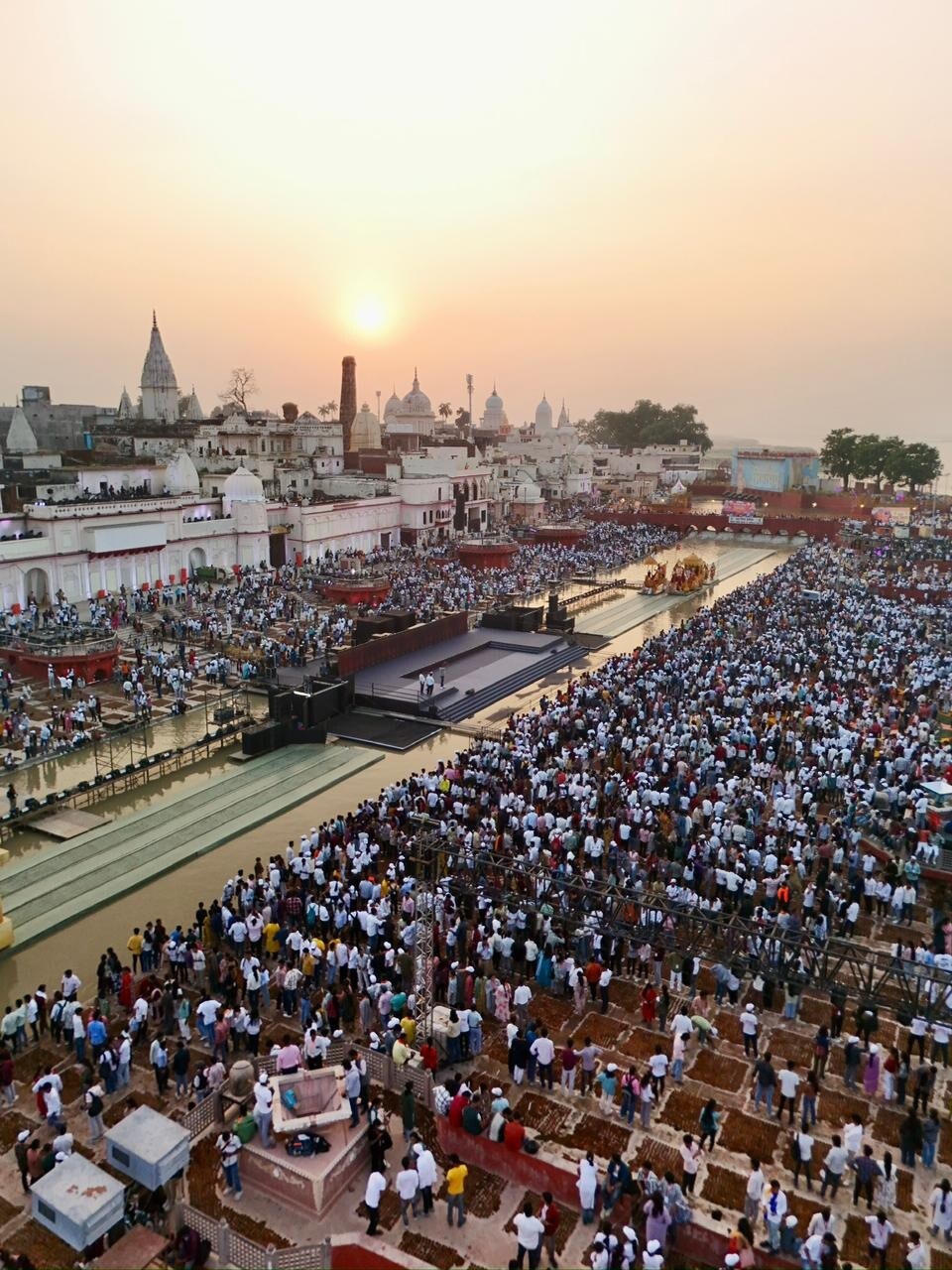
Uttar Pradesh is on the cusp of a historically significant ceremony as Prime Minister Narendra Modi prepares to hoist the Dhwaj (flag) on the Ram Temple's spire in Ayodhya on November 25. The Ram Janmabhoomi Teerth Kshetra Trust has confirmed the completion of the main temple along with six subsidiary shrines dedicated to Lords Mahadev, Ganesh, Hanuman, Suryadev, Maa Bhagwati, Maa Annapurna, and Sheshavatar, with flags and kalash installed on each structure.
This ceremony represents more than religious significance; it symbolizes a broader transformation occurring in India's most populous state. Under Chief Minister Yogi Adityanath's leadership, Uttar Pradesh has strategically positioned itself as India's premier destination for spiritual and religious tourism, blending mythological heritage with extensive infrastructure development and policy-supported tourism circuits.
The convergence of faith and infrastructure has been substantial. Over eight years, the Yogi administration has invested thousands of crores in modernizing temple towns. Ayodhya's newly developed "Ram Path," "Bhakti Path," and "Dharma Path" efficiently guide visitors from the city periphery to the temple's sacred center, integrating Lord Ram's story into the urban landscape.
The financial commitment is impressive, with Rs 4,560 crore allocated for improving roads connecting key pilgrimage sites including Ayodhya, Varanasi, Mathura, Chitrakoot, and Prayagraj. Additionally, Rs 4,200 crore has been designated for developing the Buddhist Circuit encompassing Sarnath, Kushinagar, Shravasti, Kaushambi, and other significant sites.
Private sector participation has been robust, with approximately 500 projects worth over Rs 85,000 crore announced in tourism and hospitality, nearly half targeted at Ayodhya, Varanasi, and Mathura-Vrindavan.
These investments are already yielding results in visitor numbers. Ayodhya witnessed a remarkable increase in pilgrim arrivals, hosting 16.4 million visitors in 2024, up from 5.757 million in 2023. Overall, Uttar Pradesh recorded an estimated 650 million tourist arrivals in 2024, representing a 17 percent increase from 480 million the previous year.
Varanasi's Kashi Vishwanath precinct redevelopment has similarly shown impressive outcomes, with 25.28 crore devotees visiting between December 2021 and September 2025, generating an estimated economic contribution of Rs 1.25 lakh crore to the state economy during this period.
State tourism officials have noted that "Faith-based destinations are now emerging as thriving centres of opportunity, providing livelihoods to lakhs and revitalising the local economy."
The state's tourism strategy extends beyond Hindu pilgrimage sites, with explicit focus on multiple circuits including the Ramayana Circuit, Buddhist Circuit, Krishna Circuit, and Sufi Circuits. These initiatives connect traditional pilgrimage locations with modern transportation, hospitality services, accommodations, and international outreach efforts.
The Yogi Adityanath government has established Teerth Vikas Parishads (Pilgrimage Development Councils) throughout the state to coordinate infrastructure development, heritage conservation, and tourism promotion at sacred sites.
The Buddhist Circuit has received special attention, with international outreach targeting pilgrims from Southeast Asia, Japan, and Sri Lanka. Meanwhile, the Krishna Circuit connecting Mathura, Vrindavan, and Barsana is being upgraded under a separate plan, while Sufi and Shakti circuits receive funding for conservation, accessibility improvements, and visitor facilities.
The economic impact of faith-based tourism has been substantial. Reports indicate devotees have contributed over Rs 3,000 crore in donations for the temple complex construction. This combination of private faith-based funding with public infrastructure investment has created what officials describe as a new template for participatory religious development where government planning complements voluntary devotion.
Industry analysts observe this as part of a deliberate strategy to increase tourism's contribution to the state's GDP. The 2023 Uttar Pradesh Tourism Policy outlines plans to establish religious tourism as a major economic driver, aiming to triple visitor spending by 2030.
At the Global Investors Summit in Lucknow last year, projects worth Rs 85,000 crore were announced in tourism and hospitality, including luxury hotels, wellness resorts, spiritual centers, and cultural parks primarily concentrated in Ayodhya, Varanasi, and Mathura-Vrindavan.
Varanasi's redevelopment of the Kashi Vishwanath precinct, now known as Kashi Vishwanath Dham, expanded the temple area from 3,000 square feet to nearly five lakh square feet, reconnecting the shrine to the Ganga and incorporating more than 300 small temples within its new design.
The Kashi Vishwanath Trust has reported over 25 crore visitors since the corridor's inauguration in December 2021. Officials estimate the redevelopment has generated approximately Rs 1.25 lakh crore in economic activity for the city, creating tens of thousands of jobs across hospitality, transportation, and service sectors. Enhanced visitor amenities including guided heritage walks, multimedia presentations, and improved ghats have transformed the city into a case study in heritage-driven urban renewal.
With the Ram Temple's completion, complementary facilities are being developed in Ayodhya, including new hotels, guest houses, parking facilities, and a modern airport connecting the temple town directly with major cities across India and internationally. State officials describe Ayodhya's transformation as "a model for how heritage and economy can work together."
The state has prioritized crowd management and sustainable development, seeking to balance mass tourism with preservation of sacred atmospheres. Tourism Minister Jaiveer Singh recently emphasized that "the idea is to ensure that every visitor's spiritual journey is supported by world-class infrastructure."
Officials highlight data showing faith-based tourism now accounts for over 60 percent of the state's total tourist arrivals. The economic multiplier effect has been significant—new transportation infrastructure, airports, and hospitality centers have benefited surrounding districts, generating secondary investment in retail, logistics, and small-scale industries.
Trust Chairman Nripendra Mishra stated that the November 25 event will include 6,000-8,000 invited participants representing various segments of society. "The Prime Minister will perform the aarti of the 'Ram Parivar' and hoist the Dhwaj atop the temple," Mishra explained, adding that the ceremony signifies the complete readiness of the temple and its outer boundary for devotees from worldwide.
As Prime Minister Modi prepares to lead the Dhwaj ceremony, the event marks not only the Ram Temple's completion but also a milestone in Uttar Pradesh's development narrative. For Chief Minister Yogi Adityanath, who consistently describes the state as "the spiritual heart of India," this represents validation of a long-term vision linking heritage with modernity and devotion with development.
The symbolic flag hoisting carries significance beyond faith, representing Uttar Pradesh's emergence as a center of cultural confidence and economic vitality. The coming months will test the state's ability to preserve sanctity while managing scale, but the direction is clear. From Kashi to Ayodhya, from Kushinagar to Mathura, Uttar Pradesh is creating a new chapter in Indian spiritual geography, founded equally on infrastructure and belief.
Source: https://www.ndtv.com/india-news/uttar-pradeshs-pilgrimage-push-as-pm-modi-prepares-for-dhwaj-ceremony-in-ayodhya-9572259