
Brazil's Groundbreaking Tropical Forest Conservation Fund Proposal Explained by India's Environment Minister Ahead of COP30
- Date & Time:
- |
- Views: 44
- |
- From: India News Bull
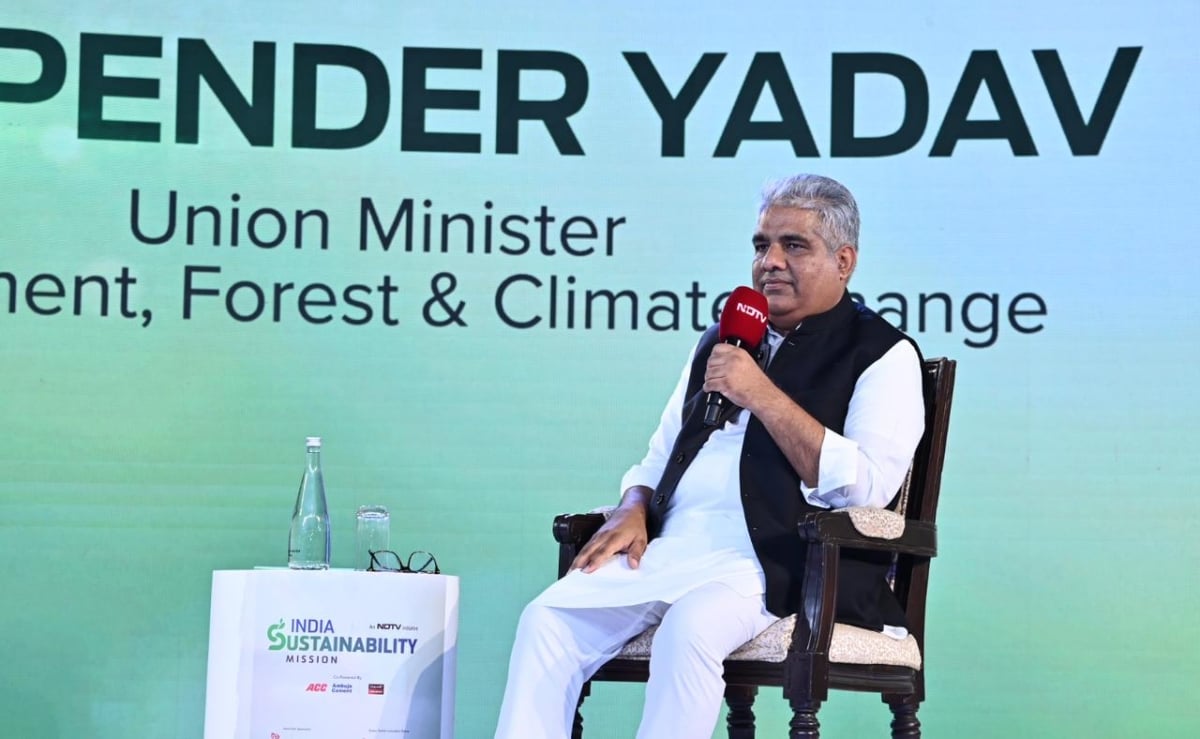
Union Environment Minister Bhupender Yadav has announced that Brazil has proposed the Tropical Forests Forever Facility (TFFF), a performance-based funding mechanism that could become the world's largest multilateral initiative for tropical forest conservation. This announcement comes just before the 30th Conference of the Parties (COP30) begins next week.
The TFFF initiative will provide consistent payments to countries that preserve their forests, with verification done through satellite monitoring. Notably, 20 percent of the funds will be designated for Indigenous communities, creating economic incentives that counter the financial drivers of deforestation.
"The world recognizes the vital role of tropical forests in combating carbon emissions and preserving biodiversity," Minister Yadav explained during a briefing session.
He emphasized that tropical nations like Brazil, which is hosting the conference in the Amazon region, are in a strategic position to lead these efforts. "Brazil possesses one of the world's richest tropical forest reserves. This proposal aims to attract investments that will prevent deforestation while supporting local communities," he added.
Hosting COP30 in Belem represents a symbolic return to the Amazon, where Brazil maintains one of Earth's most valuable rainforest ecosystems. The TFFF seeks to incorporate conservation into global climate mitigation strategies, mobilizing billions in funding to prevent the loss of carbon sinks, biodiversity, and water cycles amid increasing commodity demands.
The urgency is clear: between 2002 and 2022, tropical primary rainforests decreased by 8%—an area equivalent to Pakistan—according to Global Forest Watch data. Deforestation continues throughout the tropics, with the exception of Brazil and Indonesia, driven by illegal logging, harmful subsidies, and governance challenges.
COP30 coincides with the 10th anniversary of the Paris Agreement and follows increased global tensions after the United States withdrew from climate commitments during the Trump administration. "Despite geopolitical challenges, from Ukraine to Gaza, global unity on climate action remains essential. India represents the Global South, advocating for equity in negotiations," Minister Yadav stated.
Another key priority is the development of adaptation indicators under Article 7 of the Paris Agreement. "These indicators must align with national circumstances, monitor finance, technology, and capacity flows, while respecting data sovereignty. Developing nations face unique vulnerabilities, and we require flexibility to avoid disproportionate burdens," Yadav explained.
Minister Yadav highlighted India's remarkable progress in renewable energy, with capacity expanding from 2.7 GW in 2014 to 127 GW today—a 45-fold increase. "We've successfully reduced emissions intensity while representing groups such as LMDCs and BRICS," he noted.
Addressing domestic environmental challenges, he discussed Delhi's air pollution, attributing improvements to BS-6 fuel implementation and industrial enforcement measures, though pollution levels remain concerning. He also celebrated conservation successes, including India's cheetah reintroduction program that has now produced a third generation, and forest cover increases that rank India third globally in net forest growth according to UN assessments.
As COP30 commences on November 11, Minister Yadav confirmed India's commitment to fostering consensus. "This is a significant COP—restoring confidence in multilateralism after Paris. We'll promote ethical dialogues that combine science with spirituality, inspired by Prime Minister Modi's Panchamrit principles," he said.
Nations attending the upcoming COP30 climate summit will engage in intense negotiations regarding adaptation indicators to measure resilience progress, while prioritizing the implementation of the global stocktake initiated in Dubai. The procedural frameworks are scheduled for finalization at COP33 in 2028, alongside intensified discussions on climate finance, technology implementation programs, and gender action initiatives to advance equitable transitions and global mitigation efforts.
Key agenda items for COP30 include:
- Climate Finance: Advocating for reforms to multilateral banks and increased private sector participation to fulfill the $100 billion annual commitment, with new proposals to scale up financial flows.
- Just Transition and Mitigation: Furthering work programs for equitable shifts away from fossil fuel dependence.
- Technology Implementation: Operationalizing technology transfers to address gaps identified in the Dubai Global Stocktake.
- Gender Action Plan: Strengthening women's participation in climate resilience initiatives.
Source: https://www.ndtv.com/india-news/environment-minister-bhupendra-yadav-on-brazils-new-proposal-to-protect-trees-9569253