
Delhi's Air Quality Crisis: Only 9 of 37 Monitoring Stations Functional During Diwali as Supreme Court Demands Answers
- Date & Time:
- |
- Views: 54
- |
- From: India News Bull
New Delhi:
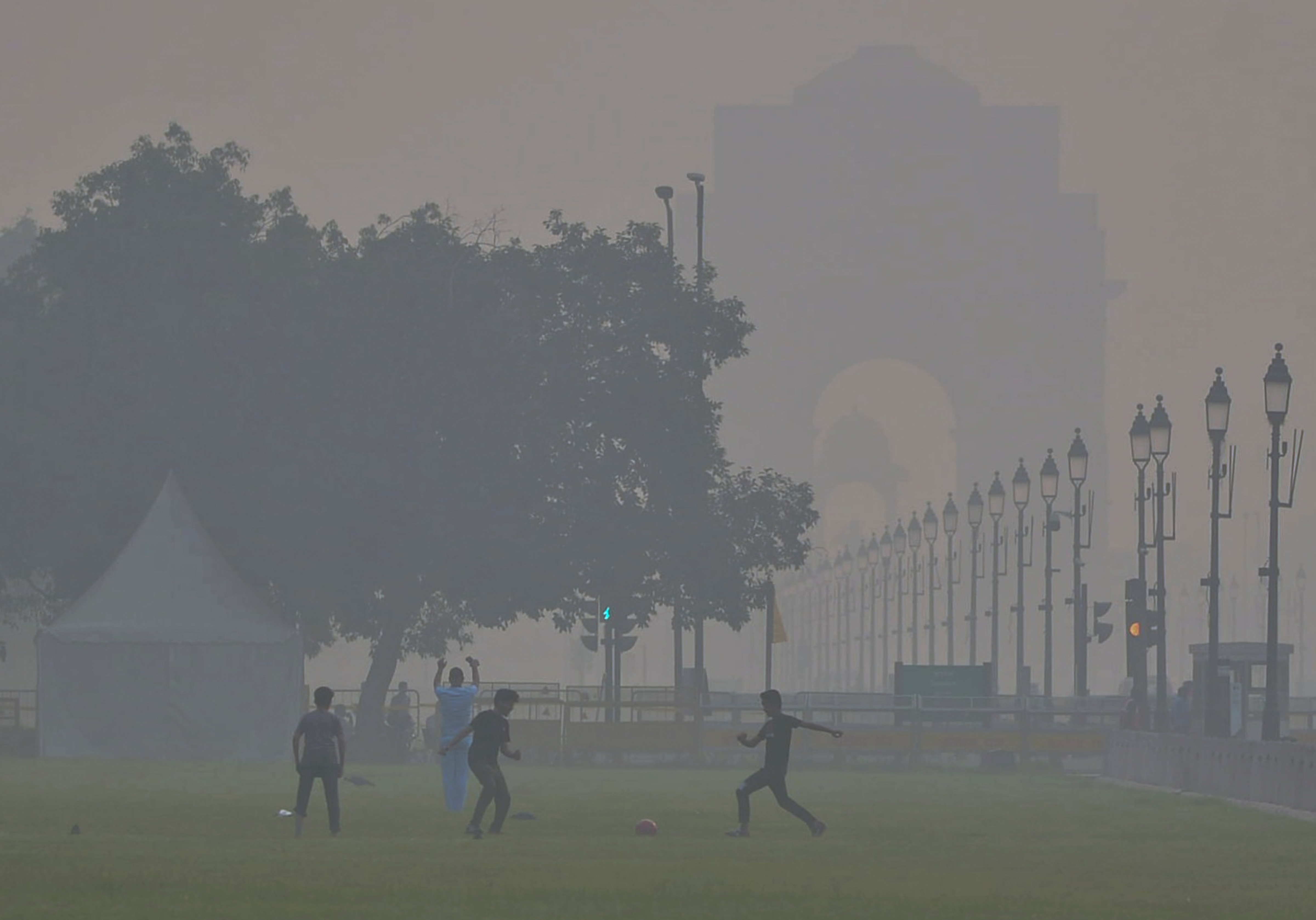
The Supreme Court was informed on Monday that merely nine out of Delhi's 37 air quality monitoring stations were operational during Diwali, when the capital city was engulfed by toxic smog from various sources including 'green' firecrackers, vehicular emissions, dust, and harmful particulate matter from agricultural fires.
Aparjita Singh, the court's amicus curiae, raised serious concerns about how the Commission for Air Quality Management (CAQM) could effectively execute its statutory responsibility to improve Delhi's air quality without essential pollution data from across the city.
"We don't even know when to implement GRAP (Graded Response Action Plan). That is the severe situation," Singh emphasized, questioning, "what is the situation of monitoring stations? Because on Diwali, out of 37, only nine were working."
Singh further questioned why the CAQM was "shrinking from filing a report" on the matter.
In response, the bench headed by outgoing Chief Justice BR Gavai instructed both the CAQM and the Central Pollution Control Board (CPCB) to provide a comprehensive report detailing their efforts to enhance air quality.
NDTV's research conducted on October 21, the day after Diwali, revealed that the Air Quality Index (AQI) had deteriorated to a five-year post-Diwali low, despite a significant 77.5 percent reduction in farm fires, which are typically a major contributor to air pollution.
Average PM2.5 concentrations reached alarming levels of 488 micrograms per cubic meter—approximately 100 times higher than the World Health Organization's recommended exposure limit—marking a devastating 212 percent increase from pre-Diwali measurements.
Air pollution levels actually reached their highest point in three years, despite the Supreme Court's authorization of 'green' firecrackers within designated time periods.
However, judging by the dense gray haze that blanketed the city on the morning after Diwali, along with the persistent acrid chemical odor, these regulations appeared to have been disregarded.
Today's court proceedings occurred as Delhi continues to struggle with breathable air and increasingly dangerous pollution levels. The AQI in most areas of the city remained well above hazardous thresholds: 335 in RK Puram, 350 in Sonia Vihar, 352 in Rohini, and 377 in Wazirpur. Other locations, including Siri Fort in upscale South Delhi, registered readings exceeding 330.
CPCB data indicated PM2.5 concentrations at 189.6 micrograms per cubic meter and PM10 at 316—both substantially exceeding safe limits. These invisible particles silently infiltrate the lungs and bloodstream, presenting potentially fatal health risks, particularly for children and the elderly.
The overall air quality in the city—one of the world's most polluted—remains in the 'very poor' category at 316. This represents a slight improvement from Sunday's reading of 366, when data from three operational AQI monitors showed readings above 400, placing them in the 'severe' category.
Source: https://www.ndtv.com/india-news/delhi-air-quality-crisis-delhi-air-pollution-supreme-court-news-supreme-court-on-delhi-aqi-delhi-aqi-monitoring-stations-9566334