
The JP Movement: How Jayaprakash Narayan Led Bihar's Student Protests to Challenge Indira Gandhi's Government
- Date & Time:
- |
- Views: 49
- |
- From: India News Bull
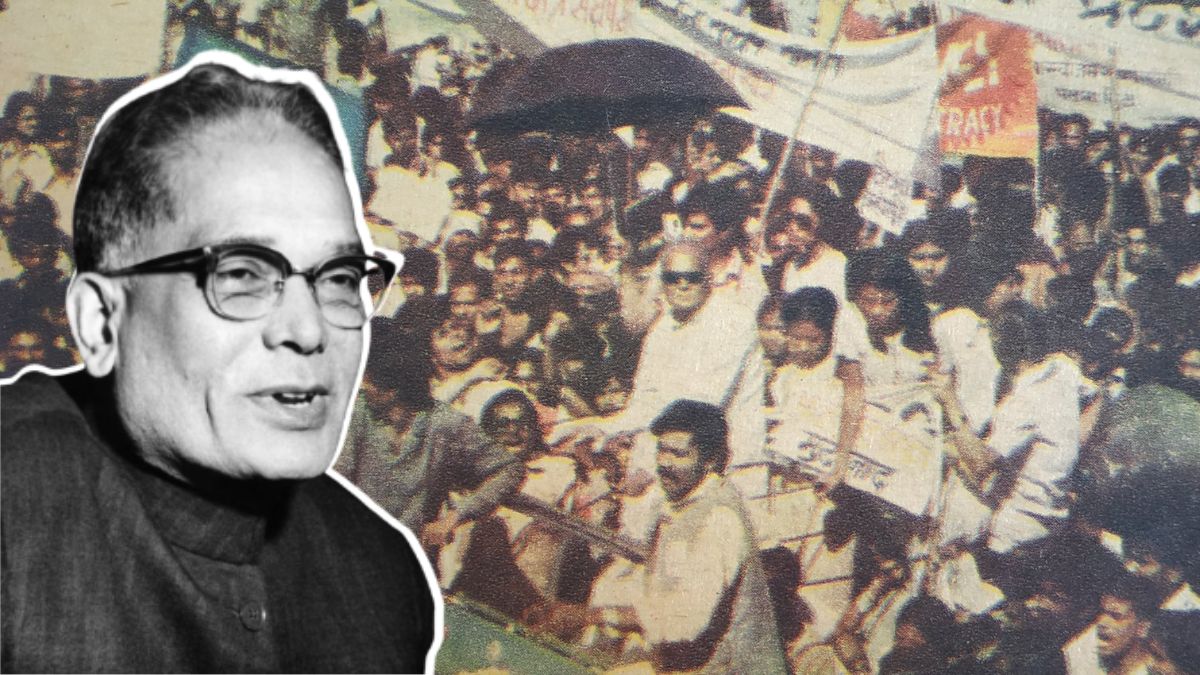
At 71, Jayaprakash Narayan had retreated from political life, dedicating himself to social reform rather than engaging in party politics.
New Delhi:
In the early 1970s, India was still finding its footing as a young democracy, barely 25 years into independence. The nation had recently mourned the loss of two influential Prime Ministers, Pandit Jawaharlal Nehru and Lal Bahadur Shastri, who passed away in quick succession during the previous decade. Indira Gandhi had risen to leadership and transformed into a national icon following India's triumph over Pakistan in the 1971 conflict, which resulted in Bangladesh's creation.
Despite the wave of patriotic sentiment, a crisis was developing beneath the surface. The country faced severe food shortages, inflation, widespread unemployment, soaring prices, and corruption allegations. Within a few years, what began as student protests evolved into powerful movements across Gujarat and Bihar.
The Nav Nirman movement erupted in 1974 when a hostel fee increase in Ahmedabad sparked protests that ultimately brought down the Congress government in Gujarat.
Bihar soon followed with its own uprising. The state had experienced political instability with 11 different governments between 1967 and 1974. Rampant corruption and unemployment drove students to protest. On March 18, 1974, the Chhatra Sangharsh Samiti (CSS), a coalition of student organizations including the ABVP and Samajwadi Yuva Jana Sabha, surrounded the Bihar Assembly in Patna.
The demonstration ended tragically with police opening fire, killing three students. Additional deaths occurred in April as unrest spread throughout the state. Looking for guidance, students turned to Jayaprakash Narayan (JP), a veteran socialist leader.
At 71, JP had withdrawn from politics to focus on social reform rather than party conflicts. Having once been close to Nehru, he still referred to Indira Gandhi as "Indu." Understandably, he initially hesitated to join the movement. Only after persistent appeals from students, poet Ramdhari Singh Dinkar, and journalist Ramnath Goenka did he finally agree to lead.
Born in 1902 in Sitab Diara, Bihar, Jayaprakash Narayan had studied in America, embraced socialist principles, and dedicated himself to India's independence struggle. As a leader of the Congress Socialist Party, he endured imprisonment during the 1942 Quit India movement.
Following Independence, JP distanced himself from electoral politics, devoting his energy to the Bhoodan and Sarvodaya movements alongside philosopher Vinoba Bhave, advocating for land redistribution and rural development. He earned the revered title of Lok Nayak, meaning People's Leader.
On June 5, 1974, addressing a crowd at Patna's Gandhi Maidan, JP called for Sampoorna Kranti (Total Revolution). He demanded the elimination of corruption, purification of politics, and rebuilding India based on grassroots democracy. He encouraged students to boycott classes for a year to raise political awareness across the country.
Throughout late 1974, JP traveled across Bihar and beyond, mobilizing students and citizens. His supporters included socialists, landowners, Hindu nationalists, and ordinary people who felt betrayed by the Congress party.
Indira Gandhi perceived this movement as a direct challenge to democratic governance. She met JP in Delhi on November 1, 1974. He demanded the dissolution of state assemblies, which she refused to consider.
Their discussions concluded in disagreement.
Days afterward, police mistreated JP at a rally in Patna. The image of the elderly leader being dragged by his hair outraged the public.
By the end of 1974, the nation was deeply divided. While Indira Gandhi's critics accused her of corruption and authoritarian tendencies, JP's opponents claimed he was undermining democracy by aligning with the Jana Sangh.
The situation was rapidly changing. Two pivotal events in June 1975 determined the course of history. On June 12, the Allahabad High Court invalidated Indira Gandhi's 1971 election victory due to electoral misconduct. On June 25, as protests intensified, she declared a state of Emergency.
For 21 months, civil liberties were suspended, Opposition leaders were imprisoned, and media was censored.
When elections finally took place in March 1977, the Janata Party, united under JP's moral leadership, achieved a decisive victory, ending the Congress party's dominance.
The movement had accomplished its objective. It defeated the nation's 'Iron Lady,' who just a few years earlier had seemed unbeatable.
Source: https://www.ndtv.com/india-news/jp-movement-bihar-national-revolution-history-the-jp-movement-of-1970s-how-bihar-sparked-a-national-revolution-9322467