
NSA Ajit Doval Highlights How Weak Governance Led to Regime Changes in South Asian Nations
- Date & Time:
- |
- Views: 62
- |
- From: India News Bull
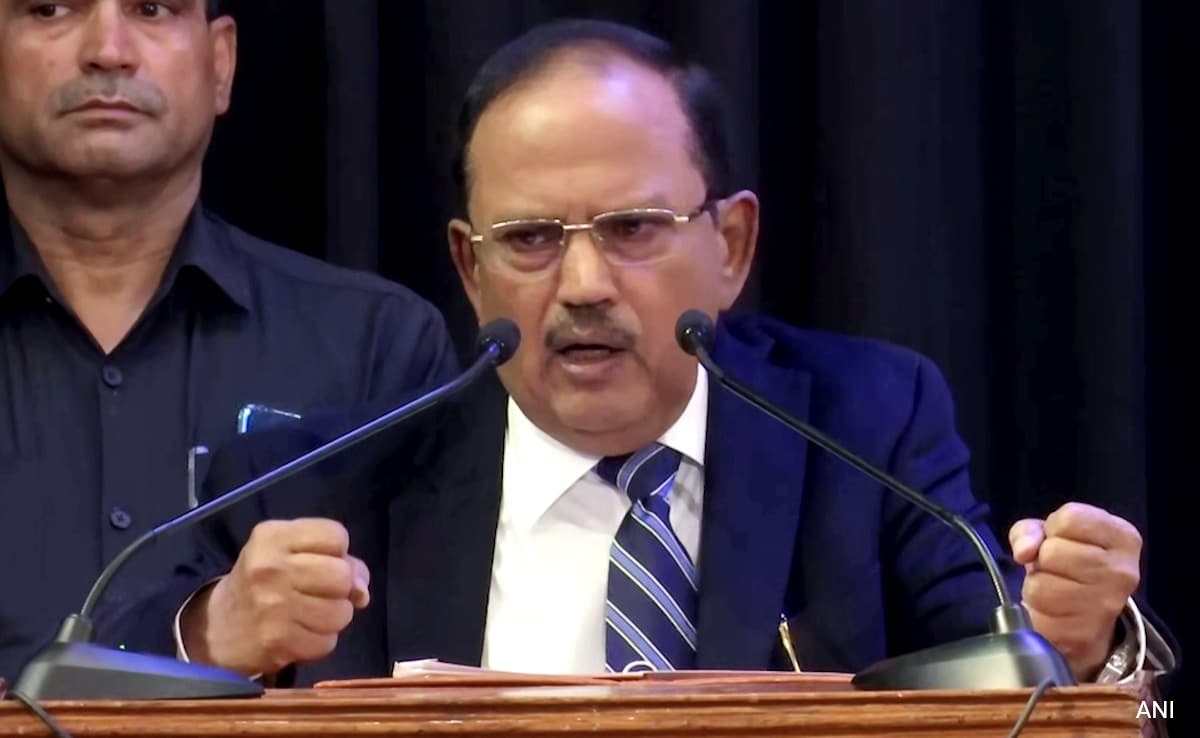
NSA Ajit Doval delivered remarks on Rashtriya Ekta Diwas at a lecture in New Delhi.
National Security Advisor Ajit Doval emphasized on Friday that governance serves a fundamental role in nation-building and national security, enabling countries to achieve their objectives and fulfill citizens' aspirations.
During his Rashtriya Ekta Diwas lecture, Doval pointed out that a growing challenge in modern governance is the increasing necessity to meet the expectations of ordinary citizens.
"Today's common man has become more informed and aspirational, with higher expectations from the state, and governments have a vested interest in ensuring citizen satisfaction," he remarked.
Highlighting weak governance as a potential catalyst for regime change, the NSA referenced examples of governments overthrown through non-institutional methods in Bangladesh, Sri Lanka, Nepal and other nations.
"A nation's strength lies in its governance. Governments function through institutions, and the most valuable individuals in nation-building are those who establish and nurture these institutions," Doval stated.
Praising Prime Minister Narendra Modi's governance model, he observed, "India is experiencing an orbital shift, not only in governance style and governmental structure but also in its position within the global order."
The NSA also noted institutional reforms implemented by the current administration to address institutional corruption, suggesting that additional measures may be forthcoming.
He remarked that during times of transformation, "clarity of vision is paramount—not becoming blinded by turmoil, intimidated by threats, or discouraged by challenges."
"Preparation and equipping oneself is essential. This exemplifies Vallabhai Patel's life," Doval said, highlighting Patel's contributions to the freedom movement alongside Mahatma Gandhi and his post-independence efforts to integrate over 500 princely states into a unified India.
Doval also attributed India's robust governance framework to Vallabhai Patel's vision for establishing all-India services.
As a crucial component of effective governance, the NSA emphasized the importance of protection, safety, and promoting equality and empowerment for women.
"Women's empowerment is essential for good governance in the modern world. Having sound laws, structures, and systems is important, but implementing them effectively is even more critical," he asserted.
Doval underscored the need to leverage technology in governance: "We must utilize technology to ensure greater transparency, accountability, and improved service delivery to citizens."
He concluded by stating that society must be safeguarded against emerging challenges such as cyber threats and other technology-related risks.
Source: https://www.ndtv.com/india-news/weak-governance-led-to-regime-change-in-bangladesh-nepal-sri-lanka-national-security-advisor-ajit-doval-9555066