
Women's Representation in Bihar Elections Hits 15-Year Low Despite Voter Outreach Efforts
- Date & Time:
- |
- Views: 69
- |
- From: India News Bull
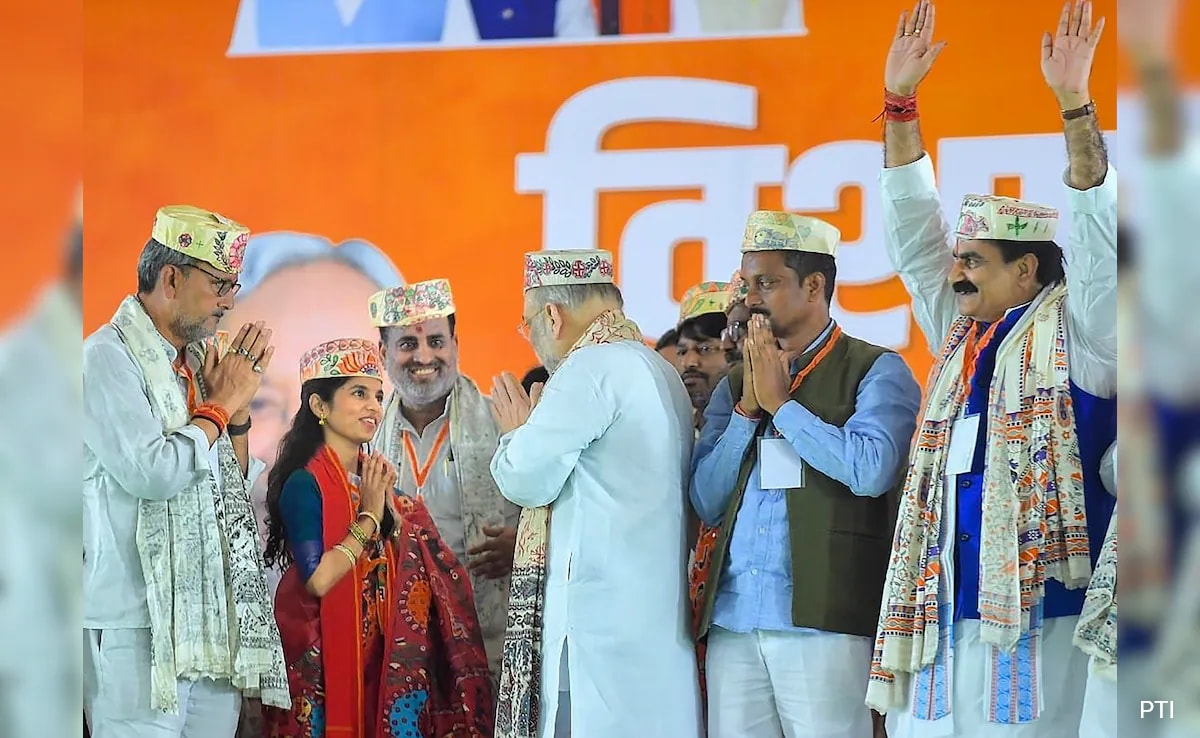
BJP candidate Maithili Thakur shares the stage with Amit Shah during a campaign event.
The electoral contest in Bihar has reached a critical phase with political parties actively courting women voters while simultaneously failing to provide adequate representation for female candidates. This election features just 258 women candidates compared to 2,357 male contenders.
With merely 15 days remaining before polls open, women voters represent a crucial demographic, especially for the National Democratic Alliance (NDA). The state administration has implemented various welfare initiatives targeted at women, including transferring Rs 10,000 to the bank accounts of 1.25 crore women through the Chief Minister's Women Employment Scheme.
The government has established a 35 percent reservation for women in police recruitment and 50 percent in panchayats and local bodies, aiming to enhance their role in governance. Additional measures such as low-interest loans for Jeevika Didis, increased allowances for ASHA and Mamata workers, and employment scheme priorities have strengthened NDA's connection with female voters.
Meanwhile, the opposition Mahagathbandhan coalition has promised to regularize all contractual and outsourced employees and elevate all Jeevika women to permanent government positions with monthly salaries of Rs 30,000 if elected. Their "Mai-Bahin Maan Yojana," which would provide women Rs 2,500 monthly for five years starting December 1, was highlighted in the recently released 'Tejashwi Pran' manifesto.
When questioned about the limited female candidacy, political organizations universally cite "winnability" as the primary concern.
In the current election cycle, BJP has fielded 13 women candidates, Congress 5, JD(U) 13, RJD 23, Jan Suraaj 25, while Bahujan Samaj Party leads with 26 female candidates. The previous Assembly election saw 26 women MLAs elected from 370 female contestants, representing a seven percent success rate, compared to approximately ten percent for male candidates.
Statistical analysis reveals a declining trend in women's representation across most political parties. JD(U) reached its peak in 2020 with 22 women candidates but has decreased in 2025. Conversely, RJD has demonstrated consistent growth, increasing from nine women candidates in 2015 to 23 in 2025. Prashant Kishor's Jan Suraaj Party made a notable entrance this year with 25 women candidates. BJP has maintained relatively stable participation across recent elections, while CPI-ML experienced significant decline after 2015. Congress continues showing a downward trajectory.
During the 2020 assembly elections, BJP's women candidates achieved a remarkable 69 percent success rate, with 9 of 13 winning their constituencies. RJD followed with 44 percent, Congress with 29 percent, and JD(U) with 27 percent.
Despite recurring commitments to enhance women's political participation, the numbers demonstrate a persistent decline, making this election the lowest for female representation in Bihar over the past 15 years.
Source: https://www.ndtv.com/india-news/lowest-number-of-women-candidates-in-bihar-elections-in-15-years-9553878