
Understanding the Controversy: Why Bangladesh's National Anthem at Congress Event Isn't Problematic
- Date & Time:
- |
- Views: 60
- |
- From: India News Bull
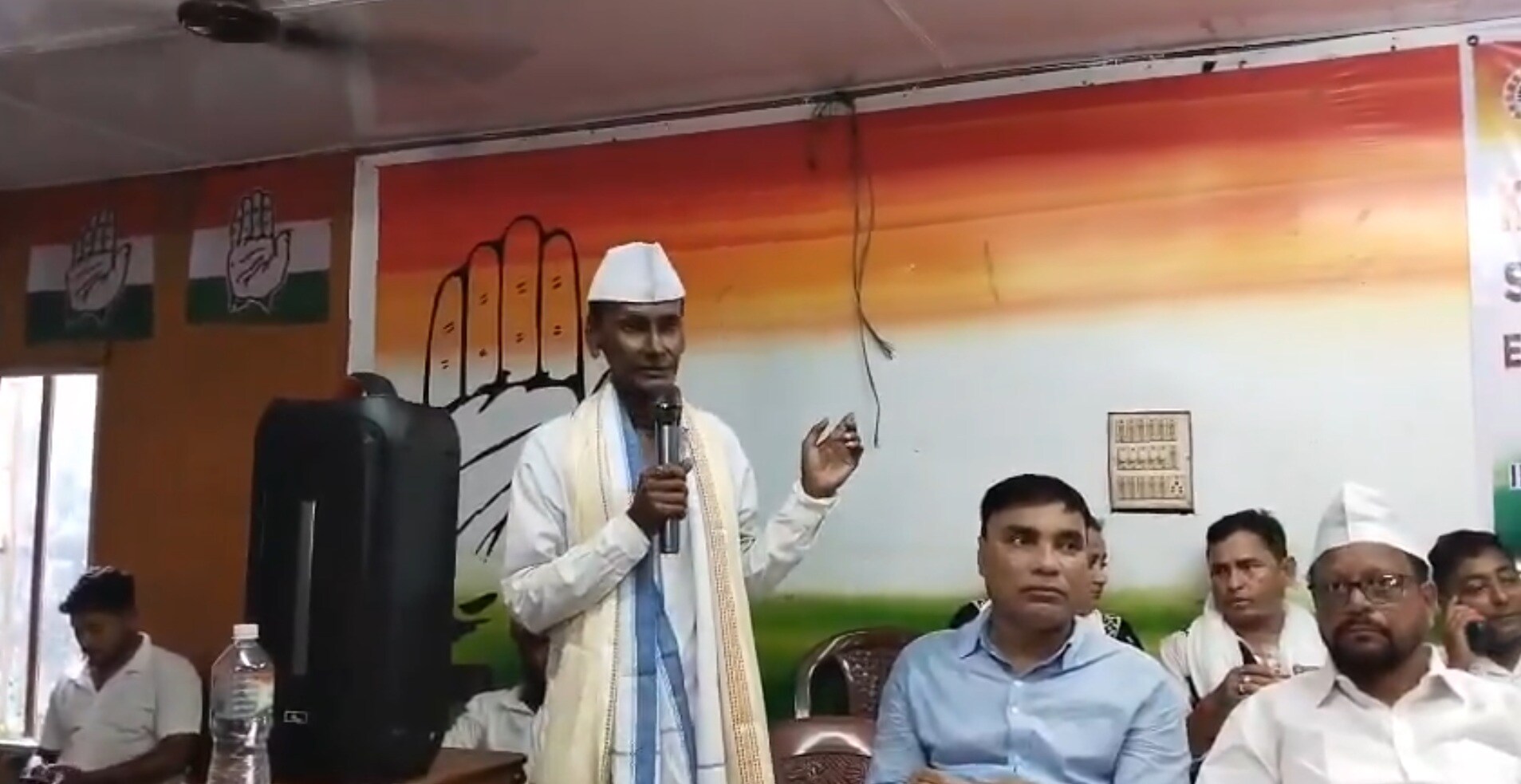
A video showing a Congress leader singing Amar Sonar Bangla at a party gathering has triggered controversy in Assam.
The BJP's Assam unit has criticized Congress after footage emerged of a district-level leader performing Amar Sonar Bangla, Bangladesh's national anthem, during a party event in Sribhumi district. BJP representatives labeled Congress as "Bangladesh-obsessed" and connected the incident to a recent controversy involving a Bangladesh map that incorporates most of Northeast India.
However, the BJP's criticism misses important context. Amar Sonar Bangla, which translates to "My Golden Bengal," was composed by Rabindranath Tagore in 1905 as a protest against Bengal's first partition. This division sparked widespread demonstrations against British rule, leading to the reversal of the partition by 1911. Bangladesh later adopted this composition as its national anthem following independence in 1971, nearly seven decades after Tagore wrote it.
The song celebrates Bengal's natural beauty and expresses the profound connection Bengalis feel with their homeland. Bengali speakers on both sides of the India-Bangladesh border frequently perform Amar Sonar Bangla at various gatherings. Several restaurants across India serving Bengali cuisine, including establishments in Delhi, bear the name Amar Sonar Bangla.
Sribhumi district in Assam, formerly known as Karimganj, shares a border with Bangladesh and forms part of the Bengali-majority Barak Valley region. Given this demographic reality, the performance of Amar Sonar Bangla at a local event should not be surprising.
Congress MP Gaurav Gogoi, who serves as the party's deputy leader in Lok Sabha, defended the performance: "Bidhu Bhusan Das, an 80-year-old senior member of our party, sang the Bengali song 'Amar Shonar Bangla,' a beautiful composition by Rabindranath Tagore."
"Unfortunately, the BJP cell is criticizing this, claiming it to be a song of the Muslim community and the national anthem of Bangladesh. They fail to understand the historical and cultural significance of the song. It was written by Rabindranath Tagore, a Nobel laureate and one of India's greatest poets. Why can't we sing a Bengali song that celebrates our shared heritage and literary legacy?" he questioned.
Despite this explanation, BJP representatives continued their criticism. The party's Assam unit posted on X: "The signs couldn't be louder. Just days ago, Bangladesh dared to publish a map swallowing the entire Northeast and now the Bangladesh-obsessed Congress is proudly singing Bangladesh's national anthem right here in Assam. If after this someone still can't see the agenda at play, then they're either blind, complicit or both."
Assam minister Ashok Singhal also weighed in, stating: "Bangladesh's national anthem 'Amar Sonar Bangla' sung at a Congress meeting in Sribhumi, Assam - the same country that wants to separate the Northeast from India!"
He further claimed: "Now it's clear why Congress, for decades, allowed and encouraged illegal Miya infiltration into Assam - to change the state's demography for vote-bank politics creating a 'Greater Bangladesh.'"
Relations between India and Bangladesh have deteriorated following a nationwide movement that resulted in a regime change in Dhaka last year. Sheikh Hasina, Bangladesh's former Prime Minister and a long-term ally of India, sought refuge in Delhi. In the wake of this political shift, India has expressed concerns about mistreatment of minorities in Bangladesh.
Recently, Bangladesh's interim government Chief Advisor and Nobel laureate Muhammad Yunus met with Pakistan's Chairman of Joint Chiefs of Staff Committee, General Sahir Shamshad Mirza, to discuss relations between Dhaka and Islamabad.
During this meeting, Yunus presented Mirza with a book titled 'Art of Triumph: Bangladesh's New Dawn.' The book cover features a map of Bangladesh that incorporates parts of several Indian northeastern states including Assam, Arunachal Pradesh, Manipur, Meghalaya, Mizoram, Nagaland, and Tripura. This map has provoked strong reactions across social media platforms.
Source: https://www.ndtv.com/india-news/amar-sonar-bangla-assam-congress-bangladesh-national-anthem-sung-at-congress-event-why-its-not-a-problem-9535260