
Chief Justice Gavai: Courts as Moral Conscience of Constitution Protecting Democracy and Fundamental Rights
- Date & Time:
- |
- Views: 68
- |
- From: India News Bull
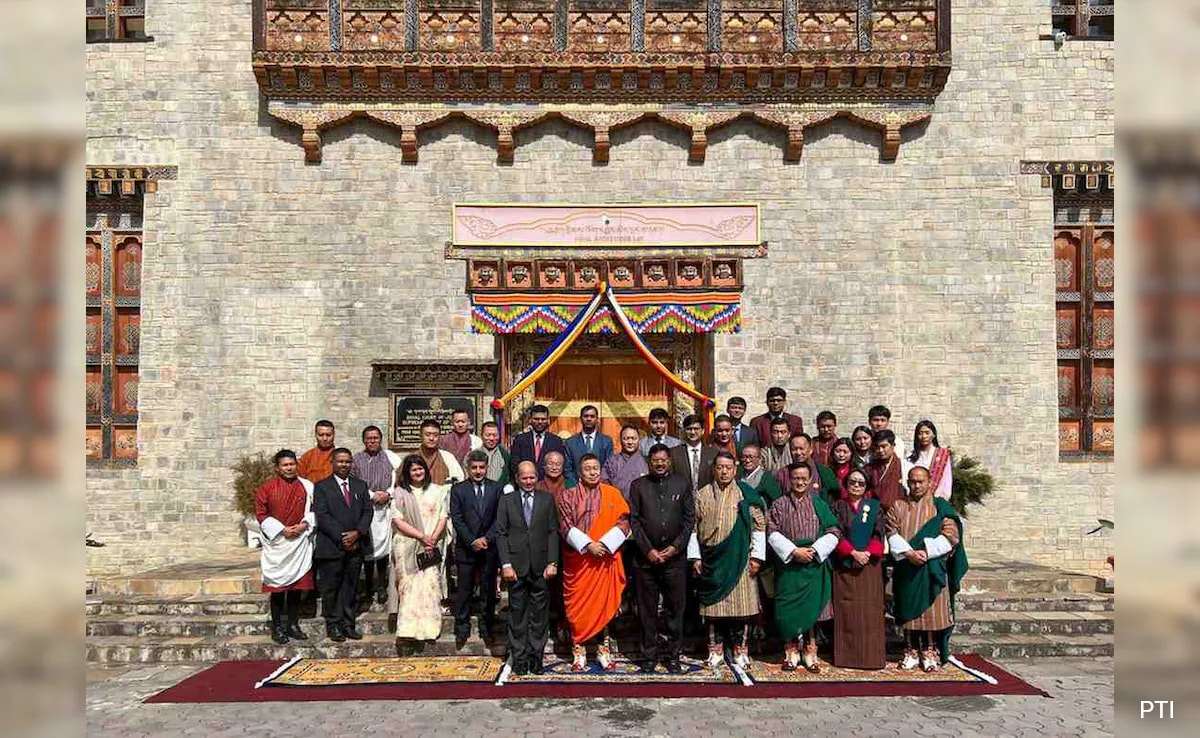
Chief Justice of India BR Gavai addressed an event in Thimphu, Bhutan, emphasizing that courts serve beyond dispute resolution as the "moral conscience of the Constitution" with responsibilities for preserving democracy, safeguarding fundamental rights, and ensuring accountability of power.
During his lecture on "Courts and Constitutional Governance" at the Fifth Wisdom for Future Talk Series hosted by JSW School of Law at the Royal Institute of Management, CJI Gavai explored India's constitutional development and its parallels with Bhutan's constitutional framework.
"Courts are not merely adjudicatory bodies that resolve disputes between parties," he stated. "They are vital organs of constitutional governance that safeguard the rule of law, protect fundamental rights, and ensure that every exercise of power remains accountable to constitutional principles."
Princess Sonam Dechan Wangchuck, President of the JSW School of Law, Bhutan's Chief Justice Norbu Tshering, members of the Bhutanese judiciary, scholars, and students attended the prestigious event.
CJI Gavai described Bhutan as "a living lesson in what an ideal civilization could be," highlighting how the nation demonstrates "progress in harmony—between human aspiration and nature's rhythm, between tradition and modernity."
"Bhutan's example invites the world to rediscover the art of balanced and compassionate living," he remarked, noting that India and Bhutan share a civilizational bond nurtured by common spiritual inheritance expressed through Buddha's teachings.
The Chief Justice reflected on landmark judgments that have shaped India's constitutional identity. Referencing the Kesavananda Bharati v. State of Kerala case, he explained how the Supreme Court established that Parliament could amend the Constitution but could not alter its basic structure.
"The decision marked a turning point in constitutional thought, recognizing that amendment cannot become destruction, and that the Constitution must preserve its spirit even as it adapts to changing times," CJI Gavai elaborated.
He noted that the "basic structure doctrine" has since become foundational to India's constitutional philosophy and has influenced courts worldwide. The Chief Justice identified various rights—including free legal aid, speedy trial, education, health, shelter, clean environment, privacy, and protection from climate change impacts—as essential components of the right to life's expansive interpretation.
"This approach compels the State to translate constitutional guarantees into tangible actions," he stated, asserting that rights are meaningful "only when they are enforceable, accessible, and capable of shaping the lived experience of the citizen."
CJI Gavai emphasized that judicial legitimacy comes not from coercive authority but moral integrity. "Public trust is the judiciary's most valuable asset," he said, adding that "Courts earn this trust through transparency, reasoned judgments, and consistent adherence to constitutional principles."
He stressed that judicial decisions must reflect fairness and moral courage, stating: "When citizens believe that justice will be done without fear or favor, the legitimacy of the entire constitutional system is strengthened."
In his conclusion, the Chief Justice praised Bhutan's constitutional commitment to Gross National Happiness, describing it as a constitutional vocabulary that unites justice with joy, rights with responsibilities, and liberty with collective flourishing.
"We share not only a geographical neighborhood but also a deep commitment to constitutional values, justice, and human dignity. We are, and will continue to be, there for each other: as partners in the pursuit of a fair and compassionate world," he affirmed.
Expressing that he would cherish "fond memories of Bhutan's warmth, wisdom, and friendship," CJI Gavai concluded, "May our shared commitment to justice and compassion continue to guide our paths forward," ending with "Kadrinchey la"—Bhutanese for "Thank you."
Source: https://www.ndtv.com/india-news/courts-moral-conscience-of-constitution-protects-democracy-chief-justice-of-india-br-gavai-9505903