
India-Canada Relations: A New Era of Diplomatic Reset and Economic Cooperation Under Foreign Minister Anand's Visit
- Date & Time:
- |
- Views: 60
- |
- From: India News Bull
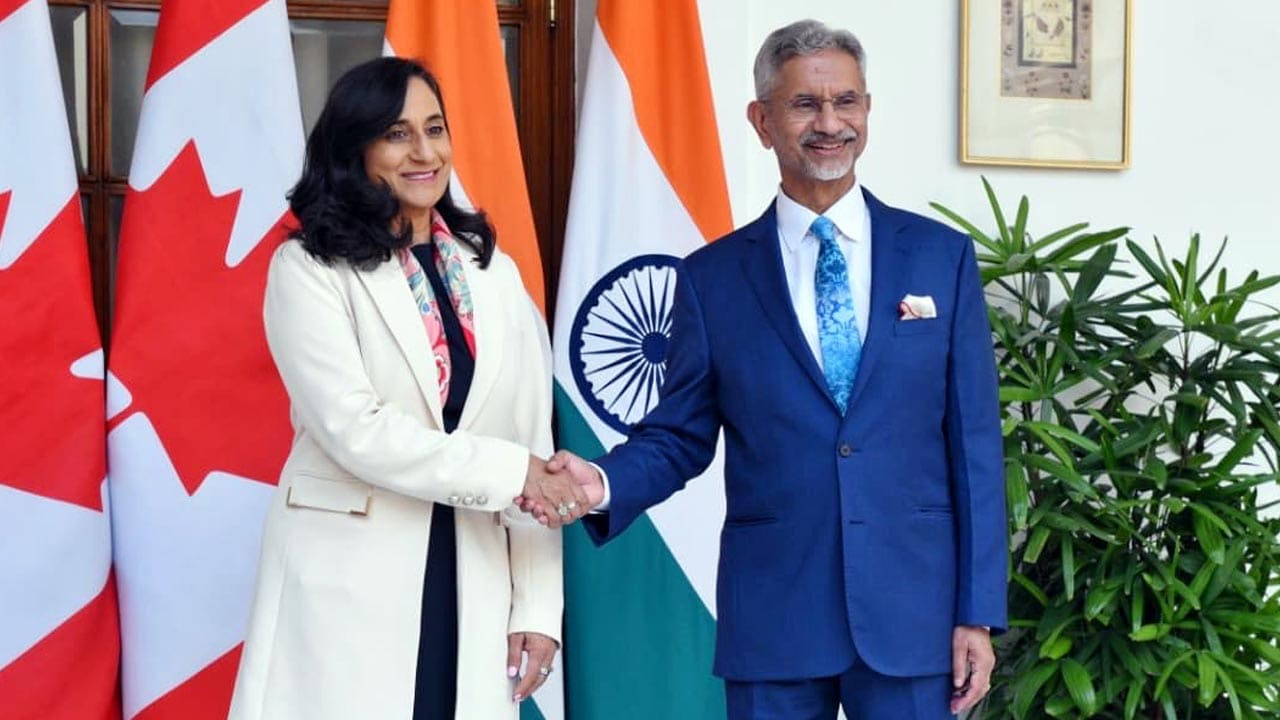
Canadian Foreign Minister Anita Anand's recent diplomatic mission to New Delhi represents a significant milestone in the cautious restoration of India-Canada relations. Following two years of tension sparked by former Prime Minister Justin Trudeau's allegations regarding a Sikh separatist's killing on Canadian soil, this visit signals both nations' determination to emphasize mutual economic and strategic benefits over past diplomatic conflicts.
The visit's primary achievement was the establishment of a "New Roadmap for India-Canada Relations," creating a systematic framework to revitalize institutional cooperation across critical sectors. This demonstrates a shared commitment to moving beyond the diplomatic nadir of 2023. Minister Anand's three-day engagement included substantive meetings with Prime Minister Narendra Modi, External Affairs Minister S Jaishankar, and Commerce Minister Piyush Goyal, focusing on rejuvenating dormant cooperation mechanisms.
This visit itself marked a notable diplomatic breakthrough as the first ministerial-level engagement since the 2023 crisis. Building upon earlier progress including the reinstatement of High Commissioners and National Security Advisor dialogues, it confirms the restoration of fundamental diplomatic channels. The "New Roadmap" represents a pragmatic shift toward concrete action plans rather than sweeping declarations, concentrating on rebuilding political, economic, and technological partnerships.
Several critical dialogue mechanisms have been reactivated. These include commitments to ministerial-level trade and investment discussions, the relaunched Canada-India Ministerial Energy Dialogue (CIMED) focusing on clean energy initiatives, LNG, and critical minerals, plus a joint Science and Technology Cooperation Committee to enhance technological collaboration. Minister Anand's Mumbai visit to engage with investors and business leaders highlighted the vital role of the Indian-Canadian diaspora community, which continues to serve as a foundation for bilateral relations.
Economic and technological cooperation emerged as the most promising and immediate area for renewed engagement, driven by mutual interests in supply chain diversification beyond American and Chinese markets. While formal Comprehensive Economic Partnership Agreement (CEPA) negotiations remain suspended, the focus has shifted to enhancing current trade and investment based on mutual respect. As Canada's seventh-largest trading partner in goods and services, India presents enormous economic potential. Discussions specifically targeted opportunities in agriculture, clean technology, renewable energy, and critically important minerals—an area currently dominated by Chinese suppliers that could align Canadian resources with Indian industrial requirements.
The CIMED relaunch indicates strategic alignment on climate objectives. Canada's clean energy expertise positions it as a valuable partner for India's decarbonization and renewable energy expansion initiatives. Similarly, the Joint Science and Technology Cooperation Committee's revival signals shared aspirations in advanced technological fields, with emphasis on research partnerships in artificial intelligence, cybersecurity, and financial technology. The potential Canadian Prime Ministerial attendance at next year's AI Summit in New Delhi suggests high-level commitment to this sector. Both nations also agreed to strengthen educational cooperation through expanded Canadian academic presence in India and revitalized higher education working groups.
National security remains the most challenging aspect of bilateral relations, having been central to recent diplomatic tensions. However, the security dialogue reportedly made significant progress toward establishing a cooperative framework, reflecting determination to manage and potentially resolve core disputes. The joint statement explicitly mentioned developing a framework for strategic security cooperation, providing a diplomatic channel for addressing sensitive issues. Notably, the Foreign Minister's visit followed a meeting between both nations' National Security Advisors, which established groundwork for counter-terrorism cooperation, combating transnational crime, and intelligence exchanges.
Minister Anand confirmed Canada's commitment to maintaining law enforcement and security dialogue with India. This represents a delicate balance—allowing Canada to continue its Nijjar case investigation while addressing India's concerns about extremist elements operating from Canadian territory. Rather than immediate deep intelligence sharing, the focus is on establishing stable communication channels for addressing security concerns diplomatically, founded on "mutual respect for shared democratic values, rule of law, and commitment to sovereignty and territorial integrity principles."
Importantly, both sides agreed to deploy necessary expertise in their respective diplomatic missions to advance their shared agenda. For public representatives frequently addressing constituent concerns about Canadian visa delays, the hope is that enhanced visa-processing staff will facilitate smoother people-to-people exchanges and student mobility.
Despite positive developments, significant structural and political challenges continue to constrain the relationship's progress. The unresolved Nijjar case—involving the murdered Khalistani militant and charges against four Indian nationals—remains a fundamental limitation. While inflammatory rhetoric has decreased, ongoing Canadian investigations regarding alleged foreign interference continue to influence public discourse. For India, Canada's permissive approach toward pro-Khalistan elements and their threatening activities remains both a security concern and diplomatic irritant.
The previous breakdown created substantial government-to-government trust deficits. The new roadmap explicitly adopts an incremental approach where progress in areas like diplomatic staffing precedes advancement in trade missions or CEPA negotiations. This measured approach inherently slows realization of full economic and security potential. Additionally, Canada's visa refusal policy toward retired Indian military and police personnel who served in sensitive regions creates further friction, especially given instances of Canadian peacekeepers' involvement in human rights violations during international missions.
Certain obstacles persist. Comprehensive Economic Partnership Agreement negotiations have not officially resumed. Canada has historically cited India's positions at the World Trade Organization, particularly regarding agriculture, as problematic. Moreover, Canadian domestic pressure from diaspora groups, especially Khalistani supporters, creates skepticism about prioritizing trade over human rights concerns—an issue requiring attention from the recently restored High Commissioners.
While both nations share Indo-Pacific interests, their geopolitical priorities differ slightly. Canada views the relationship primarily through economic diversification and its Indo-Pacific strategy lens, while India considers it within broader global stability and strategic autonomy contexts, particularly regarding Chinese threats. This aspect of the relationship shows promise but remains underdeveloped.
In conclusion, Minister Anand's visit successfully shifted the relationship from crisis to a new phase characterized by pragmatism and positivity. However, future cooperation's depth and pace will depend on political willingness to manage sensitive security issues discreetly, allowing significant economic and people-to-people connections to drive the relationship forward. Perhaps the visiting Minister's name—"Anand" meaning "bliss"—portends a more harmonious chapter in India-Canada relations.
Source: https://www.ndtv.com/opinion/acrimony-to-anand-the-return-of-good-sense-in-india-canada-ties-9496639