
35 Injured in Traditional Hingot Battle: Ancient Post-Diwali Ritual Continues Despite Dangers in Indore
- Date & Time:
- |
- Views: 51
- |
- From: India News Bull
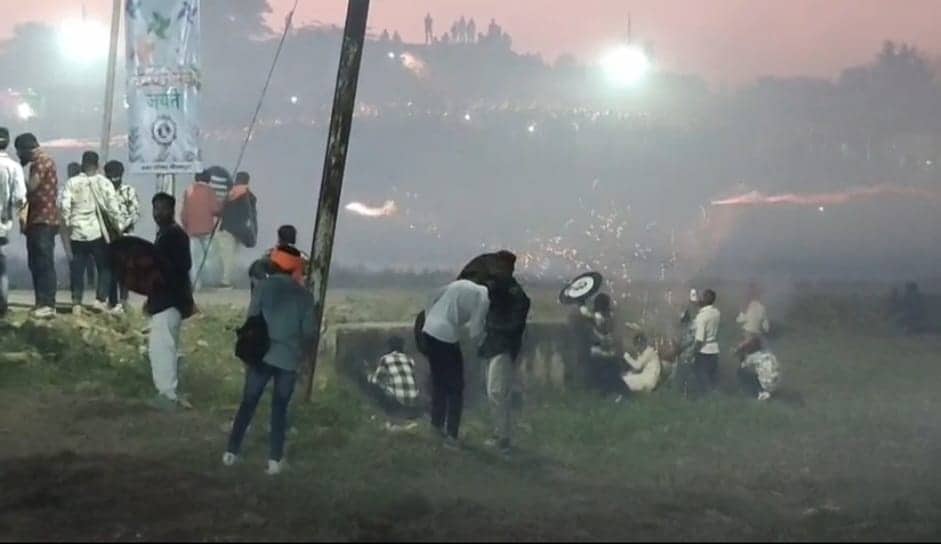
35 individuals suffered burn injuries during the traditional annual Hingot Yuddh (Hingot Battle) celebrated one day after Diwali.
Indore:
A centuries-old celebration of bravery and tradition transformed into a scene of chaos and injuries in Madhya Pradesh's Indore, where 35 people sustained burn wounds during the yearly Hingot Yuddh (Hingot Battle) conducted following Diwali. The wounded received immediate first aid before being transported to hospital facilities.
As is customary each year, thousands assembled to observe the intense competition between the Turra and Kalangi teams, a ritual with historical roots stretching back hundreds of years. Surrounded by thunderous drumming and billowing smoke, combatants hurled burning Hingots - dried, hollow fruits packed with gunpowder - across the battlefield, converting the festive atmosphere into a dramatic fiery confrontation.
Men prepare Hingots filled with gunpowder for the fiery battle.
The Hingot confrontation, contested between Gautampura's Turra team and Runji's Kalangi team, commenced with both groups positioned approximately 200 feet apart near the Devnarayan Temple. Adorned in traditional garments, carrying shields and wearing Hingot pouches across their shoulders, the warriors lit bamboo sticks and launched flaming projectiles toward their adversaries.
Despite authorities deploying fire brigades, ambulances, and police forces to manage the gathering, the intensity of the event resulted in numerous injuries. The battle, typically lasting until dusk, was terminated half an hour earlier this year due to safety considerations.
At minimum 35 people incurred injuries and were promptly taken to medical facilities. One participant's condition is serious, necessitating transfer to an Indore hospital.
Annually, various participants and spectators sustain injuries, and in 2017, a young man perished, prompting appeals to prohibit the event.
A legal petition submitted to the Madhya Pradesh High Court challenged the legitimacy of the tradition, describing it as "inhuman and life-threatening." Though the case remains unresolved, the practice continues uninterrupted, defended by local residents as an age-old symbol of cultural heritage and courage.
Historical accounts trace the Hingot battle to the Mughal period when Maratha soldiers utilized hollow Hingot fruits filled with gunpowder as improvised explosives during guerrilla warfare. Over generations, this weapon evolved into a ritualistic offering, transforming combat into a ceremonial demonstration of bravery.
Currently, for numerous young men in Gautampura and neighboring villages, participating in the Hingot battle represents a source of honor and exhibits fearlessness and devotion, despite the considerable dangers involved.
The Hingot itself is a wild fruit featuring a robust exterior shell. After drying, its interior is removed, and gunpowder is inserted before being sealed with yellow clay.
Source: https://www.ndtv.com/india-news/35-injured-during-traditional-hingot-battle-post-diwali-in-indore-9495065