
Delhi's Air Quality Crisis: Green Crackers Fail as City Records Worst Post-Diwali Pollution in Five Years Despite Reduced Stubble Burning
- Date & Time:
- |
- Views: 74
- |
- From: India News Bull
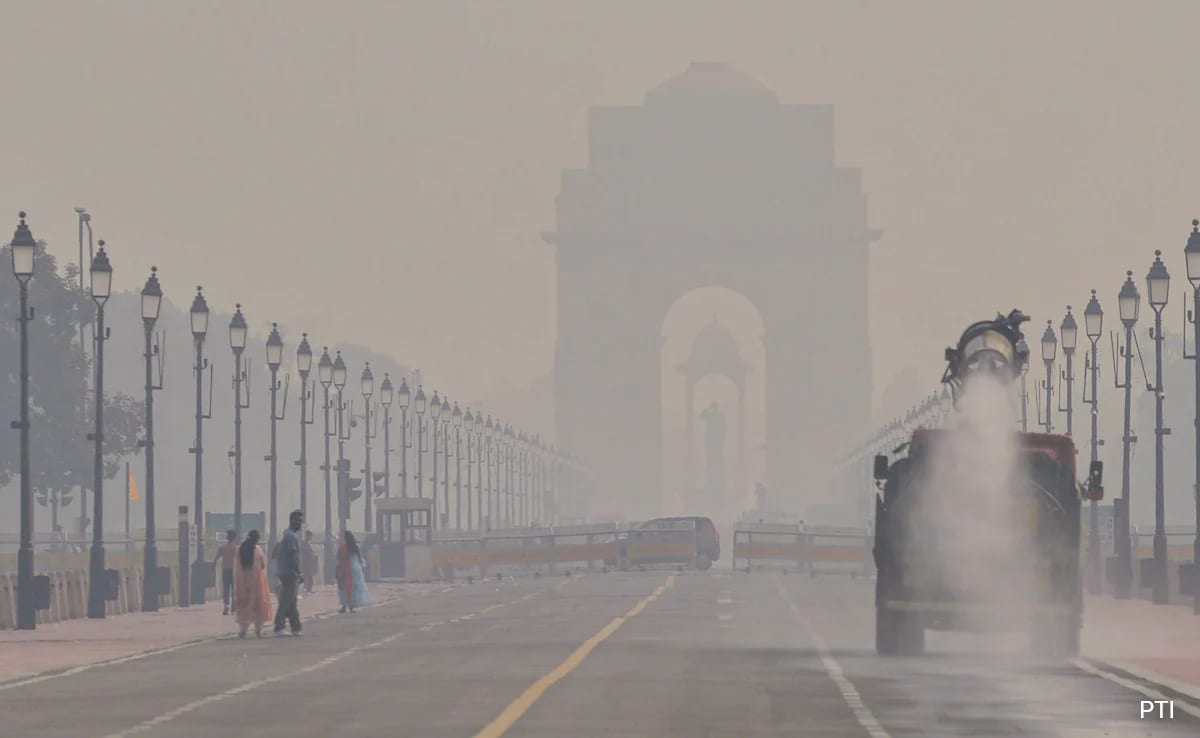
Delhi choked under a familiar blanket of toxic smog this Diwali (File).
New Delhi:
Despite a substantial 77.5 percent reduction in stubble burning - typically a major contributor to Delhi's winter air pollution - the national capital experienced its worst post-Diwali air quality in five years on Tuesday morning.
PM2.5 concentrations reached alarming averages of 488 micrograms per cubic meter, approximately 100 times higher than the World Health Organization's recommended exposure limit. More concerning was the catastrophic 212 percent increase from pre-Diwali levels. The highest single measurement recorded a staggering 675 micrograms per cubic meter on Monday night during Diwali celebrations.
Air pollution levels reached a three-year high, despite the Supreme Court permitting the use of 'green' firecrackers within designated timeframes. Observations from Tuesday morning suggested both regulations were largely ignored, with the distinctive acrid chemical odor permeating the atmosphere.
This year's Air Quality Index (AQI) for Diwali surpassed last year's reading of 328 and significantly exceeded figures from previous years (218 in 2023 and 312 in 2022).
This evidence suggests that even supposedly environmentally friendly 'green' firecrackers failed to mitigate the hazardous haze.
Four-year data compiled by the Central Pollution Control Board identified Diwali 2025 as one of the most severely polluting in recent memory. More importantly, it revealed a consistent and dangerous pattern of deteriorating air quality directly linked to firecracker emissions.
The inevitable Diwali pollution spike
Diwali 2025's record is particularly troubling.
PM2.5 levels typically double or triple during Diwali night and persist into the following day.
However, this year's pollution exceeded previous records, according to Palak Balyan, lead researcher at Climate Trends, a Delhi-based consulting initiative. "Data analysis shows post-Diwali PM2.5 readings averaged approximately 488, compared to 156.6 before the festival. That represents more than a threefold increase, making 2025 one of the most polluted Diwali celebrations in recent years," Balyan told NDTV.
Air quality readings before, during, and after Diwali for 2021-2025. Data: CPCB
Post-Diwali PM2.5 measurements - averaging 488 micrograms per cubic meter with peaks of 675 - were the highest recorded, indicating a concerning trend of increasing post-festival pollution.
Adverse weather conditions exacerbated the situation as they typically do.
Wind speeds below one meter per second prevented pollutant dispersal, while the post-Diwali temperature drop from approximately 27 degrees Celsius to 19 degrees created temperature inversions that essentially trapped toxic smoke near ground level.
Amidst these circumstances, scrutiny falls on the 'green crackers' heavily promoted by Delhi's ruling BJP and permitted by the Supreme Court, which argued that illegally smuggled fireworks were causing greater environmental damage.
Delhi temperature readings before, during, and after Diwali for 2021-2025. Data: CPCB
Ground-level data, however, presents contradictory evidence.
Dr. SK Dhaka, professor at Delhi University-affiliated Rajdhani College, concluded that pollution is predominantly local in nature rather than transported from outside the city.
"Our analysis indicates that green firecrackers rapidly increased particulate matter concentrations," stated Dr. Dhaka. "The pollution originates locally... This suggests a need to scrutinize cracker quality."
Stubble burning misconception addressed?
The burning of agricultural waste in neighboring states - particularly Punjab and Haryana - represents a major seasonal concern. A separate analysis of PM2.5 data recorded during October 2025 provided critical insight - local emissions constitute the persistent underlying problem.
Floods in Punjab and Haryana earlier this year functioned as a 'natural experiment' to evaluate restriction effectiveness and determine the scale of impact on Delhi's air quality crisis.
Data this year reinforces the strong and direct link between farm fires and air pollution (File).
The 77.5 percent reduction in stubble burning incidents "involuntarily suppressed farm fires" and corresponded with a 15.5 percent decrease in Delhi's average PM2.5 levels during the same period.
This reduction confirms the role agricultural fires play in creating Delhi's toxic air conditions. Nevertheless, despite reduced farm fire activity, PM2.5 levels remained above 50 micrograms per cubic meter.
This highlights a persistent baseline pollution from urban sources - including traffic, industrial activity, and dust - that continues contaminating the city even when external factors are limited.
Key findings from the data
Reducing farm fires provides immediate air quality benefits
The Diwali pollution spike represents an almost entirely local, human-caused crisis separate from stubble burning
Structural air quality improvements require comprehensive multi-sectoral policies addressing both regional agricultural practices and unregulated urban/festive emissions
An impending health crisis: Appeals for responsibility
Continued refusal to acknowledge reality is "disappointing," Climate Trends chief Aarti Khosla told NDTV. "Despite years witnessing the harmful effects of Diwali firecrackers, we persistently refuse to accept reality and repeat the same mistakes."
Air pollution disproportionately affects vulnerable populations, including children, elderly individuals, and those with pre-existing medical conditions. While Delhi battles a long-term urban pollution crisis, 2025 data serves as a stark reminder that individual actions and public awareness are essential to breaking this deadly cycle.
The conclusion is unmistakable - allowing any type of firecrackers during unfavorable weather conditions amid already poor air quality is "simply not sustainable" for the Delhi-NCR region.
NDTV is now available on WhatsApp channels. Click on the link to get all the latest updates from NDTV on your chat.
Source: https://www.ndtv.com/india-news/diwali-air-pollution-delhi-aqi-diwali-2025-aqi-green-firecrackers-delhi-suffers-worst-post-diwali-air-in-5-years-9493185