
Delhi's Green Diwali Experiment: Air Quality Data Reveals Limited Impact Despite Eco-Friendly Fireworks
- Date & Time:
- |
- Views: 62
- |
- From: India News Bull
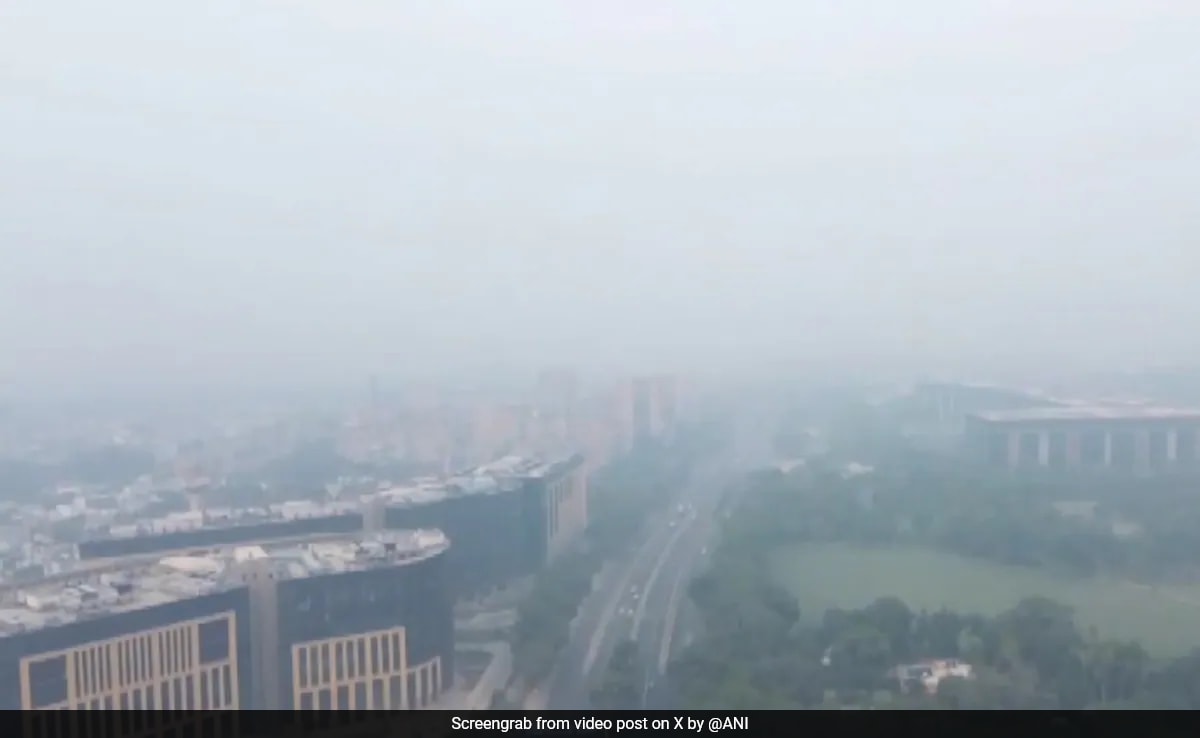
Delhi residents awoke to a polluted Tuesday morning following Diwali celebrations, with the Air Quality Index (AQI) reaching 350 by 8 am despite the use of green crackers.
After a night of colorful fireworks and celebrations, the national capital found itself blanketed in a thick layer of smog and fine particulate matter. The festive atmosphere quickly gave way to hazy, heavy air that proved difficult to ignore.
The post-celebration gray skies have once again dimmed Delhi's festive spirit, a familiar occurrence after Diwali. This year's situation is particularly noteworthy as it follows the Supreme Court's directive to use less-polluting 'green crackers' instead of traditional fireworks.
View this post on Instagram
A post shared by NDTV (@ndtv)
Historical data reveals a concerning pattern in post-Diwali air quality. On November 1, 2024, Delhi's AQI surged to 359 by early morning according to the System of Air Quality and Weather Forecasting and Research (SAFAR).
The previous year proved even more alarming, with November 13, 2023 recording an AQI of 438 (severe category) after residents ignored firecracker restrictions. This represented a significant deterioration from the pre-Diwali AQI of 269 just 24 hours earlier.
Looking further back, October 25, 2022 saw Delhi's post-Diwali AQI at 315 (very poor), while November 5, 2021 registered a severe 454 after widespread disregard for firecracker prohibitions.
Anand Vihar, frequently cited as one of Delhi's most polluted areas, provides particular insight into the effectiveness of green crackers versus complete bans. This year, with green crackers permitted, the station recorded an AQI of 360 at 8 am.
In 2024, Anand Vihar's AQI approached the severe category at 396, while 2023 saw a very poor reading of 312 with PM10 as the primary pollutant. The 2022 reading stood at 356, also with PM10 predominating.
The Supreme Court first imposed firecracker restrictions in Delhi-NCR during 2014-15 as air pollution intensified. However, enforcement difficulties and public non-compliance have consistently undermined these efforts, with Delhi experiencing very poor to severe air quality levels around Diwali each year.
This year's Supreme Court decision to permit green crackers attempted to balance industry interests with public health concerns. However, the resulting air quality data suggests minimal improvement over previous years.
Environmental advocates expressed skepticism regarding the court's ruling, characterizing green crackers as merely "less poison" since they only claim to reduce pollution by 30 percent.
Bhavreen Kandhari, a long-time clean air advocate, emphasized that air pollution transcends environmental concerns: "We are talking about public health. 30 percent less pollution is meaningless. Are you saying less poison? Do you want to feed your children less poison? I'm fighting for clean air even before my children were born, and I still managed to give them only damaged lungs."
#WATCH | Visuals from near Sarojini Nagar as GRAP-2 invoked in Delhi; shot at 7:15 AM
The Air Quality Index (AQI) around the RK Puram was recorded at 330, in the 'Very Poor' category, in Delhi this morning as per the Central Pollution Control Board (CPCB).
One day before Diwali, on October 19, authorities implemented anti-pollution measures under stage two of the Graded Response Action Plan (GRAP-2) for Delhi and surrounding areas as air quality deteriorated.
GRAP-2 restrictions include limitations on coal and firewood usage, as well as diesel generator operation throughout Delhi and the National Capital Region (NCR).
Daily road sweeping and water sprinkling have been mandated on specific routes to control dust pollution, along with efforts to reduce traffic congestion.
Source: https://www.ndtv.com/india-news/delhi-air-pollution-did-delhis-green-diwali-work-air-quality-data-from-last-year-shows-9489582