
Beyond Diplomacy: Will Britain Ever Apologize for Its Colonial Legacy in India?
- Date & Time:
- |
- Views: 44
- |
- From: India News Bull
A British journalist colleague once shared an enlightening experience that revealed how imperial mindsets persist in British consciousness. Preparing for a trip to Delhi to discuss a partnership with an Indian broadcaster, he was baffled when airline staff at Heathrow requested his Indian visa. "Why would I need a visa for India?" he asked with genuine confusion. Unable to board without proper documentation, he returned home embarrassed.
After eventually visiting India with the correct visa, he confessed to me back in London, "I suppose we Brits still think of India as our playground," while casually rolling a cigarette. This startling admission revealed a deeply ingrained assumption. I responded lightly, "You have finally learned that the Raj expired decades ago." He acknowledged how reflexive such colonial attitudes had become—an instinctive entitlement that requires conscious awareness to overcome.
This conversation resonates today as Britain occasionally demonstrates that its imperial instincts remain active, merely cloaked in contemporary sensibilities. During Prime Minister Keir Starmer's recent visit to India aimed at strengthening trade relations, senior Conservative MP Robert Jenrick made remarks reminiscent of colonial thinking. Describing Handsworth, a predominantly South Asian area of Birmingham, he called it "a slum" and noted with apparent discomfort that during his 90-minute visit, "I didn't see another white face."
Such comments reveal more than mere prejudice—they echo the empire's voice in modern dialect. These sentiments still surface in social interactions, casual conversations, and serious debates even now.
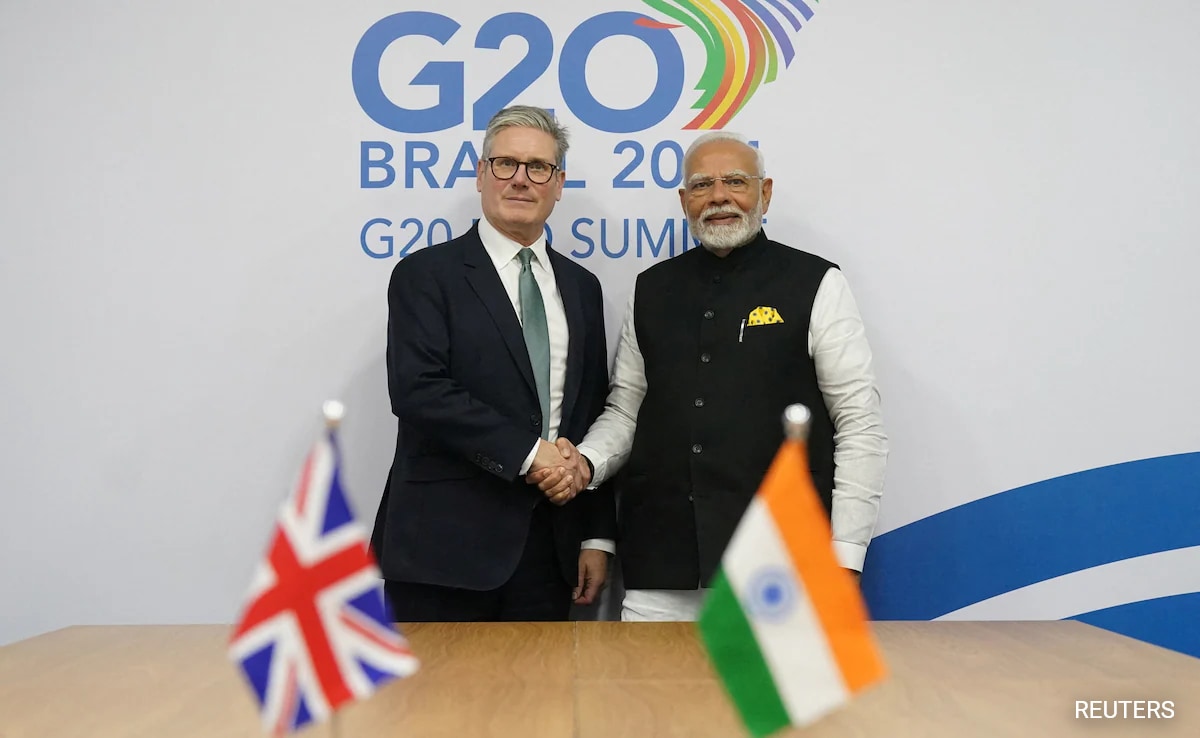
Currently, India-UK relations are experiencing a complex mixture of warmth and contradiction. Prime Minister Modi's visit to London in July to finalize the Comprehensive Economic and Trade Agreement (CETA), followed by PM Starmer's arrival with an unprecedented business delegation, has injected new optimism into a relationship historically burdened by its past. "India and the UK are natural partners," PM Modi declared in Mumbai. "Our relationship is built on the shared values of democracy, freedom and the rule of law."
He further observed, "India's dynamism and the United Kingdom's expertise together create a unique synergy." His statement projected confidence and generosity while subtly emphasizing that India now stands as an equal partner, no longer subordinate as in the past.
Yet beneath diplomatic cordiality and measured rhetoric lies a persistent question: can this partnership truly function as one between equals when many Britons continue to speak from a position of cultural superiority?
Jenrick's comments exposed this underlying tension. Contrary to his characterization, Handsworth is not a slum but a vibrant tapestry of ambition and heritage: sari boutiques and spice markets, gurdwaras and mosques, entrepreneurial ventures and eateries—all representing communities who built lives from nothing. These are the families whose labor helped rebuild post-war Britain, operating its transportation systems, staffing its healthcare facilities, educating its children, and maintaining its industries. Yet to Jenrick, this represented alien territory, insufficiently English, insufficiently white.
The irony is striking: as Britain actively pursues economic ties with modern India, segments of its political establishment recoil at the prosperity of British citizens of South Asian heritage in their own cities.
Jenrick's remarks were not merely careless but reflected a persistent imperial worldview that categorizes humanity as either "civilized" or "other." His discomfort at seeing few white people in a British neighborhood betrays anxiety about diminishing cultural dominance, even as Britain champions global inclusivity.
This same Britain now requires India's partnership more urgently than ever before. The UK economy faces challenges, with diminished manufacturing capacity and reduced global influence, particularly post-Brexit. Conversely, India continues its steady, confident growth, positioning itself among the world's five largest economies—a technological leader, manufacturing center, and democratic counterbalance to China's ascendance. The reality, quietly acknowledged in London's corridors of power, is that Britain's need for India far exceeds India's need for Britain, though historical habits make this difficult to admit openly.
As the prime ministers celebrate their shared vision, a question persists: will Britain ever genuinely address its colonial legacy? Will it formally apologize for imperial transgressions—for Jallianwala Bagh, for manufactured famines, for the systematic extraction of wealth that impoverished generations?
Whenever an Indian leader visits Britain, this question emerges: will London finally apologize? Each time, official responses pivot to expressions of "regret," treating imperialism as an unfortunate misunderstanding rather than deliberate exploitation. Many Indians believe a formal apology would represent justice rather than humiliation—an acknowledgment that one nation's prosperity was built upon another's suffering.
When modern democracies acknowledge moral failings, they demonstrate strength rather than weakness. A British apology would not erase history but would dignify contemporary relations. It would signal Britain's readiness to engage with India as an equal partner rather than imperial successor.
Today, power dynamics have reversed. India possesses what Britain once commanded—youth, scale, energy, and the confidence of an ascendant nation. Britain retains what India values—influence, networks, and privileged access to American policymakers.
The Free Trade Agreement promises substantial opportunities—reduced tariffs, market access, increased mobility. British spirits, Indian pharmaceuticals, collaborative financial technology ventures and joint research initiatives form part of this emerging framework. The symbolism transcends economics, marking a historical reversal: the former colony extending opportunity to the former empire.
However, commerce without confidence creates transactions rather than partnerships. Trust cannot develop when prominent British politicians continue speaking from positions of hierarchy, superiority, and nostalgia.
Handsworth represents a microcosm of contemporary Britain—diverse, complex, vibrant, sometimes struggling yet perpetually resilient. Its residents descend from immigrants who arrived from India, Pakistan, Bangladesh, and the Caribbean, bringing unwavering commitment to hard work and dignity. Dismissing such communities constitutes disrespect. The MP's refusal to apologize for his statement underscores how many in Britain's establishment view people from former colonies as unwelcome presences.
India seeks recognition, not retribution. PM Modi's cordial engagement with PM Starmer, outreach to the British monarchy, and emphasis on forward-looking cooperation demonstrate evolved diplomatic maturity. India has nothing to prove—its economy outpaces Britain's growth, its diaspora exercises substantial influence, and its cultural exports—from cinema to cuisine—permeate British society. A British apology would benefit Britain's moral standing more than satisfy Indian demands.
While the FTA establishes economic connections, the moral bridge remains incomplete—spanning Jallianwala Bagh and unacknowledged historical injustices. Britain demonstrating the grace to apologize, not from guilt but from moral conviction, would transform a relationship currently constrained by history into one enriched by honest reconciliation.
As former colony and colonizer approach unprecedented cooperation, perhaps the narrative transcends trade agreements. The real story concerns historical rebalancing. A century ago, British generals commanded in Amritsar; today, Indian leadership shapes global diplomacy.
Modern India no longer seeks validation from its former ruler but demands fairness, respect, and acknowledgment. While trade agreements promise economic benefits, an apology would deliver something more enduring—historical truth and justice.
(Syed Zubair Ahmed is a London-based senior Indian journalist with three decades of experience with the Western media)
Disclaimer: These are the personal opinions of the author
Source: https://www.ndtv.com/opinion/visits-aside-will-uk-ever-apologise-to-india-9453268