
Supreme Court Justice Calls for Urgent Legislation on Deepfakes and AI-Enabled Child Abuse to Protect Girl Children
- Date & Time:
- |
- Views: 52
- |
- From: India News Bull
New Delhi:
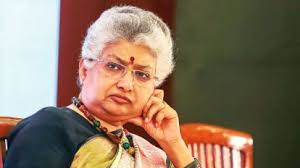
Supreme Court judge Justice B V Nagarathna emphasized on Sunday that legislation addressing deepfakes and artificial intelligence-enabled child abuse is urgently needed by competent authorities.
Justice Nagarathna spoke at the concluding session of the national annual stakeholders consultation titled 'Safeguarding the Girl Child: Towards a Safer and More Enabling Environment for Her in India' organized by the Supreme Court's Juvenile Justice Committee in collaboration with UNICEF India.
She noted that during the two-day event, participants discussed various forms of violence affecting girl children, particularly highlighting both the dangers and potential benefits of cyberspace and artificial intelligence (AI).
"The evolving technologies present dangers that may appear as a Sword of Damocles. Currently, there is an urgent need for competent authorities to legislate on deepfakes and AI-enabled child abuse; require 24-hour reporting of child sexual abuse material, implement platform-level age verification, and establish national tracking of response timelines," she stated.
Justice Nagarathna, who chairs the Supreme Court's Juvenile Justice Committee, added that sufficient vigilance could help intercept instances of violence and child trafficking before they occur.
She suggested that the Supreme Court consider creating an "AI Cybercrime Advisory Committee on Girl Child" to specifically identify how AI and emerging technologies impact girl children and how these effects might be mitigated.
Justice Nagarathna recommended implementing judicial training protocols and capacity-building related to AI, its potential harms, and appropriate responses nationwide.
She also emphasized the need for stringent monitoring and enforcement of existing laws to prevent female infanticide and feticide.
"Law alone cannot transform society. We must also raise awareness and increase sensitization among prospective parents about the various opportunities, benefits, and options available to girls today, and how these can be accessed if parents are committed to dispelling the notion that a girl child is a burden," she said.
Justice Nagarathna highlighted the importance of nutritional access for girl children, noting that "to save a girl child is to save a generation."
She advocated for promoting nutritional literacy in school curricula, stating that "food is the best medicine."
"We should consider finalizing a national definition of HFSS (High in Fat, Sugar, and Salt) foods, introduce front-of-pack warning labels, tax unhealthy products, and enforce bans on junk food marketing near schools, with annual compliance audits," Justice Nagarathna said, highlighting concerns about increasing junk food consumption.
She emphasized that education has unique emancipatory potential for girl children by promoting social mobility, raising awareness about social issues, and empowering them to understand their rights and duties in society.
Justice Nagarathna stressed the importance of creating pathways to help children in conflict with the law or victims of violence, trafficking, child marriage, and other social evils return to normal life by resuming education, ensuring "no child is left behind."
For more effective anti-trafficking efforts, she called for professionalizing investigations using forensic and financial tracing methods, and institutionalizing rehabilitation as a state duty with measurable recovery outcomes.
"We need to ensure stronger child survivor/victim-centered responses. Every district must provide access to child and gender-sensitive medical, psychosocial, and legal services," she stated.
Regarding child marriage, Justice Nagarathna said the consultation revealed the need for collaborative rather than isolated efforts. "Child marriage prevention and response initiatives are most effective when implemented at the community level—involving panchayats, community members, and designated officials," she explained.
She also advocated for institutionalizing empathy-based police training and judicial proceedings, ensuring regular inter-departmental coordination, and annually reviewing survivor satisfaction and conviction rates.
"This would contribute to compassionate justice for children," she said.
Justice Nagarathna emphasized that girl children from marginalized communities, those differently-abled, economically disadvantaged, or with learning disabilities must receive proper recognition according to the Constitution and international child rights covenants.
She added that empowering girl children is fundamental to creating a more just, equitable, and flourishing Indian society.
"We must establish measurable monitoring systems to address legal ambiguities, enforcement gaps, and technological misuse in sex-selection. Data is a valuable resource, and we should not avoid accurate statistical reporting, even if it presents a negative picture," Justice Nagarathna said.
She concluded that after collecting these statistics, timely and periodic reviews of institutional performance are necessary to track improvements in sex ratios at national, state, and local levels.
Source: https://www.ndtv.com/india-news/legislating-deepfakes-artificial-intelligence-enabled-child-abuse-need-of-hour-top-court-judge-justice-bv-nagarathna-9441787