
Ladakh's Big Statehood Movement. What Is It, What Do Protesters Want?
- Date & Time:
- |
- Views: 48
- |
- From: India News Bull
Ladakh's Major Statehood Movement: Understanding the Protests and Demands
New Delhi:
In August 2019, the government enacted legislation that removed Jammu and Kashmir's special status under Article 370. The region was subsequently divided into two union territories, accompanied by a comprehensive security clampdown.
Numerous individuals, including seasoned political figures like Omar Abdullah and Mehbooba Mufti, both former chief ministers, were placed under house arrest. Internet services were suspended, and military forces were deployed throughout the region.
The newly established Union Territory of Jammu and Kashmir was experiencing significant tension. The ruling Bharatiya Janata Party faced accusations of suppressing dissent and blocking almost all communication with the rest of India. Reports emerged of violent confrontations and some civilian casualties.
However, across the border in Ladakh, there was no violence, tension, or political repression.
Instead, there was celebration because separation from J&K had been a long-time aspiration of the Ladakhi people. They desire direct political representation through a legislature and local governance, along with constitutional protections, particularly inclusion under the Sixth Schedule.
Additional safeguards demanded include quotas for employment opportunities and land ownership rights, similar to benefits enjoyed by tribal communities in northeastern states and, in many respects, even by the former state of J&K (which included Ladakh) under Article 370.
Another demand was increased parliamentary representation. Currently, Ladakh has only one Lok Sabha seat, held by independent lawmaker Mohmad Haneefa.
The request is for an additional seat for Kargil, plus one Rajya Sabha seat as well.
The creation of the Union Territory of Ladakh was viewed as a positive step toward achieving statehood and fulfilling the aforementioned demands, except that final step was never implemented.
Over the past six years, the Ladakhi people's patience appears to have diminished, culminating in a resurgence and dramatic intensification of the statehood movement this week.
Intense protests in the capital city of Leh – including vandalism of a local BJP office – resulted in four fatalities and dozens of injuries. Police were compelled to open fire to regain control of the situation.
Why Did Protests Turn Violent?
The initial demonstrations, led by environmental activist Sonam Wangchuk, were peaceful. The current violence reflects the Ladakhis' long-standing frustration.
Negotiations between the Leh Apex Body and the Kargil Democratic Alliance – representing the Buddhist majority and Shia Muslim-dominated regions in Ladakh – and the central government have reached an impasse.
Activists who met with Home Minister Amit Shah in Delhi last year left feeling disheartened.
The immediate trigger was the hospitalization of statehood activists on hunger strike. Furthermore, the central government's announcement of a fourth round of talks – scheduled for October – did not alleviate tensions.
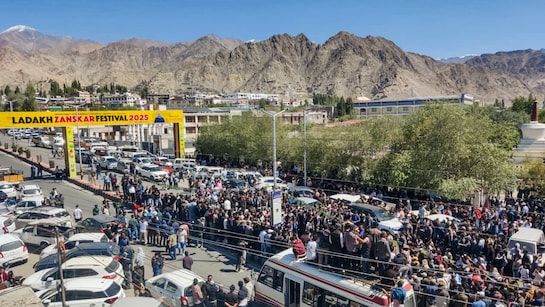
Four people were killed in Ladakh statehood protests on September 24. Photo: PTI
Over the last three years, the LAB and KDA have collaborated – the unity between Buddhist and Muslim communities has been notable – to organize strikes and negotiate with the government.
However, as time passed without progress toward statehood, the rallies grew more tense.
Young people, many from Generation Z – which recently made headlines for protests in Nepal that forced a corrupt government to resign – responded with more forceful rallies and shutdowns, including setting fire to a Central Reserve Police Force vehicle.
Law enforcement responded firmly; baton charges and teargas were deployed.
It is important to note this represents the first instance of violence in the Ladakh statehood movement.
It is equally significant that Leh and Kargil, often regional rivals, are united in their demand for Ladakh statehood, which underscores the intensity of emotion driving these protests.
Government Response
The BJP's approach has been measured.
Commitments were made to the Supreme Court and Parliament that J&K's statehood would be restored – the conducting of an Assembly election in October last year, the first since Article 370 and the first in 11 years, was a major milestone – but Ladakh was not mentioned.
Regarding Sixth Schedule demands, officials have pointed out that these protections already exist under the Ladakh Autonomous Hill Development Councils of Leh and Kargil.
Activists, however, contend these councils possess limited authority and power, and remain subordinate to the Lieutenant-Governor of Ladakh, who serves as the federal government's representative in the union territory.
Ladakh's geographic position – along the disputed border with China – is another factor in the central government's reluctance to commit to statehood demands. Granting statehood to Ladakh would result in devolution of powers that might compromise military logistics and critical infrastructure projects in the region.
Is There A Solution?
Unlikely, at least in the immediate future.
The ongoing border standoff with China means the federal government will require complete and unhindered access to Ladakh at all times, particularly to construct roads facilitating troop movements and monitor Beijing's incursions. Granting Ladakh statehood complicates this objective, especially if the BJP or a reliable ally does not win any potential election.
Consequently, Ladakhi statehood protesters will likely organize more rallies and increase pressure on the government to achieve their goals, which could lead to more (and escalating) violence.
How will this situation resolve? Possibly through compromise on both sides. The government might agree to expand the Hill Councils' authority to address the Ladakhi people's demands for greater control over governance and offer special reservations for employment and land ownership.
In exchange, the LAB and KDA might need to abandon statehood demands and accept that Ladakh will remain, at least temporarily, a Union Territory rather than a full-fledged State.
With input from agencies
NDTV is now available on WhatsApp channels. Click on the link to get all the latest updates from NDTV on your chat.