
India To Receive New Batch Of Cheetahs As Survival Rates Outpace Global Average
- Date & Time:
- |
- Views: 60
- |
- From: India News Bull
India To Receive New Batch Of Cheetahs As Survival Rates Outpace Global Average
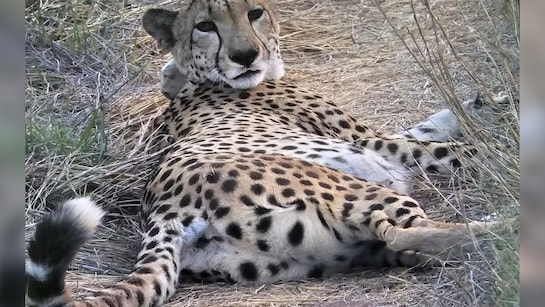
Of the 20 cheetahs relocated to India, 11 have survived - three Namibian and eight South African specimens
India is set to welcome 8-10 new African cheetahs by December as part of its ambitious Cheetah Reintroduction Project, with negotiations progressing with Namibia, Botswana, and Kenya. Officials report that this marks a crucial consolidation phase for the program, which has shown promising results following initial challenges.
The project, inaugurated by Prime Minister Narendra Modi on his birthday in September 2022, reintroduced cheetahs to India after a 70-year absence since their extinction in the wild.
This initiative represents the world's first intercontinental large carnivore relocation effort. The program commenced with the release of eight Namibian cheetahs into Madhya Pradesh's Kuno National Park, followed by twelve additional cheetahs from South Africa in February 2023.
Survival Rates Exceed Global Average
Among the 20 relocated cheetahs, 11 have survived - three from Namibia and eight from South Africa. More impressively, the program has achieved significant reproductive success, with 26 cubs born in India. Sixteen cubs have survived, representing a 61.05% survival rate - substantially higher than the global average of approximately 40%.
The project currently oversees 27 cheetahs across Indian habitats, including 15 free-ranging individuals in Kuno: 10 sub-adults, three adult females, and two males. Officials highlight that while adult cheetah survival was around 70% in the first year, it improved to 85.71% in the second year, indicating increasing adaptation to Indian conditions.
Learning, Relearning, and Adaptation
Project scientists and officials acknowledge significant learning curves during the first year. "When the cheetahs initially arrived, they had thick winter coats from Southern Africa, making them vulnerable to India's warmer climate," explained a senior scientist.
Management adjustments - including the soft release method, ensuring adequate prey availability, and improving acclimatization enclosures - have subsequently helped overcome these challenges.
Each cheetah is meticulously monitored via radio collars, which officials maintain pose no health risks. Nine veterinarians work on-site with at least three monitoring personnel assigned to each animal.
This continuous tracking has provided scientists with fresh behavioral insights. For example, a mother cheetah with four cubs ventured from Kuno to a neighboring forest, remained for nearly a month, and safely returned - an encouraging indication of range establishment.
Expanding Habitats Beyond Kuno
As Kuno approaches capacity, the government is developing additional cheetah habitats. Madhya Pradesh's Gandhisagar Wildlife Sanctuary is being prepared as a second home for the species. Officials are relocating competing leopards and increasing ungulate populations to ensure adequate prey availability.
In September this year, a 7.5-year-old female cheetah named Dheera was released into Gandhisagar on the Prime Minister's birthday, signaling the sanctuary's readiness for new cheetah groups.
Beyond Madhya Pradesh, Gujarat's Banni grasslands and MP's Nauradehi Wildlife Sanctuary are also being prepared as future release sites.
Officials emphasize that distributing groups across different landscapes is crucial for genetic diversity and long-term population health.
"The initial batches came from Southern Africa. We want to avoid mixing populations too early, so we're establishing multiple secure habitats before introducing the next group," stated an NTCA official.
Targets and Long-Term Goals
The National Tiger Conservation Authority (NTCA), which manages Project Cheetah, has set an ambitious goal: introducing 8-14 cheetahs annually for at least five years, subject to availability, to establish a founder population in India. The long-term vision involves creating a metapopulation across multiple sites, enabling natural dispersal, breeding, and expansion.
High-level delegations from Namibia, Botswana, and South Africa visited India between June and September this year to discuss future transfers. "Negotiations are advanced. We anticipate the next group of 8-10 cheetahs arriving by late 2025," revealed a source familiar with the discussions.
Borrowing Lessons from Project Tiger
Project officials indicate that tiger management experience has been invaluable. "When cheetahs first arrived, we were told they didn't drink water. However, here we've observed them queuing at water holes. These learnings are unique to Indian conditions, and we continually adapt," remarked one official.
The strategy has been to apply principles from Project Tiger - habitat restoration, prey augmentation, community engagement, and scientific monitoring - while tailoring them to cheetah ecology.
In some areas, such as conflict mitigation and managing competing predators, existing tiger conservation models have been directly applied to the cheetah project.
A Personal Project for the PM
Officials frequently note that the project holds personal significance for PM Modi, who has described it as "historic" in India's conservation journey. Both his 2022 and 2025 birthdays were marked with special cheetah releases into the wild.
The Road Ahead
While challenges persist - including maintaining genetic diversity, ensuring adequate prey in new habitats, and minimizing conflicts - the government and scientists report promising early indicators.
"The cub survival rate exceeding 61% represents a very strong beginning. It indicates that with adaptive management, India can not only host cheetahs but help them thrive," stated an NTCA source.
As India prepares for the next batch of cheetahs, conservationists view this effort as a new chapter in the country's extensive tradition of big cat protection.
Project Tiger, launched in 1973, transformed India into the global stronghold for tigers, increasing the population from approximately 1,800 tigers then to more than 3,000 today.
With survival rates already exceeding global averages, Project Cheetah shows potential to become India's next major conservation success story.