
Copyright Row: Delhi High Court Sets Aside Order Asking AR Rahman To Deposit Rs 2 crore
- Date & Time:
- |
- Views: 59
- |
- From: India News Bull
Copyright Dispute Resolved: Delhi High Court Revokes Order for AR Rahman's 2 Crore Deposit
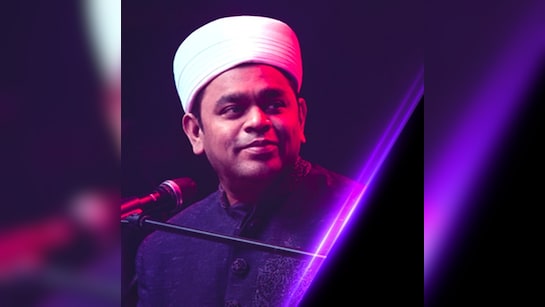
Delhi High Court has overturned the previous ruling requiring AR Rahman to deposit Rs 2 crore.
New Delhi:
The Delhi High Court delivered significant relief to acclaimed music composer AR Rahman and the producers of "Ponniyin Selvan 2" on Wednesday by setting aside a previous order that had directed them to deposit Rs 2 crore in a copyright lawsuit concerning the Junior Dagar brothers' classical rendition of 'Shiv Stuti'.
A division bench consisting of Justices C Hari Shankar and Om Prakash Shukla determined that the single judge of the high court had "erred" in her ruling on principle, leading to the reversal of the original order.
The detailed judgment explaining the court's reasoning is still pending.
Previously, Justice Prathiba M Singh had ruled on April 25 that from a listener's perspective, the essence of Rahman's composition 'Veera Raja Veera' in the film was "not just inspired but is, in fact, identical" in musical notes, emotional quality, and aural effect to the 'Shiva Stuti', constituting a violation of the original composers' rights.
That order had mandated the inclusion of a slide in the film across all OTT and online platforms to properly acknowledge Junior Dagar Brothers—Late Ustad N Faiyazuddin Dagar and Late Ustad Zahiruddin Dagar—for the composition, and had also awarded Rs 2 lakh in costs to family members of the deceased artists.
Ustad Faiyaz Wasifuddin Dagar, son of Faiyazuddin Dagar and nephew of Zahiruddin Dagar, had claimed in his lawsuit that he possessed the copyright for all original compositions of Junior Dagar Brothers, including 'Shiv Stuti', which he alleged the defendants had unlawfully infringed upon.
Rahman's legal representation countered by arguing that 'Shiv Stuti' was derived from the traditional dhrupad genre, which exists in the public domain, and since both the singing style and the composition itself lacked originality, they were not subject to copyright protection.