
"12 Years Since He Was Buried. Why Now?" High Court On Afzal Guru, Maqbool Bhat Grave Plea
- Date & Time:
- |
- Views: 49
- |
- From: India News Bull
"12 Years Since He Was Buried. Why Now?" High Court On Afzal Guru, Maqbool Bhat Grave Plea
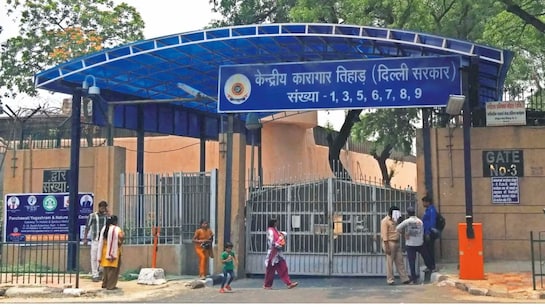
Guru was executed in February 2013 and Bhat in February 1984, with both interred within Tihar Jail premises (File).
New Delhi:
The Delhi High Court dismissed a public interest litigation on Wednesday that sought the removal of Afzal Guru and Maqbool Bhat's graves from Tihar Jail in Delhi. Both men were executed for terrorism-related offenses.
Vishwa Vedic Sanatan Sangh filed the PIL alleging these burial sites had transformed into 'pilgrimage' locations. However, the court rejected the petition, requesting concrete evidence to support such claims.
While acknowledging that these graves should not become 'pilgrimage' sites, the court refused to issue directives without hearing the federal government's position on the matter.
Consequently, the court dismissed the PIL as withdrawn but allowed the petitioner to resubmit with empirical data rather than merely presenting newspaper reports and social media posts. The court also expressed dissatisfaction regarding the absence of legal representatives from both federal and Delhi governments.
During proceedings, the court questioned the timing of the petition.
"It has been 12 years (since Afzal Guru was buried). Why are you raising this now?" inquired a division bench comprising Chief Justice Devendra Kumar Upadhyaya and Justice Tushar Rao Gedela.
The court informed the petitioner they needed to demonstrate how the Sangh's rights had been concretely affected, clarifying that relief under a PIL couldn't be granted based on personal sentiments. "We requested you at the start of this case... you have to make out a case of infringement of your rights. Something that my brother judge or I may want cannot become a PIL. We are a democratic society. Use other forums to agitate those issues."
"We do not, prima facie, agree with you that it is a nuisance (under the law) which is to be removed by the authorities. Where is the prohibition? If prohibition is not there, can the court read into it a prohibition? Are we policy-makers? This lies in their realm."
Responding to the petitioner's argument that "the graves are being treated as a site of pilgrimage by a particular community... this cannot be allowed in a secular community," the court demanded material evidence demonstrating the graves had indeed become pilgrimage destinations.
This evidence the petitioner failed to provide. "I have shown newspaper reports..." stated the petitioner's counsel, to which the court responded, "You are a seasoned advocate. Are you asking us to rely on news reports or social media posts? Where is the empirical data?"
"The government has taken a call (about burying Afzal Guru and Maqbool Bhat on jail grounds). For what you are saying, there is no empirical data."
"We agree... there should be no pilgrimage or glorification but there has to be data on this. We can direct the jail authorities to stop that but removing the grave after 12 years... (needs data)."
The High Court also emphasized that last rites performed at burial sites deserve respect. "We need to ensure no law-and-order situation issue arises. Government decided to have the burial in jail keeping these issues in mind. Can we challenge that decision 12 years later?" the bench questioned.
Afzal Guru, convicted for his involvement in the December 2001 Parliament attack and executed in February 2013, and Maqbool Bhat, executed in February 1984, were both buried within jail premises.
The petition claimed these individuals orchestrated and executed terrorist acts threatening India's sovereignty, territorial integrity, and security, citing 'established practice in cases of executed terrorists such as Ajmal Kasab and Yakub Memon, where every precaution was taken to prevent glorification'.
With input from agencies
NDTV is now available on WhatsApp channels. Click on the link to get all the latest updates from NDTV on your chat.