
India's Electric Vehicle Charging Infrastructure Faces Implementation Delays Despite Growing EV Adoption and Government Schemes
- Date & Time:
- |
- Views: 35
- |
- From: India News Bull
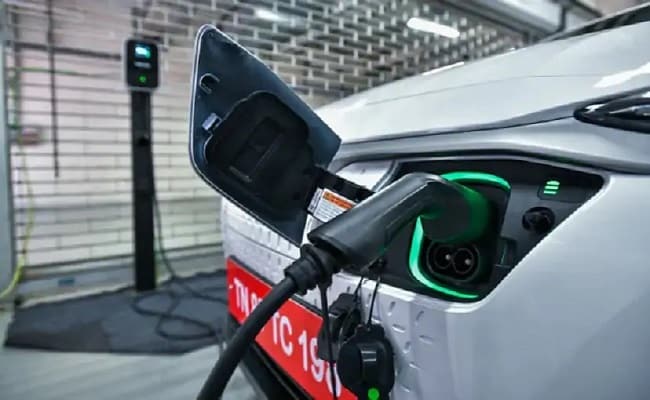
India has expanded its public charging infrastructure to approximately 29,000 stations by late 2025, yet significant challenges remain in fund utilization for electric vehicle (EV) charging networks despite substantial government commitments.
The ambitious transition away from fossil fuels has encountered roadblocks as approximately 31% of allocations for Electric Vehicle Public Charging Stations (EVPCS) under the Faster Adoption and Manufacturing of Electric Vehicles in India (FAME India) Phase II scheme remain unutilized.
More concerning is the complete lack of expenditure from the Rs 2,000 crore earmarked for public charging infrastructure under the PM Electric Drive Revolution in Innovative Vehicle Enhancement (PM E-DRIVE) Scheme.
This information was disclosed by Bhupathiraju Srinivasa Varma, Minister of State for Heavy Industries, responding to Trinamool Congress MP Shri Deepak (Dev) Adhikari's parliamentary inquiry.
These implementation delays are particularly noteworthy given the strong growth in EV adoption, with registrations exceeding 2.2 million units in the past year alone.
The FAME II initiative, operational from 2019 to 2024 with Rs 11,500 crore funding, facilitated sales of over 16.7 lakh EVs and sanctioned 6,862 electric buses. Under this program, three oil marketing companies established 8,932 public charging stations, yet considerable EVPCS-specific funding remains unused.
The successor PM E-DRIVE program, launched April 2024 with Rs 10,900 crore, extends support to additional vehicle categories including trucks and ambulances alongside charging infrastructure development. However, charging station disbursements remain at zero as the scheme enters its second year.
To strengthen domestic manufacturing capabilities, the Production Linked Incentive (PLI) Scheme for Automobile and Auto Components, approved in 2021 with Rs 25,938 crore, has approved 82 companies with incentives disbursed on eligible sales exceeding Rs 32,000 crore. The complementary PLI for Advanced Chemistry Cell batteries (Rs 18,100 crore) targets 50 GWh capacity development.
Public transportation electrification initiatives include the PM e-Bus Sewa-Payment Security Mechanism (Rs 3,435 crore), targeting deployment of over 38,000 e-buses, alongside the Scheme for Promotion of Manufacturing of Electric Passenger Cars in India.
While nationwide charging infrastructure has grown significantly, industry experts caution that uneven distribution and delayed fund utilization could impede broader EV adoption, currently representing approximately 6-7% of total vehicle sales. With annual EV registrations now exceeding 2 million units, accelerated infrastructure deployment remains essential to reducing vehicular emissions and fossil fuel dependence.
Source: https://www.ndtv.com/india-news/slow-progress-in-electric-vehicle-charging-infra-despite-multiple-schemes-9827168