
Unprecedented Tiger Deaths in Madhya Pradesh: 54 Fatalities in 2025 Raise Serious Conservation Concerns
- Date & Time:
- |
- Views: 34
- |
- From: India News Bull
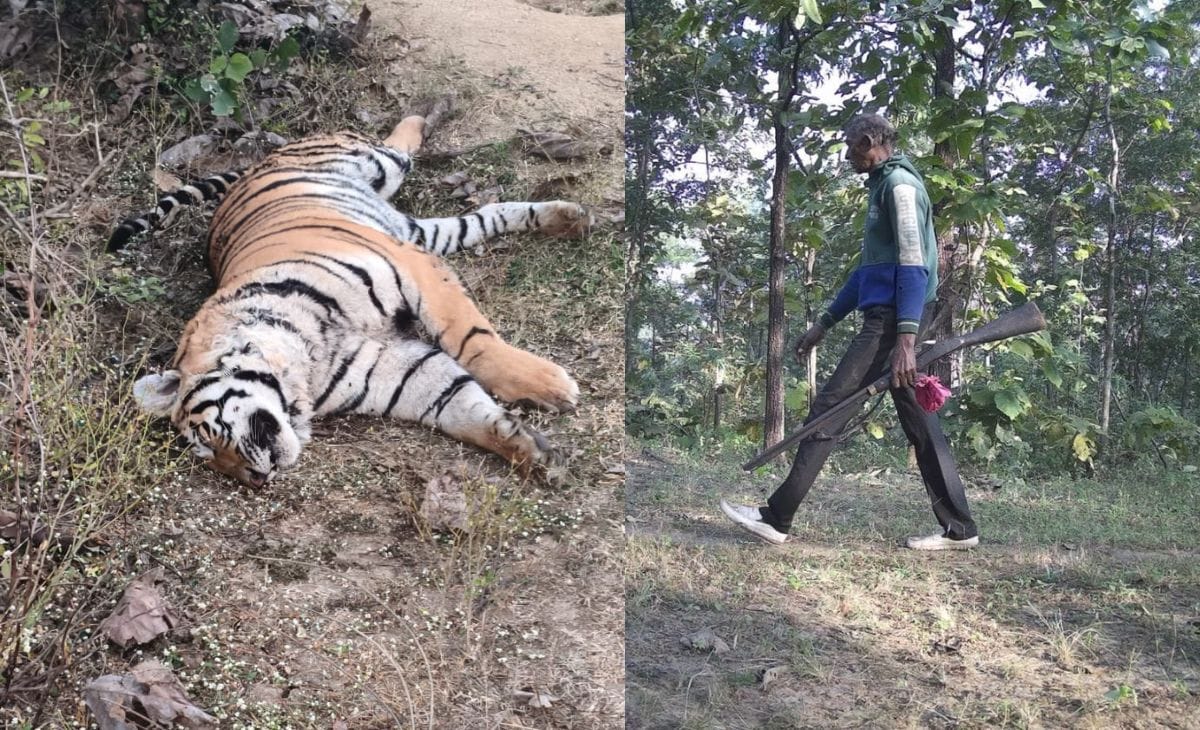
The tiger's body was discovered near a power line, immediately raising suspicions about the cause of death.
Madhya Pradesh, long known as India's "Tiger State," is currently facing a troubling contradiction. While officials continue to celebrate increasing tiger populations, a concerning reality is unfolding in the state's forests. This darker narrative features not conservation success stories but a disturbing pattern of tiger deaths. These magnificent creatures are perishing under mysterious and often suspicious circumstances, prompting serious questions about protection measures, law enforcement effectiveness, and accountability systems.
The state has recorded an unprecedented 54 tiger deaths in 2025, marking the highest annual mortality rate since the inception of Project Tiger in 1973.
The situation has become particularly acute with six tigers dying across the state in just one week. Most recently, another tiger carcass was found in the Bandhavgarh Tiger Reserve, one of India's most significant conservation areas. According to official records, approximately 57 percent of these deaths are categorized as "unnatural," resulting from poaching, electrocution, or unexplained circumstances.
The most recent discovery occurred during a field survey conducted as part of the All India Tiger Estimation exercise in the Chandia forest range of Umaria district. The tiger was found near a power line, leading forest officials to acknowledge the possibility of death by electrocution. While authorities maintain the incident remains under investigation, conservation experts argue this death represents part of a broader and deeply concerning pattern.
Minister of State for Forests Dilip Ahirwar has responded by asserting that the department treats every tiger death with utmost seriousness. He explained that expert teams are promptly dispatched to incident sites, investigations conducted, and appropriate actions taken based on findings. The Minister confirmed that electrocution is being investigated as a potential cause in the latest case and assured that both the department and administration are closely monitoring developments.
Despite official reassurances, poacher intrusions into protected forests remain an ongoing threat. Intelligence reports and images indicating poaching activity continue to emerge from Madhya Pradesh's reserves. A recent high-profile case has further highlighted the magnitude of this issue.
In a coordinated effort between the Madhya Pradesh State Tiger Strike Force and the Wildlife Crime Control Bureau, Yangchen Lakhungpa, an alleged international wildlife trafficking kingpin, was apprehended on December 2, 2025, in Lachung, North Sikkim. Wanted under an Interpol Red Corner Notice, his arrest followed months of technical surveillance and a challenging operation near the India-China border in freezing conditions. Investigators report that his trafficking network extended across India, Nepal, Tibet, and China.
Statistical data reveals a consistent and alarming upward trend: 34 tiger deaths in 2021, 43 in 2022, 45 in 2023, 46 in 2024, and already 54 deaths in 2025, with the year not yet concluded.
While forest officials have frequently attributed many of these fatalities to territorial conflicts between tigers, wildlife experts strongly dispute this explanation. Wildlife activist Ajay Dubey warns that this crisis extends beyond tigers, noting that numerous leopards are also being killed. He claims poachers are operating within reserves using electrical wires and argues that the forest department's surveillance and intelligence systems are inadequate. Dubey emphasizes that this record-breaking annual death toll since Project Tiger's establishment should serve as an urgent call to action.
Responding to criticism, the Forest Department has implemented stricter measures within core zones. Tourists are now prohibited from carrying mobile phones, and warnings have been issued to jeep drivers after footage emerged showing vehicles approaching tigers too closely. However, conservation experts suggest these measures may be misdirected. Dubey notes that guides and drivers often rely on mobile phones to report emergencies or breakdowns in isolated forest areas, and prohibiting phones could actually compromise safety and emergency response times.
Further complicating matters is an internal Forest Department report obtained by NDTV last year. The document revealed serious negligence and procedural failures in handling tiger death cases in major reserves including Bandhavgarh. It documented instances where Preliminary Offence Reports were not filed, post-mortems were conducted without required video documentation, forensic investigations remained incomplete, and deaths were routinely classified as animal conflicts without thorough examination.
Source: https://www.ndtv.com/india-news/54-tiger-deaths-in-madhya-pradesh-in-2025-most-since-project-tiger-launch-9826117