
The Growing North-South Divide: Hindi Bill Naming Sparks Constitutional Controversy in India
- Date & Time:
- |
- Views: 33
- |
- From: India News Bull
New Delhi:
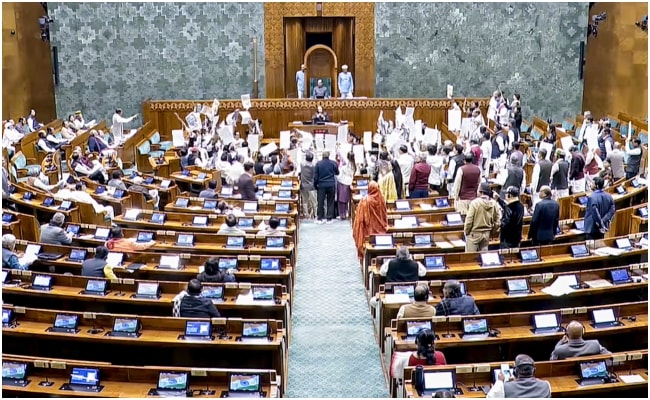
The controversy surrounding MNREGA's renaming has brought attention to the Centre's recent shift towards naming bills exclusively in Hindi, departing from the longstanding tradition of providing both Hindi and English names. Recent months have witnessed numerous bills with solely Hindi names—often incorporating acronyms—which critics argue represents an attempt at linguistic homogenization. This practice has particularly resonated in southern states, where leaders view it as another instance of Hindi imposition.
The proposed replacement for MNREGA—G Ram G—stands for Viksit Bharat Guarantee for Employment and Livelihood Mission (Rural) Bill. Higher education reforms are addressed in the Viksit Bharat Shiksha Adhishthan Bill, while insurance law amendments come under the Sabka Bima, Sabki Raksha Bill.
Interestingly, one bill concerning private sector participation in atomic energy reverses the pattern by using an English name that creates a Hindi acronym. The "Sustainable Harnessing and Advancement of Nuclear Energy for Transforming India" yields the acronym SHANTI, which means "peace" in Hindi.
Previously, the replacement laws for the Indian Penal Code, Code of Criminal Procedure, and Indian Evidence Act were named Bharatiya Nyaya Sanhita, Bharatiya Nagarik Suraksha Sanhita, and Bharatiya Sakshya Bill respectively. The Aircraft Act of 1934 has been replaced by the Bhartiya Vayuyan Vidheyak law.
The Congress party has expressed strong objections to renaming MNREGA—originally a tribute to Mahatma Gandhi—after Lord Ram. While BJP supporters characterize this opposition as evidence of anti-Hindu sentiment, the broader use of Hindi names threatens to deepen the existing north-south divide.
Many parliamentarians and political figures contend that these Hindi names create comprehension difficulties.
When Union Education Minister Dharmendra Pradhan introduced the Viksit Bharat Shiksha Adhisthan Bill in the Lok Sabha, RSP(A) leader NK Premachandran noted his difficulty pronouncing the name. He argued that using Hindi names violates Article 348(B) of the Constitution, which stipulates that new laws should have English names.
Congress member Jothimani and DMK member T M Selvaganapathi also voiced their concerns. "I perceive this as Hindi imposition. Tamil Nadu has already been denied SSA funds merely for opposing the three-language policy in the National Education Policy-2020," stated Jothimani.
DMK leader T R Baalu similarly opposed the "imposition" of Hindi on southern states.
P Chidambaram of Congress described the change as "an affront to non-Hindi speaking people and states with official languages other than Hindi." In a social media post, he questioned why the government would alter a 75-year practice that had caused no difficulties, noting that traditionally "the title of the Bill appears in English words in the English version and in Hindi words in the Hindi version."
Article 348(1)(b) of the Constitution mandates that until Parliament decides otherwise, all Bills, Acts, Ordinances, orders, rules, regulations, and by-laws at central and state levels, plus all Supreme Court and High Court proceedings, must be in English. In cases of conflict with translations, the English version takes precedence.
Source: https://www.ndtv.com/india-news/amid-mnrega-row-a-north-south-divide-over-hindi-names-for-new-laws-9825913